
Updated May 18, 2026
Indian lesbian films and shows often arrive with a sense of weight that’s hard to ignore. Not because the stories themselves are always tragic, but because telling them openly has never been easy. In a cultural landscape shaped by tradition, censorship, and social pressure, queer women’s stories tend to surface slowly — sometimes quietly, sometimes defiantly. That context changes how I watch Indian lesbian cinema. Every scene feels aware of the space it’s occupying, and every narrative choice carries a sense of intention.
After writing about Chinese-language lesbian cinema and Korean GL dramas, I wanted to look at Indian sapphic stories with the same care. This guide includes Hindi films, regional Indian cinema, web series, and stories shaped by Indian family expectations, marriage pressure, caste, religion, disability, and social visibility. Some titles are mainstream and accessible, while others are quieter, older, or more independent.
I do not treat every title here as a simple “lesbian romance.” Some are family dramas, some are coming-out stories, some are about lavender marriage, and some are important because they made queer women visible in spaces where that visibility was once extremely rare.
How I Chose These Indian Lesbian Films and Shows
I looked at whether the sapphic storyline is central enough to matter, whether the work adds something meaningful to Indian queer screen representation, and whether I would still recommend it to another WLW viewer today.
I also separate mainstream Hindi films, web series, regional Indian cinema, and older landmark films where possible. That matters because Badhaai Do, Maja Ma, The Married Woman, Sancharram, and Fire do not come from the same production context, even if they all matter to Indian sapphic storytelling.
Mainstream and Contemporary Indian Sapphic Films
Badhaai Do (2022)
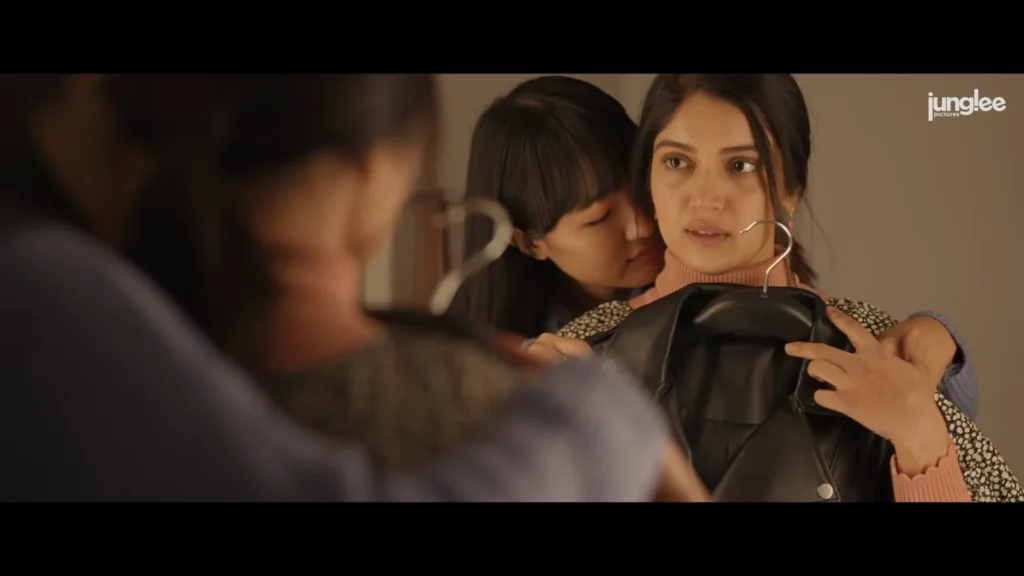
What I like about Badhaai Do is that it understands how survival can look like compromise. The lavender marriage setup is funny on the surface, but underneath it is a very real fear: how do queer people create breathing room inside a society that still expects marriage, family performance, and respectability?
For me, the film works because it does not treat queerness as a single dramatic reveal. It shows negotiation, exhaustion, friendship, chosen family, and the strange relief of finding someone else who is also hiding in plain sight.
Related: If you want more sapphic films that feel hopeful rather than purely tragic, I also keep a guide to lesbian movies with happy endings.
Maja Ma (2022)
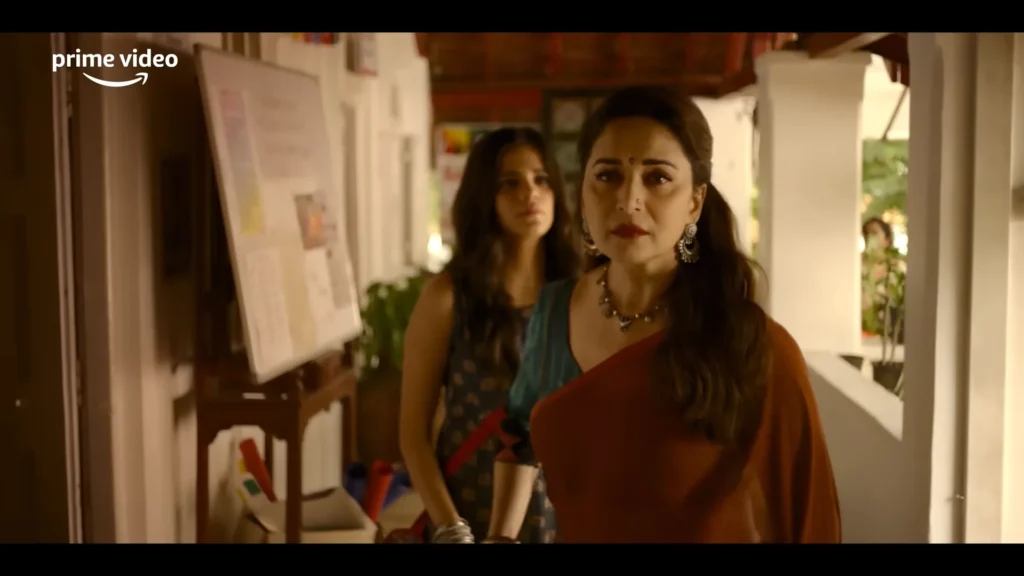
Maja Ma interests me because it places a lesbian identity inside motherhood, marriage, and respectability. The main character is not a young woman just beginning to understand herself; she is a mother whose family has built an entire image around who they think she is.
That makes the coming-out conflict feel different. It is not only about desire, but about what happens when a woman’s private truth disrupts the role everyone else needs her to perform.
Related: For more Asian sapphic stories shaped by family pressure and social expectation, see my Asian lesbian movies guide.
Ek Ladki Ko Dekha Toh Aisa Laga (2019)
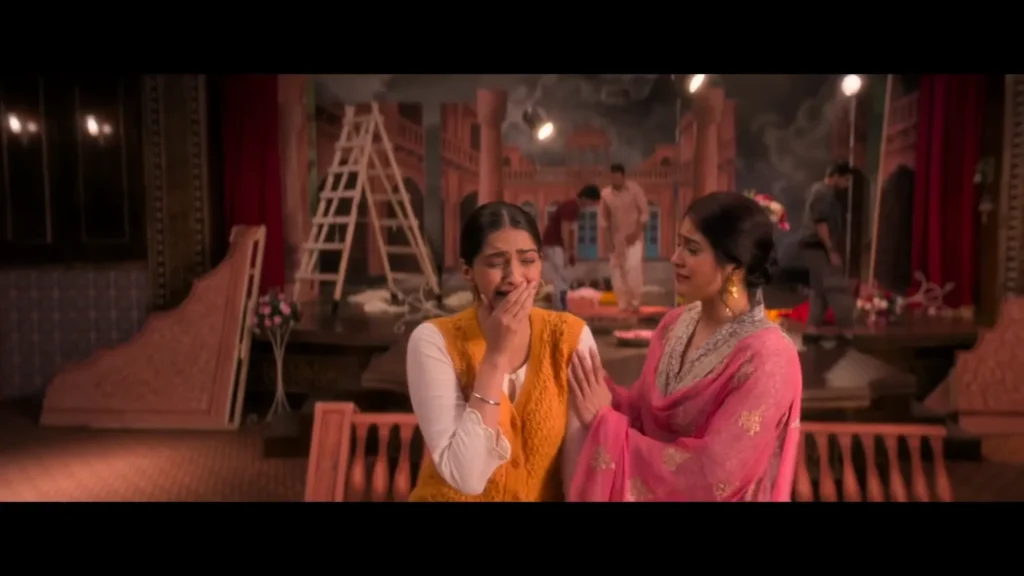
Ek Ladki Ko Dekha Toh Aisa Laga, often translated as How I Felt When I Saw That Girl, is one of the most visible mainstream Hindi films centered on a lesbian love story. Its importance comes from the fact that it brings a sapphic coming-out story into a familiar Bollywood family-drama structure, rather than treating it as something completely outside mainstream emotion.
What I appreciate is how the film uses the language of first love, family expectation, and self-acceptance to make the story accessible to a wider audience. It may feel gentle compared with more radical queer cinema, but that gentleness is also part of its cultural function: it opens a door for viewers who may never have watched an Indian lesbian film before.
Margarita with a Straw (2015)

This beautifully crafted film follows Laila, a talented Delhi University student with cerebral palsy, who is also an aspiring writer and lyricist for her college band. After facing rejection from her first crush – the band’s lead singer – Laila embarks on a journey of self-discovery that leads her to New York, where she meets the confident and blind activist Khanum.
What sets this film apart is its intersectional approach to identity – exploring disability, sexuality, and self-acceptance with remarkable sensitivity. The film eschews melodrama in favor of authentic character development, with stunning cinematography and a mesmerizing soundtrack that elevates the storytelling. Kalki Koechlin’s nuanced performance as Laila brings depth and authenticity to this complex character.
What stays with me is that the film allows Laila to be curious, flawed, desiring, selfish, tender, and uncertain all at once. It does not reduce her to disability representation or queer representation alone. For me, that is why the film still feels valuable: it gives a young woman the messy interior life that screen characters like her are often denied.
Related: For more sapphic stories about youth, self-discovery, and identity, see my guide to lesbian coming-of-age movies.
Indian Lesbian Web Series and Streaming Dramas
The Married Woman (2021)
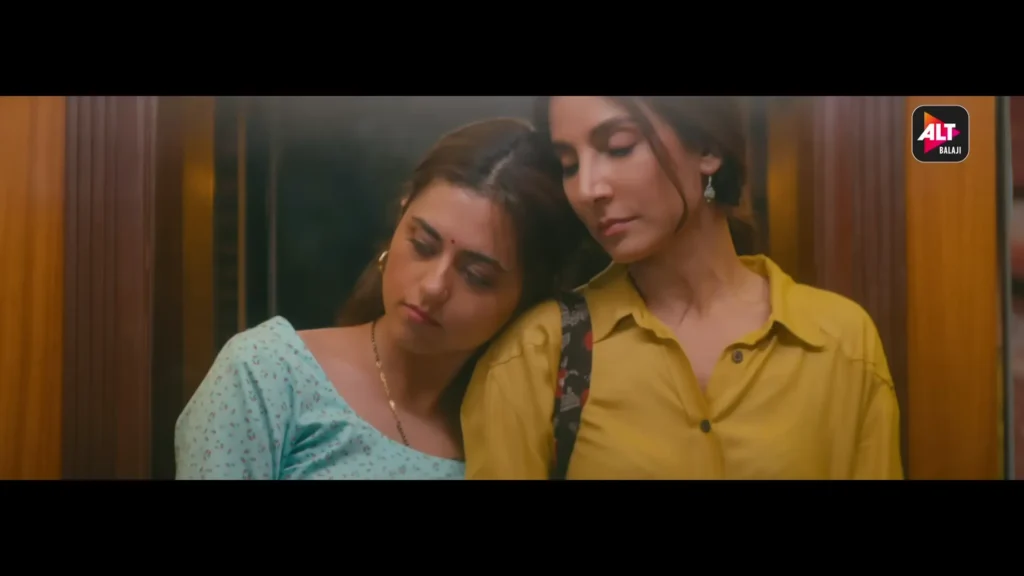
What stays with me in The Married Woman is its sense of emotional suffocation. Astha is not simply falling in love; she is slowly realizing how much of herself has been absorbed by marriage, family duty, and the political noise around her.
The series is strongest when it lets small objects carry emotional weight. The bag that does not fit in the suitcase becomes more than a prop — it feels like the part of Astha’s life that can no longer be packed away neatly.
Related: For more sapphic dramas from Asia, I also have a guide to Asian GL series and dramas.
Maaya 2 (2018)

While this web series is technically a second season, it tells a completely fresh sapphic story unrelated to its predecessor. The narrative follows Ruhi, a talented lesbian architect who returns to India from America, only to face discrimination from her misogynistic boss.
The plot takes an interesting twist when Ruhi meets Simmi, a mesmerizing singer, at a bar. Their instant connection becomes complicated when it’s revealed that Simmi is engaged to Ruhi’s problematic boss. The show brilliantly explores the complexities of attraction and professional power dynamics in modern India.
I do not think Maaya 2 is the most polished title on this list, but I include it because Indian lesbian web series have their own importance. Sometimes visibility starts in smaller digital spaces before it reaches mainstream cinema. The show’s appeal is not subtle realism, but the fact that it gives its sapphic relationship a direct, watchable, dramatic shape.
The ‘Other’ Love Story (2016)

Set against the backdrop of Indian society, this tender romance follows two young women falling in love. What makes this story special is its raw honesty – showing how the characters act on their feelings without overthinking, despite the shame society might attach to their relationship. At its core, it’s a powerful reminder that love persists despite social obstacles.
Related: If you like small, tender sapphic web series, you may also want to browse my guide to lesbian series on YouTube.
Regional and Independent Indian Lesbian Films
Sancharram (2004)
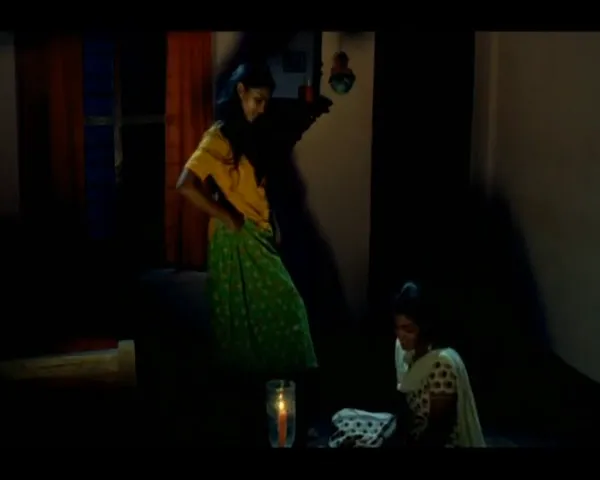
Set in a serene Indian village, “The Journey” (Sancharram) tells the story of Kiran and Delilah, childhood friends whose relationship transforms after a heartfelt love letter sparks deeper feelings between them. Unlike typical Bollywood productions, this film takes a more intimate approach, focusing on the subtle dynamics of forbidden love in a traditional society.
Director Ligy J. Pullappally crafts a visually stunning narrative that feels both culturally specific and universally relatable. The film delicately balances the beauty of first love with the harsh realities of societal pressure, creating a powerful commentary on tradition, religion, and personal freedom in contemporary India.
Fire (1996)
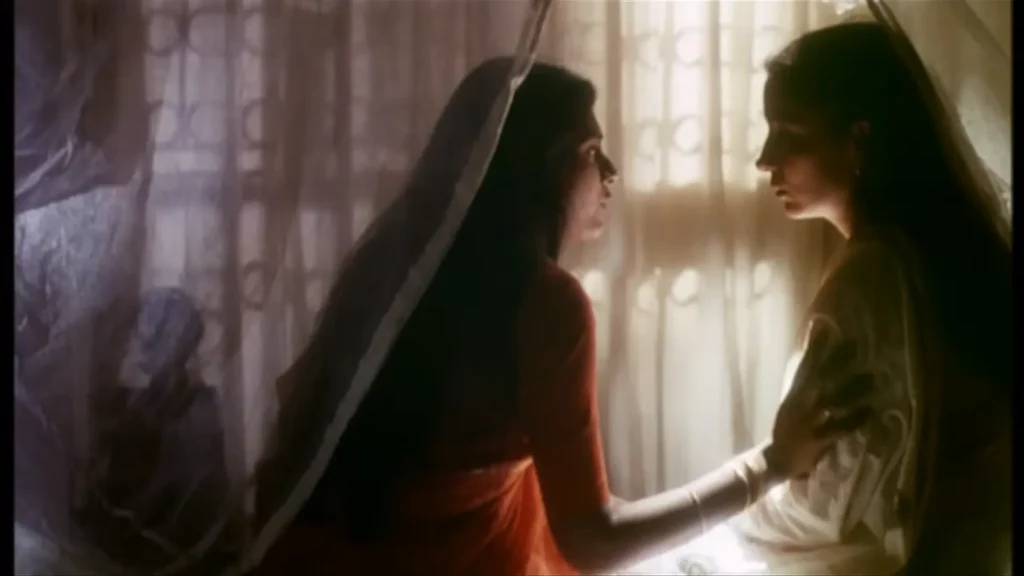
Fire remains one of the most important and controversial films in Indian sapphic cinema. Directed by Deepa Mehta, it follows Radha and Sita, two women trapped inside emotionally empty marriages who begin to find comfort, desire, and dignity in each other.
Watching it now, I am struck less by shock value and more by how direct the film is about domestic loneliness. The house becomes a place where women cook, serve, wait, and disappear. Their relationship feels like a refusal to keep living only as wives inside a structure that gives them so little emotional life. The controversy around the film also shows why it mattered: it forced a public conversation about women’s desire, marriage, and queer visibility in Indian cinema.
FAQ About Indian Lesbian Movies and Shows
What is the best Indian lesbian movie to start with?
If you want a mainstream and accessible starting point, I would begin with Badhaai Do or Maja Ma. If you want a historic landmark, watch Fire. For a quieter regional film, Sancharram / The Journey is a strong choice.
Are all Indian lesbian movies Bollywood films?
No. Some titles in this guide are mainstream Hindi films, but others are regional films, web series, streaming dramas, or independent productions. That difference matters because Indian sapphic storytelling does not come from only one industry or language tradition.
Which Indian lesbian movie is considered a landmark classic?
Fire is one of the most important landmark films in Indian sapphic cinema because of the public controversy it created and the way it forced a wider conversation about women’s desire, marriage, and queer visibility.
Are there Indian lesbian web series?
Yes. The Married Woman, Maaya 2, and The Other Love Story are examples of Indian sapphic stories told through series or digital formats rather than traditional feature films.
Related Guides
Indian sapphic cinema often feels powerful because it does not separate love from social consequence. These stories are about desire, but they are also about marriage, family honor, religion, class, disability, migration, and the pressure to remain acceptable.
- Asian Lesbian Movies Guide
- Asian GL Series and Dramas
- Lesbian Coming-of-Age Movies
- Lesbian Movies With Happy Endings
- Lesbian Series on YouTube
- Lesbian Movies Guide
👉 Also explore: Lesbian Movies | GL Series | Yuri Anime & Manga
🌍 By Country | 🎭 By Theme