
Japanese lesbian dramas have always been a source of excitement and inspiration, with uniquely talented creators bringing a diverse range of styles to the queer community year after year. From groundbreaking films like those featured in our Japanese lesbian movie guide to compelling TV series, Japan continues to push creative boundaries in LGBTQ+ storytelling.
Now we’re highlighting some of the best Japanese lesbian series from recent years that are absolutely worth watching.
In This Article
This list focuses on Japanese lesbian dramas where emotional restraint and character dynamics matter more than plot twists. Some titles are GL-centered, while others include sapphic storylines within broader narratives. What connects them is not genre, but the way intimacy is portrayed — quietly, patiently, and often without clear labels.
Japanese Lesbian Dramas List
Even if You Become an Adult (2025)

Our Rating: TBA
Release Date: 4/26 2025
📺Where to Watch: Hulu
Takako Shimura has adapted this drama from the same-named manga. It chronicles Ayano, a married elementary school teacher who is contacted by Juri at a restaurant-bar she hasn’t been in some time. Though they are meeting for the first time, the two click right away and subsequently head to Juri’s flat. They still lack real maturity even in their forties. It’s a love story full of emotional whiplash, where warmth and discomfort constantly coexist.
🔍 Similar Recommendations:
Call Me by No-Name (2025)

Our Rating: 👑👑👑👑👑
Release Date: 2025
📺Where to Watch: GagaOOLaLa
Main Role:


Review: “Identity, Love, and Secrets: A Captivating Tale of Unconventional Romance”
At Eichi University, Ai (played by Kudo Mio) encounters the mysterious and beautiful Kotoha Furuhashi (played by Osaki Ichika) abandoned at a garbage dump. When Ai invites the enigmatic Kotoha to her home hoping to become friends, her offer is firmly rejected. Ai soon discovers that “Kotoha” is not her real name.
Instead of friendship, Kotoha proposes an unusual arrangement: they will be “lovers” until Ai can guess her true name. It’s a strange gamble – if Ai discovers Kotoha’s real name, they’ll become “friends” as originally intended. Accepting this peculiar challenge, Ai begins navigating their relationship as “lovers,” awkwardly trying to grow closer to Kotoha while unraveling the mystery of her identity. However, the past hidden behind Kotoha’s name soon threatens their present happiness.
This unconventional romance masterfully weaves together themes of identity, trust, and the complex nature of human connections. The chemistry between Kudo Mio and Osaki Ichika brings depth and authenticity to this unique story that challenges our understanding of how relationships form and evolve.
Related:
Chaser Game W Season I and II (2024)

Our Rating: 👑👑👑👑👑
Release Date: 2024
📺Where to watch: GagaOOLaLa
Main Role:


Released in January 2024, this series quickly stood out among recent Japanese GL dramas. Chaser Game W: Power Harassment Joshi wa Watashi no Moto Kano is the highly awaited new lesbian Japanese drama. Starring in this Japanese gl series are Nakumura Yurika and Sugai Yuuka.
The portrayal of the love-hate relationship between a former female boss, Hayashi Fuyu, and her subordinate Harumoto Itsuki, by the two female actresses was outstanding.
The former lovers become superior and inferior in the workplace, and the dusty love and hate are rekindled.
After the first season, its creators quickly produced and released a second season within the same year.
The second season follows the story of Hayashi Fuyu, who resigns from her job but returns to Japan in search of Harumoto Itsuki. The director faced the challenging task of fitting so much dramatic tension into an eight-episode series, with each episode lasting only 20 minutes. With complex characters, over-the-top drama, and the inherent societal weight of a same-sex love story, achieving perfection was a tall order. Still, the explosive opening, flawless middle, and slightly bumpy yet satisfying conclusion made this show a small spark of hope in the conservative cultures of Japan and East Asia.
Related:
She Loves to Cook, and She Loves to Eat Season I and II (2022 – 2024)

Our Rating: 👑👑👑👑👑
Release Date: 2022 – 2024
Main Role:


The series is adapted from a manga of the same name and features two main characters: Nobu, a woman who loves to cook, and Kasuga, a woman who loves to eat. The story portrays their warm, everyday interactions while exploring themes of breaking stereotypes and discovering one’s identity.
Each 15-minute episode packs a lot into its short runtime, offering a well-crafted and deeply meaningful narrative. The plot touches on topics like minority awareness, escaping toxic family dynamics, and promoting diverse romantic orientations. Through the pure and slow-building love between Kasuga and Nobu, the series delves into real-world issues faced by modern women.
In the first season, the script focused on everyday details of women’s lives, addressing stereotypes like “maternal expectations” and “eating lightly.” It emphasized that women are independent individuals, not just accessories to traditional heterosexual norms.
The second season brings a deeper and subtler perspective, connecting the personal struggles of the characters to broader societal issues.
Nomoto encounters Ms. Yako, a figure within the LGBT community. Through Ms. Yako, Nomoto gains deeper insight into lesbian relationships and is introduced to a variety of lesbian films, prompting a journey of self-discovery.
As these emotional seeds begin to sprout, Kasuga confides in Nomoto about her strained family dynamics, particularly with her father, drawing them closer.
Japanese dramas excel at portraying the intricate details of women’s lives, covering their professional endeavors, social interactions, marital relationships, and romantic connections.
Related:
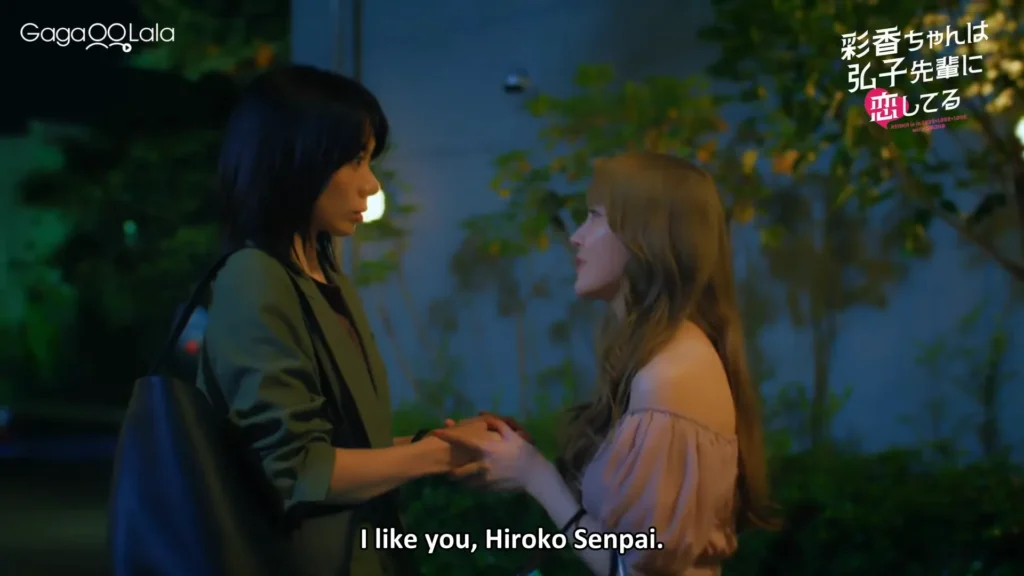
Ayaka Is in Love With Hiroko!(2024)
Our Rating: 👑👑👑👑👑
Release Date: 2024
📺Where to watch: GagaOOLaLa
Main Role:


Review: This show is based on a manga of the same name. It tells the story of Ayaka, who has a huge crush on her coworker Hiroko. Every day, Ayaka tries to win her over, but Hiroko doesn’t seem interested.
However, while everyone admires Hiroko as the perfect role model, she secretly has a strong attraction to women—and Ayaka’s persistent advances make her heart race. The misunderstanding grows because both believe the other is straight, leading to even bigger miscommunications.
I’ve read the manga, including the English version. It’s not very long and has a light, comedic tone with a happy ending. Still, the story also touches on issues LGBTQ+ individuals and women face in the workplace, offering a deeper layer of meaning. These challenges are common for the queer community and women alike, whether in the workplace or daily life.
The adapted series brings these themes to life with a cool meta-narrative. After so much media focused on objectifying women or catering to the male gaze, I’ve noticed a shift online toward creating “healthy” and “wholesome” WLW stories. That’s great and understandable! But I think this sometimes ignores or denies the reality of lesbian sexuality and desire. What I appreciated most is that the series doesn’t sanitize desire—because lesbian desire is still desire.
So, seeing a story that openly embraces themes of desire and suppression in such a fun and relatable way is fantastic! This show uses humor to tell the story of a workplace romance between two women while boldly showcasing the sexual tension and attraction between them.
🔍 Similar Recommendations:
Let’s Have a Meal Together! (2019)

Our Rating: 👑👑👑
Release Date: 2019
📺Where to watch: TVtime
Main Role:


Review: “Cooking Up Love: A Sweet Sapphic Tale of Food and Family”
I clicked this one expecting a cute food drama with a little sapphic garnish — and that’s basically what it is, in the best way. The romance doesn’t come in big declarations; it grows in the quiet rhythm of cooking, sharing plates, and noticing the other person’s preferences a little too carefully.
What I liked most is the tone: gentle, domestic, and unhurried. It’s not trying to be “deep” every minute, but the warmth feels earned. The downside is that the GL line can sometimes feel lighter than the food-of-the-week structure, so if you want intense emotional payoff, this may feel a bit soft.
Still, if you’re in the mood for something comforting — a series that feels like coming home hungry and being understood — this is an easy recommendation.
Related:
Futari Monologue (2017)

Our Rating: 👑👑👑👑
Release Date: 2017
📺Where to watch: YouTube
Main Role:


Review: “From Best Friends to Soulmates: A Sweet Japanese GL That Will Steal Your Heart”
This is a small, slightly awkward school GL that understands one thing very well: feelings often arrive before language. I liked how the story lets the characters circle around each other — rebuilding a friendship first, then slowly realizing the “friend” label stops fitting.
The best moments are the quiet ones: the pauses, the almost-confessions, the way their body language changes before they admit anything out loud. The trade-off is that the pacing can feel light and episodic, so you’re not always getting huge plot turns.
If you enjoy gentle coming-of-age GL with soft tension (and a bit of secondhand embarrassment), this one lands.
Transit Girls (2015)
Our Rating: 👑👑👑👑
Release Date: 2015
📺Where to watch: YouTube
Main Role:


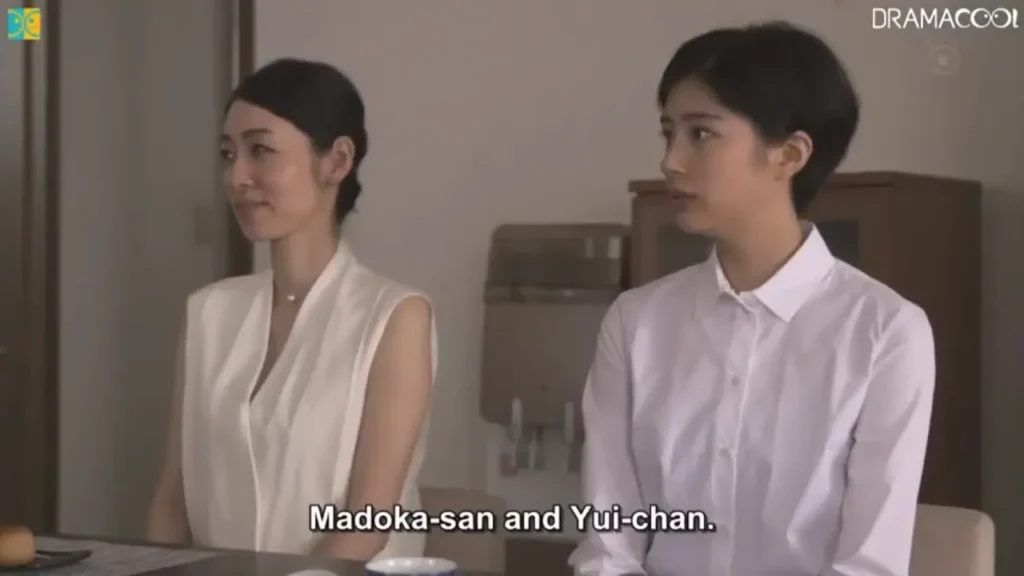
Review: “Growing Up Gay: A Coming-of-Age Story That Feels Like a Warm Hug”
What stayed with me about Transit Girls is its softness. It’s a coming-of-age story, but it doesn’t treat queerness as a spectacle — it treats it as something a teenager is quietly trying to name, while life keeps moving around her (family shifts, school pressure, future plans).
I won’t pretend it’s perfect: the drama is simple, and at times it feels like the show wants to stay “safe.” But that safety is also the point — the series gives its girls room to be confused, to be brave in small steps, and to be loved without the world collapsing.
If you want a classic Japanese GL that feels gentle rather than sensational, this is worth your time.
GL Couple Isn’t the Main Plot in These Series
BOKUMARI(2017)

Our Rating: 👑👑👑
Release Date: 2017
Main Role: Ikeda Elaiza/Yoshizawa Ryo/Nakamura Yurika
Review: “Split Love: When One Heart Houses Two Souls”
BOKUMARI is one of those shows that feels provocative first and romantic second. The split-personality setup can be genuinely interesting, but it also creates a relationship dynamic that’s hard to read as “healthy” — and I don’t think the drama is even trying to make it comfortable.
What worked for me was the tension around identity: when attraction isn’t just about “who” you love, but which side of a person you’re loving — and what that means for consent, trust, and stability. The downside is that the concept can start to feel like a device the moment the writing leans on it too heavily.
I’d recommend it if you like psychologically messy stories that blur BL/GL energy — but don’t go in expecting a straightforward romance.
Ôoku (2016)

Our Rating: 👑👑👑👑
Release Date: 2016
Main Role: Sawajiri Erika/Narimiya Hiroki
Review: “Beyond Traditional Beauty: A Japanese GL That Breaks All Rules”
I mainly watched Ôoku for the atmosphere — and it delivers. The traditional styling, the restrained performances, and the power dynamics inside the palace make everything feel tense even when characters are speaking softly.
The sapphic element here isn’t a bubbly romance; it’s woven into a world built on hierarchy and survival, which makes desire feel both beautiful and dangerous. If you’re looking for something warm and fluffy, this isn’t it. But if you like period settings where women’s relationships carry political weight, Ôoku hits hard.
Fake Marriage(2015)

Our Rating: 👑👑👑👑
Release Date: 2015
Main Role: Amami Yuki/Sawamura Ikki
Review: “The New Wave of Japanese GL: Where Love is Love”
What I remember most about Fake Marriage is how “normal” it tries to be — not in a boring way, but in the sense that it doesn’t treat a woman-loving-woman relationship as a shock twist. The story frames it as a relationship with real stakes: practical choices, social pressure, and the quiet cost of pretending.
It’s not the most intense GL on this list, and the writing can feel dated in places, but that’s also why it’s interesting: you can see the transition period in Japanese TV where queer relationships start to be written more like real life, not just taboo.
If you’re curious about earlier mainstream-leaning Japanese sapphic narratives, this is a solid watch.
Last Friends (2008)

Our Rating: 👑👑👑👑
Release Date: 2008
Main Role: Nagasawa Masami/Ueno Juri
Review: “The Many Colors of Love: A Japanese Drama That Touches Every Heart”
Last Friends isn’t a pure GL romance, and I think it’s better if you don’t expect it to be. The show is really about different kinds of bonds — friendship, dependence, chosen family — and the sapphic feelings sit inside that bigger emotional web.
What I appreciate is the sincerity: it lets the characters be messy, hurt, and sometimes unfair to each other, without turning everything into a neat “lesson.” The downside is that the tone can get heavy, and some story choices are clearly shaped by the era it was made in.
If you like relationship dramas that feel intense and human (not just romance-focused), this one is still memorable.
Botan to Bara (牡丹と薔薇, TV Series 2004)
Mirroring a Shakespearean tragedy, this drama follows two sisters separated by circumstance. Midoriko is abandoned by her longtime lover, Takaki, when he chooses to marry the wealthy heiress Fukiko. After Fukiko gives birth to a daughter, Midoriko steals the infant and names her Botan, raising her as her own. Years later, fate brings Botan and Fukiko’s second daughter, Kaoyo, under the same roof — one as a maid, the other as the privileged daughter — without either knowing they are sisters.

💭 My Take: This is a heavy, unsettling story that left me deeply unsettled. Kaoyo’s obsessive love toward Botan is depicted with an intensity that’s hard to digest — especially once the shocking truth of their blood relation comes out. The possession, jealousy, and twisted emotions make it both unforgettable and, at times, nearly unbearable to watch.
29歳の憂うつ パラダイスサーティー (2000)

Our Rating: 👑👑👑👑
Release Date: 2000
Review: “A Groundbreaking GL Classic: When Forbidden Love Dared to Speak Its Name”
Travel back to the early 2000s with this revolutionary Japanese drama that paved the way for modern GL storytelling. At its heart stands Shimizu Misa’s unforgettable portrayal of a butch lesbian character – a rare and authentic representation that was years ahead of its time. Her magnetic presence and quiet strength bring a depth to the role that still resonates today.
What sets this series apart is how masterfully it handles forbidden love without falling into typical tropes. The slow-burning plot comes full circle in a way that feels both natural and deeply satisfying. For a drama from the early 2000s, its sophisticated handling of complex themes feels remarkably modern.
Whether you’re a GL history buff or simply appreciate well-crafted lesbian storytelling, this series proves that some stories are truly timeless.
Sono Toki Heart wa Nusumareta (その時、ハートは盗まれた, 1992)
Yuko Shiina, a sweet and naive student, has long admired her senior, Katase, but all her attempts to win him over end in clumsy failure. When transfer student Saki Aso arrives, everything changes. Beautiful and aloof, Saki hides a troubled relationship with her mother and harbors feelings for an older man — only to discover he is actually in love with her mother. One day, Saki impulsively kisses Yuko, sparking unexpected emotions. Suddenly, Yuko finds herself drawn to Saki, while Katase too is mesmerized by her mysterious aura, creating a tangled web of love and desire.

💭 My Take: For a 1992 drama, the narrative feels surprisingly bold and layered. It’s a story of love in all its messy forms — a boy and a girl falling for the same girl, but also a girl chasing an older man as a substitute for the love she never received at home. There’s a rawness to the youth, hormones, and confusion that still resonates today. And yes, Uchida as the charming but flawed senior is both painfully attractive and tragically punished later in life — a cycle that feels all too human.
そして、ユリコは一人になった (2020)

Our Rating: 👑👑👑
Release Date: 2020
Main Role: Tamashiro Tina
Review: “Yurioko-sama: Where Sapphic Love Meets Supernatural Thrills”
Forget everything you know about campus romances – “Yurioko-sama” delivers a haunting twist on the genre that will keep you on the edge of your seat. This isn’t just another school story; it’s a masterfully crafted supernatural thriller where forbidden love dances with dark curses.
At its heart lies the mysterious Lady Yurioko, whose curse threatens all who share her name. Only one can survive – but who? The series builds tension masterfully, weaving together supernatural elements with deep, meaningful relationships that transcend the typical Yuri narrative.
What makes this series truly unforgettable is its main character’s magnetic presence and the way it strips away conventional romance tropes to focus on raw, emotional connections. Just when you think you’ve figured it out, the ending delivers a shocking twist that will leave you questioning everything.
According to Mizuki, this is sapphic storytelling at its finest – proving that sometimes the most powerful love stories come wrapped in mystery and danger.
The Mistresses: Secrets of Women (2019)

Our Rating: 👑👑👑
Release Date: 2019
Main Role: Hasegawa Kyoko/Mizuno Miki/Hyunri/Omasa Aya
Review: “Dark Desires: When Friendship Turns to Forbidden Love”
Step into a hauntingly beautiful drama where darkness and desire intertwine, creating one of the most compelling sapphic storylines we’ve seen this year. While the show masterfully weaves multiple narratives – including a powerful mother-son relationship – it’s the lesbian subplot in episode five that steals our hearts and leaves us breathless.
What sets this series apart is its raw, unflinching portrayal of unrequited sapphic love. The story delicately explores that gut-wrenching reality many of us know too well – the agony of loving someone who can’t love you back in the same way. Against a backdrop of haunting music that perfectly captures the emotional turbulence, we watch as one woman’s desperate attempt to be “perfect” for her beloved slowly unravels.
This isn’t your typical coming-out story or happy-ending romance. Instead, it’s a brutally honest look at the complexities of female relationships, where the line between intense friendship and romantic love becomes beautifully blurred. The show dares to ask: How far would you go for love that might never be returned?
For anyone who’s ever loved from the shadows or felt the exquisite pain of impossible love, this drama hits differently. It’s a reminder that sometimes the most powerful lesbian stories are the ones that break our hearts.
Life As a Girl (2018)

Our Rating: 👑👑👑
Release Date: 2018
Main Role: Shison Jun
Review: “Love, Loss, and Longing: A Must-Watch Sapphic Drama”
Get ready for a series that will haunt your thoughts long after watching. With its hypnotic soundtrack and masterful storytelling, this drama delivers an unforgettable exploration of unrequited sapphic love that hits close to home.
Episode five stands as the crown jewel, offering one of the most authentic lesbian storylines we’ve seen this year. Watch as one woman’s journey of self-transformation for love unfolds, leading to a heart-wrenching realization that sometimes love isn’t enough.
While the show excels in portraying complex female friendships and touching family dynamics, it’s the raw honesty of its sapphic elements that makes it truly special. This isn’t just another drama – it’s a beautiful, bittersweet reminder of love’s transformative pow
Explore More Sapphic Content
Japanese lesbian dramas often resonate with me not because they’re loud or dramatic, but because of how quietly precise they are. These stories linger on small gestures, unspoken tension, and the slow realization of feelings—often long before the characters are ready to name them.
If you’re drawn to sapphic stories that value emotional texture over spectacle, Japanese GL series offer something uniquely intimate. Many of these themes also appear in Japanese lesbian films, which explore similar emotional restraint through a more cinematic lens. Whether it’s a gentle slice-of-life, a workplace romance filled with restraint, or a story that lets longing do most of the talking, these shows tend to stay with you in subtle ways. And for me, that quiet aftertaste is exactly what makes them worth watching.
👉 Also explore: Lesbian Movies | GL Series | Yuri Anime & Manga
FAQ About Japanese Lesbian Dramas
Q1: What makes Japanese GL dramas different from other lesbian content?
Japanese GL (Girls’ Love) dramas uniquely blend subtle storytelling with deep emotional exploration. Unlike Western shows that might focus on explicit representation, Japanese dramas often emphasize the psychological and emotional aspects of same-sex relationships, incorporating cultural elements and societal perspectives unique to Japan.
Q2: Are these shows suitable for beginners to Japanese dramas?
Yes, most of these shows are beginner-friendly. Many offer English subtitles and universal themes that transcend cultural barriers. Start with recent shows like “Chaser Game W” or “She Loves to Cook, and She Loves to Eat” for more contemporary storytelling styles.
Q3: Where can I legally watch these Japanese GL dramas?
Most shows are available on:
GagaOOLala (Global LGBT streaming platform)
Viki (Select titles)
Netflix Japan (VPN required)
Amazon Prime Japan (VPN required)
YouTube (Official channels for some series)
Q4: How is the subtitle quality for international viewers?
Subtitle quality varies by platform:
Official streaming services typically offer high-quality English subtitles
Fan-subbed versions may vary in accuracy
GagaOOLala usually provides professional translations
Some platforms offer multiple language options
Q5: Why are Japanese GL dramas often shorter than Western series?
Japanese GL dramas typically run 6-12 episodes per season, with episodes around 20-30 minutes. This format allows for tight storytelling and focused character development without unnecessary subplots.
Q6: Are these shows appropriate for all audiences?
Content ratings vary:
Most shows are suitable for teens and adults
Some contain mature themes
Few feature explicit content
Always check individual show ratings
Cultural attitudes toward LGBT themes may differ from Western perspectives
Q7: Which show should I watch first as a GL drama newcomer?
Recommended starter shows:
“She Loves to Cook, and She Loves to Eat” – gentle, slice-of-life story
“Chaser Game W” – modern workplace romance
“Transit Girls” – classic coming-of-age tale
Q8: How recent are these shows and are they still relevant?
While some classics date back to the early 2000s, many recent productions (2020-2024) reflect contemporary LGBT issues and modern Japanese society. Both old and new shows offer valuable perspectives on lesbian relationships in Japan.
Q9: Do these shows have happy endings?
Endings vary:
Modern shows tend to feature more positive outcomes
Older series might have bittersweet endings
Some focus on personal growth rather than romantic resolution
Check reviews beforehand if you prefer specific types of endings
Q10: Are there English-speaking communities to discuss these shows?
Yes! You can join discussions on:
Reddit (r/JapaneseDrama, r/GLDrama)
MyDramaList forums
Twitter (#JapaneseGL, #GLDrama)
Facebook GL drama fan groups
Tumblr GL community