
Last updated: May 24, 2026
Disclosure: This page may contain affiliate links. As an Amazon Associate, I earn from qualifying purchases.
French lesbian movies have a long and complicated place in sapphic cinema. Some are romantic and visually elegant, some are emotionally difficult, and some are better watched as historical or arthouse works rather than simple comfort films. What interests me most is how often French cinema uses silence, glances, space, class, art, and memory to express what the characters cannot easily say aloud.
This guide brings together French lesbian films, sapphic dramas, queer-coded stories, and French co-productions where relationships between women play a meaningful role. Not every title here is a straightforward lesbian romance. Some are coming-of-age films, thrillers, period dramas, psychological stories, or older works that need context when watched today.
I organized this list as a personal viewing guide, not a perfect canon. I care about emotional impact, screen history, representation, and the way each film feels from a WLW viewer’s perspective.
How I Chose These French Lesbian Movies
I included films where sapphic desire, lesbian identity, queer female intimacy, or emotionally charged relationships between women play an important role. Some titles, like Portrait of a Lady on Fire, Water Lilies, Summertime, and Blue Is the Warmest Color, are central to modern French sapphic cinema. Others are included because they show how female desire appeared in older, more ambiguous, or more complicated forms.
I also try to separate direct lesbian romances from queer-adjacent films, thrillers, period dramas, and historical curiosities. That distinction matters because not every film in this guide offers the same kind of representation.
Where to Start With French Lesbian Movies
| If You Want… | Start With | Why I Recommend It |
|---|---|---|
| A visually perfect period romance | Portrait of a Lady on Fire | The strongest entry point for viewers who want beauty, restraint, and emotional precision. |
| A coming-of-age classic | Water Lilies | A quiet, observant film about girlhood, attraction, insecurity, and first desire. |
| A feminist 1970s romance | Summertime | Best for viewers interested in rural life, feminism, family duty, and lesbian love under social pressure. |
| An older lesbian couple story | Two of Us | A moving choice if you want late-life love, secrecy, family pressure, and suspense inside ordinary domestic space. |
| A darker psychological film | You Will Be Mine or Breathe | Better for viewers who like obsession, dependency, and emotionally unstable sapphic tension. |
| A classic before 2000 | Entre Nous or French Twist | Useful starting points for older French sapphic cinema, though both need historical context. |
2025 French Sapphic Films to Watch
Since this guide was first written, a few newer French sapphic films have started appearing through festivals and international coverage. I would not move all of them into the main ranked list until they become easier to watch, but they are worth noting for readers who want recent French lesbian and sapphic cinema.
Love Letters (2025)
Love Letters follows a French lesbian couple navigating pregnancy, adoption, and the emotional pressure around starting a family. I would place it near La Graine thematically, because both films look at sapphic family-building beyond the usual first-love framework.
Love Me Tender (2025)
Love Me Tender looks especially relevant for this guide because it connects lesbian love with motherhood, separation, and custody conflict. It sounds less like a simple romance and more like a social drama about what happens when a woman’s new relationship is used against her.
AMANTES (2025)
AMANTES appears to be a lighter French sapphic ensemble film, built around multiple lesbian love stories and the question of whether to stay, leave, run, or commit. If it becomes widely available, it could be a useful addition for readers looking for French lesbian films that are not only tragic or psychologically heavy.
Recent French Lesbian Films and Sapphic Dramas
Foreign Tongue(2024)
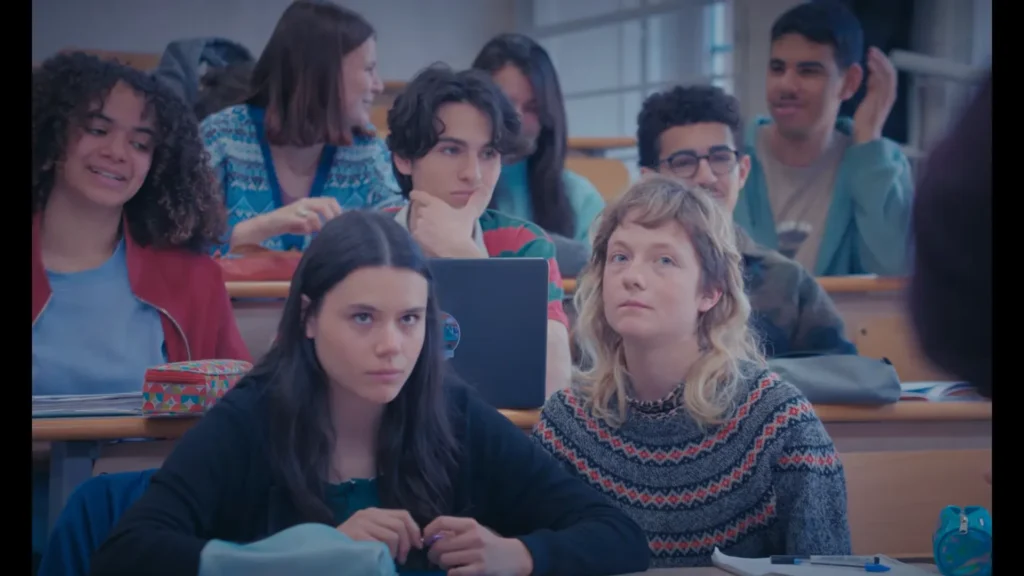
“Foreign Tongue” expertly navigates the delicate terrain of young love across cultural boundaries. When shy French student Fanny joins an exchange program in Germany, she finds herself living with her pen pal Lena, whose initially cold demeanor masks deeper complexities.
Despite the language barrier – or perhaps because of it – their connection grows through shared secrets and vulnerable moments. Their love story unfolds in beautiful silence, proving that some feelings transcend verbal communication.
The narrative takes an unexpected turn when Lena reciprocates the exchange, staying at Fanny’s home in France. As she delves deeper into Fanny’s world, she uncovers mysterious inconsistencies in Fanny’s life. Yet by then, she’s already fallen too deep to turn back.
La Vie Devant Toi (2023)
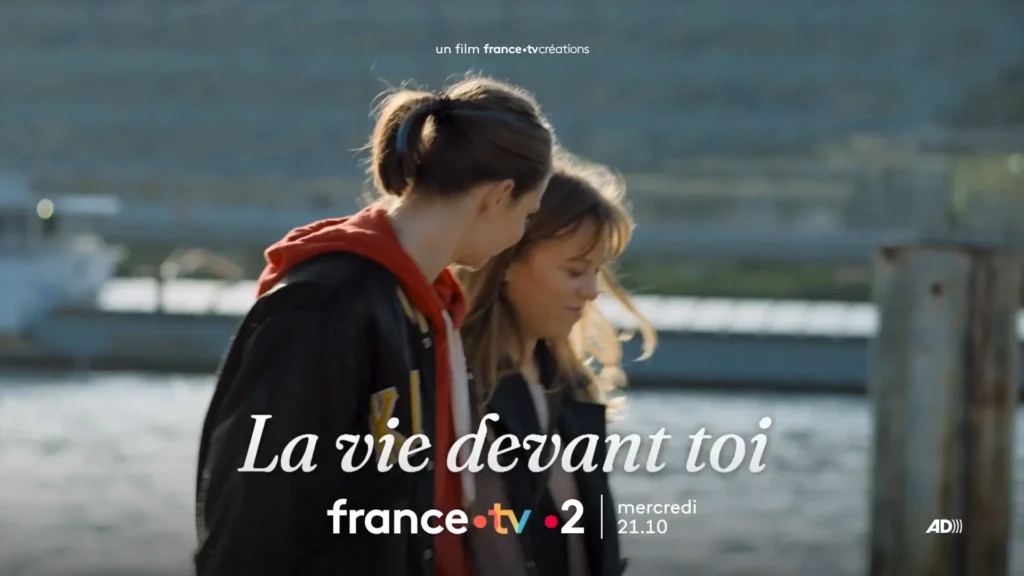
This tender coming-of-age story follows 16-year-old Violette, a promising swimmer who’s ready to live her truth openly. When she falls for Lisa, we get to witness all the beautiful firsts of teenage love. However, after facing homophobic violence while holding hands in public, their relationship is put to the test. The film beautifully balances the joy of first love with the harsh realities many LGBTQ+ couples still face today.
Related: If you like sapphic stories about first attraction, teenage intensity, and self-discovery, see my guide to lesbian coming-of-age movies.
À Mon Seul Désir (2022)
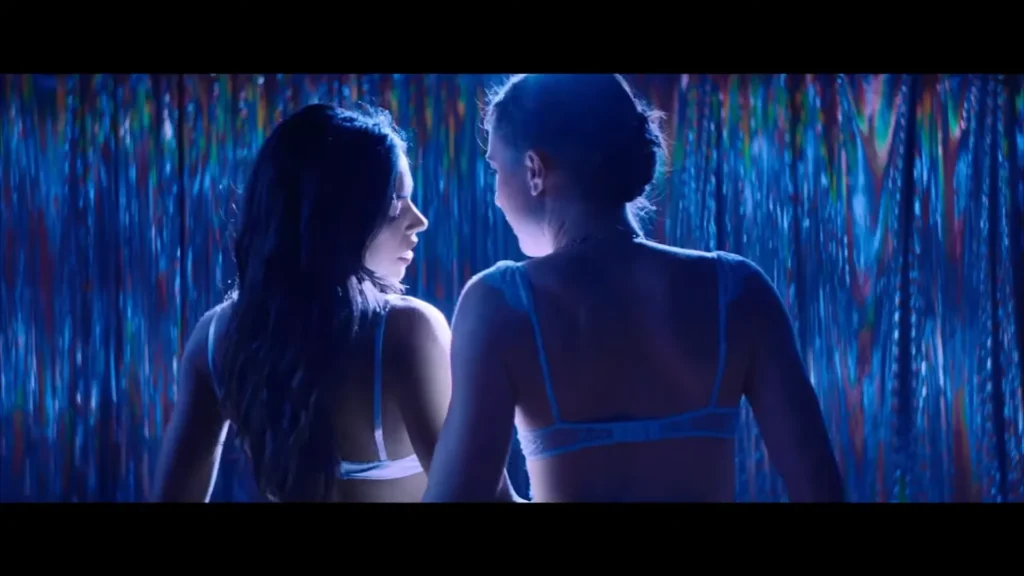
À Mon Seul Désir is one of the more adult and complicated titles in this guide, so I would not recommend it as a simple romance. It follows a young woman entering a performance-based nightlife space and slowly questioning what desire, self-image, emotional distance, and attachment mean to her.
What makes the film interesting is not shock value, but the way it treats the body as something connected to work, fantasy, vulnerability, and self-definition. I would include it with context, especially for viewers who prefer French sapphic films that are psychologically and socially layered.
La Fracture (2021)
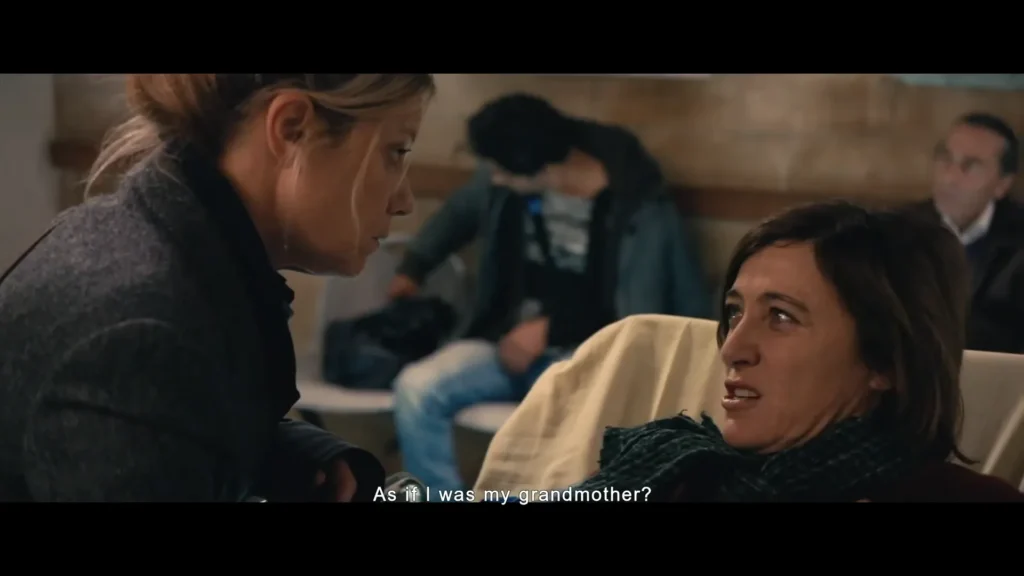
La Fracture is less a traditional lesbian romance than a sharp social dramedy built around crisis. Raf, a lesbian cartoonist whose relationship is falling apart, ends up in a Paris emergency room during the Yellow Vest protests, where private breakdown and public anger collide in the same crowded space.
What I like about the film is how messy Raf is allowed to be. She is anxious, needy, funny, infuriating, and painfully human. The sapphic relationship is not idealized; it sits inside a larger portrait of exhaustion, political tension, class conflict, and emotional collapse.
Les Meilleures (2021)
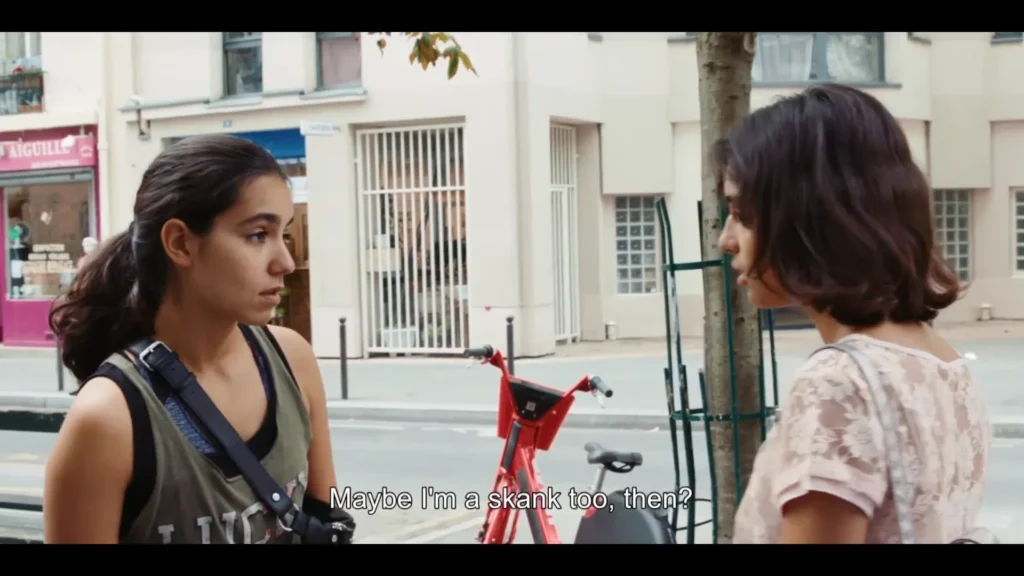
Les Meilleures is a young sapphic love story shaped by rivalry, neighborhood pressure, and the intensity of teenage feeling. When Nedjma falls for Zina, the relationship is immediately complicated by the conflict between their social circles.
What makes the film work for me is not only the forbidden-love setup, but the way it captures attraction as something impulsive, risky, and hard to control when you are young. It feels urban, restless, and emotionally direct.
La Graine(2023)

“The Seed” delves into the emotional journey of Lucy and Ines, a lesbian couple who, after four years together, embark on the challenging path of trying to have a baby through medical assistance. As their attempts repeatedly fail and both their budget and patience wear thin, they discover the real reason behind their inability to conceive.
What makes this film particularly compelling is its raw portrayal of a same-sex couple navigating the often-overlooked challenges of starting a family. The story unfolds with typical French cinematic sensitivity, never sensationalizing the couple’s struggles but rather presenting them with honest vulnerability.
Two of Us (2019)
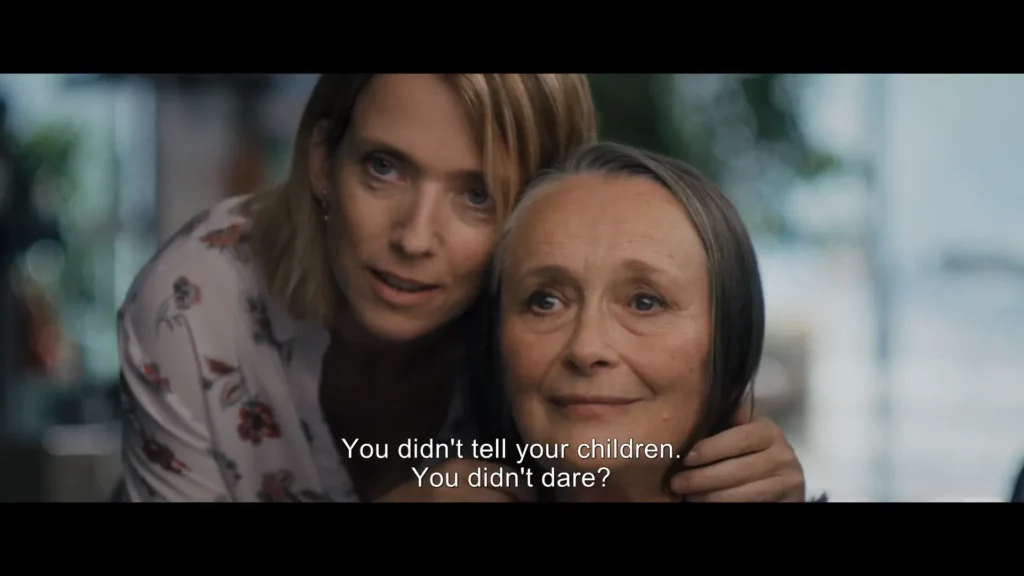
Two of Us is one of the most moving older-lesbian stories in modern French cinema. Its power comes from how ordinary the setting looks at first: two neighboring apartments, a hallway, family visits, routines, silence. But inside that ordinary space is a love that has been hidden for decades.
What stayed with me is the film’s use of domestic suspense. The relationship is tender, but it is also trapped by secrecy, age, illness, and the fear of being discovered too late. The final dance feels simple on the surface, yet emotionally huge because it gives the two women a moment of freedom the world kept delaying.
Between Us (2022)
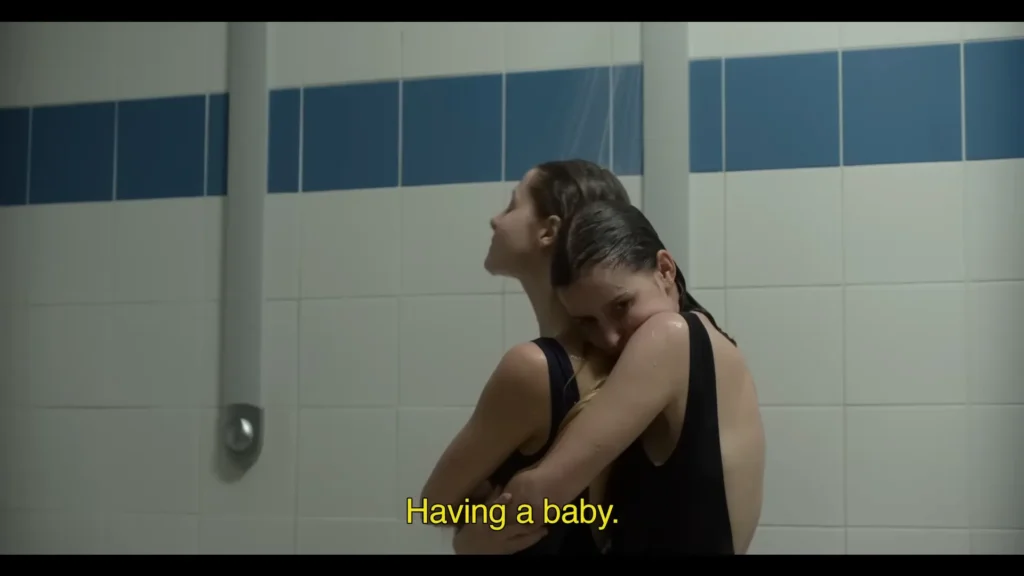
I especially related to the remark in the movie, “I tried not loving her and pursued a normal, ordinary life, but I still found myself in love with her.”
This unvarnished honesty truly hits home since it is so vulnerable and innocent-seeming. It’s a moving portrayal of what it means to be human—sometimes silly, often uncertain, but always real.
This French lesbian movie masterfully conveys the core of having trouble expressing one’s genuine emotions while underlining our common hesitation to fully trust ourselves.
Anaïs in Love (2021)
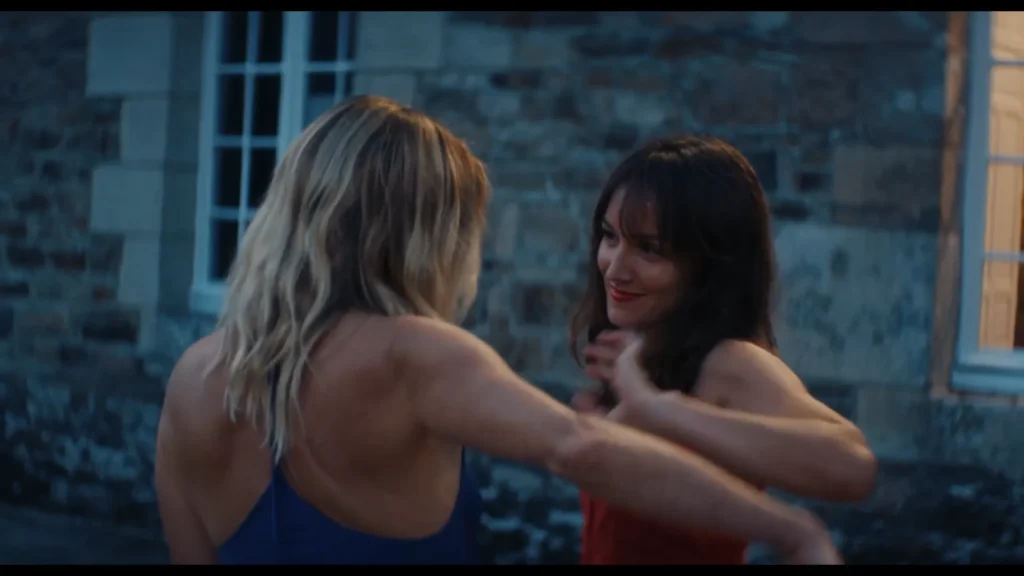
Anaïs, our protagonist, navigates life with a restless spirit, seeking meaningful connections while struggling to find her place. Her mother’s liver cancer diagnosis becomes the catalyst that sends her running, claiming she needs space.
Her relationships – from casual encounters with older men to an intense connection with a female writer – reflect her desperate search for deeper bonds, though each attempt reveals more about her internal struggles.
Rising star Anaïs Demoustier draws inevitable comparisons to Isabelle Huppert, particularly reminiscent of “Villa Amalia” (2009), with both films featuring Purcell’s music and mysterious Italian women at their cores.
Embrasse-moi! (2017)
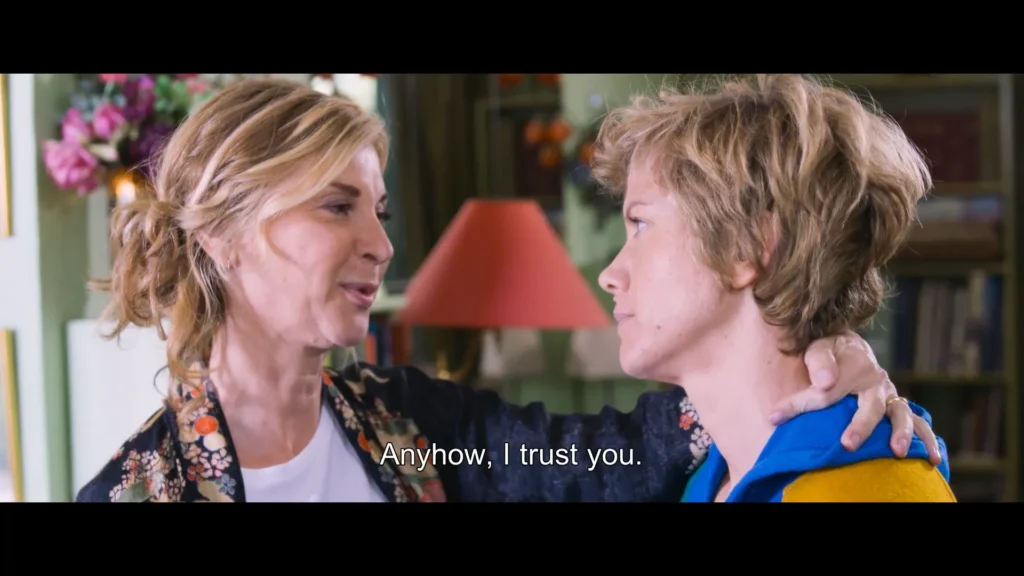
This charming romantic comedy follows Océane Michel as Marie, an orthopedic surgeon whose love life is as complicated as her career is successful. After breaking up with her long-term girlfriend Fantine, she meets Cécile, an aspiring artist whose innocence and passion for life captivate her. The film brings a refreshing lightness to lesbian representation, proving that not every queer story needs to be heavy with drama.
French Period Dramas and Historical Sapphic Films
Benedetta (2021)
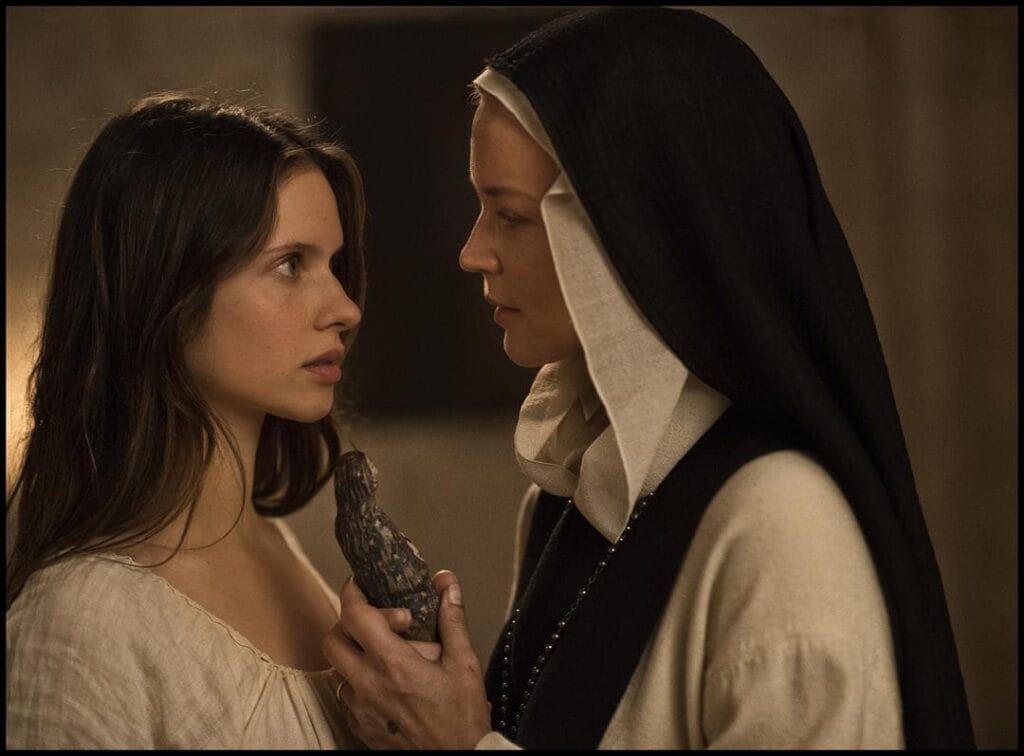
The Dutch director, Paul Verhoeven, creates a gripping two-hour movie about Sister Benedetta, a notable figure in religious history, in his own unique style.
Benedetta is portrayed as a passionate believer, a cunning strategist, and notably, one of the few recorded lesbians in religious history. Her portrayal as a figure of authority and power adds layers to her already complex identity, and her character is not limited to her sexual orientation.
Verhoeven’s portrayal, which combines faith, deceit, and power in a ground-breaking way, highlights the complex character of this historical individual.
Farewell, My Queen (2012)
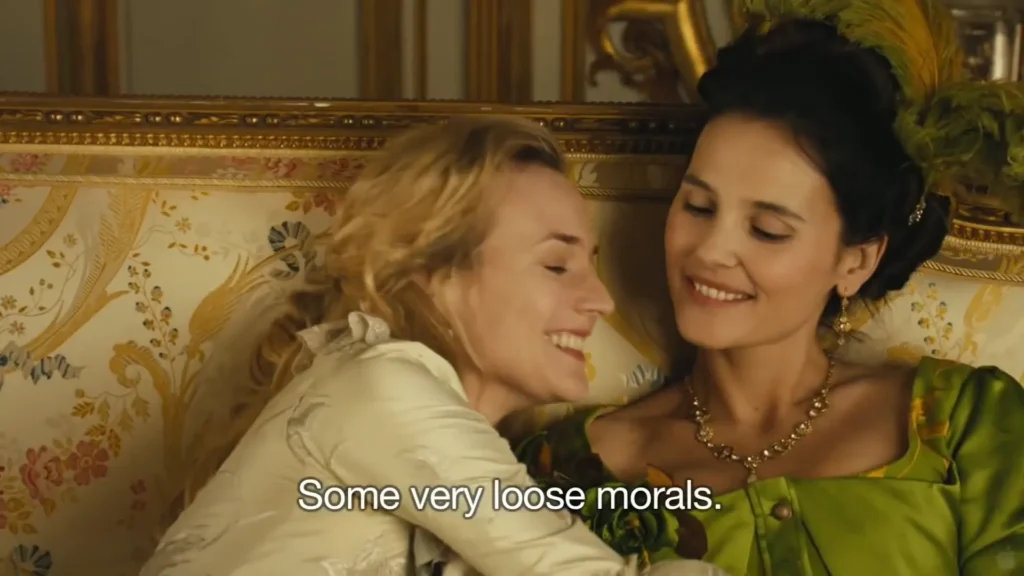
The French lesbian film provides a unique viewpoint from a royal maid in the Palace of Versailles, set against the backdrop of the approaching French Revolution.
Despite having an expansive goal, it is unable to completely convey the nuanced historical story, in part because of its short running length, which leaves out important historical information and a plethora of characters.
This led to some story points and historical accuracy being left out or not fully developed.
Nevertheless, the film wasn’t aimed to be a rigorous historical drama. Its true strength lies in the nuanced and detailed depiction of the maid’s personal journey and transformation. This alone deserves a five-star ranking.
Gigola (2011)
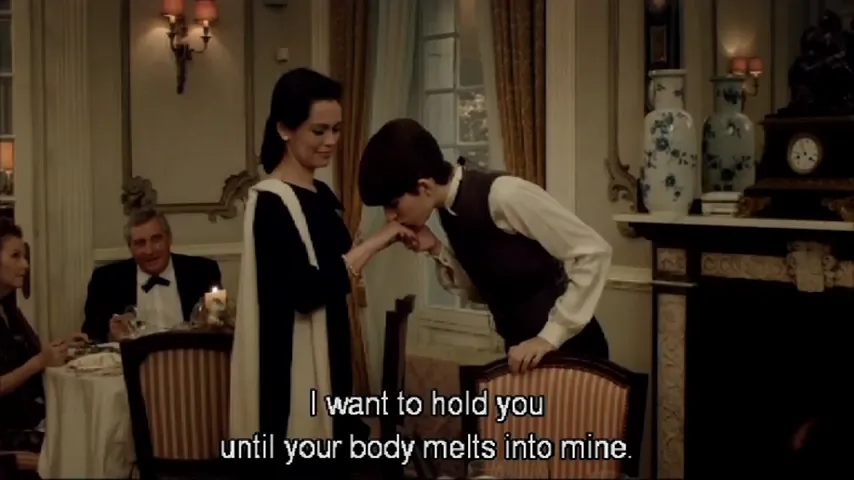
Lou Doillon delivers a captivating performance in this bold drama about a woman who reinvents herself as a suited Gigola in 1960s Paris after losing her first love, a female teacher. The film explores gender expression, sexuality, and the price of emotional survival in a restrictively conservative era. While dark at times, it offers a unique glimpse into a rarely portrayed aspect of French lesbian history.
Entre Nous (1983)
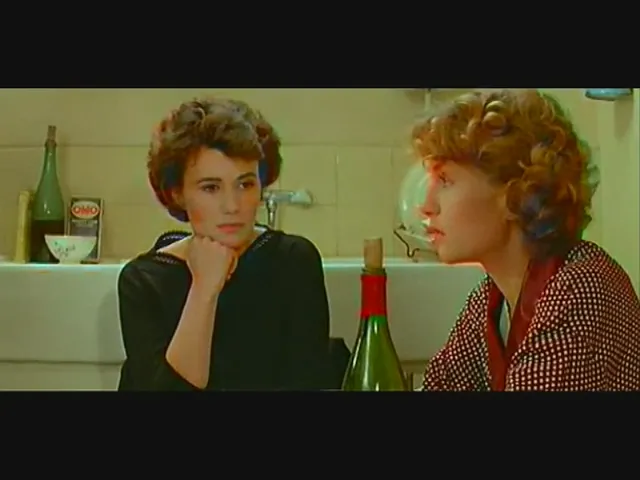
The French lesbian movie, which at first glance appears to be a simple lesbian romance, deftly and sensitively addresses the subject of same-sex love.
I like this style because it explores human nature and does a wonderful job of depicting the era.
The director employs a smooth and emotionally impactful style that delicately conveys the characters’ feelings through ordinary experiences.
The film’s ending, which shows a younger “me” sharing a poignant look with the parents, suggests the film is rooted in the director’s own experiences, subtly questioning whether the father’s choice to take the mother from the institution was misguided.
Related: For more sapphic films shaped by history, class, religion, and social pressure, see my guide to lesbian period dramas and historical films.
Le Jupon rouge (1987)
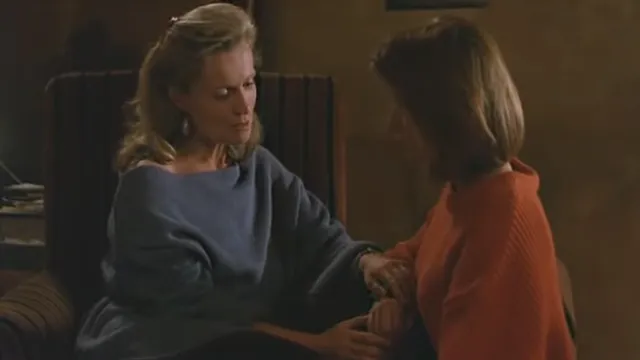
The movie may seem unremarkable at first, yet it develops into a moving story. The main female character’s choice to break up with her boyfriend in favor of her friendship with Claude is shown to be more than just a friendship, suggesting a deeper, potentially non-romantic connection with Basha.
The Algerian War and other historical contexts are deftly incorporated into the novel to give it depth. It’s clear that the director takes a unique tack when it comes to depicting lesbian sex romance. A richly nuanced study of its subjects is provided by this reflective picture, which is further enhanced by its exquisite music.
The Pirate (1984)
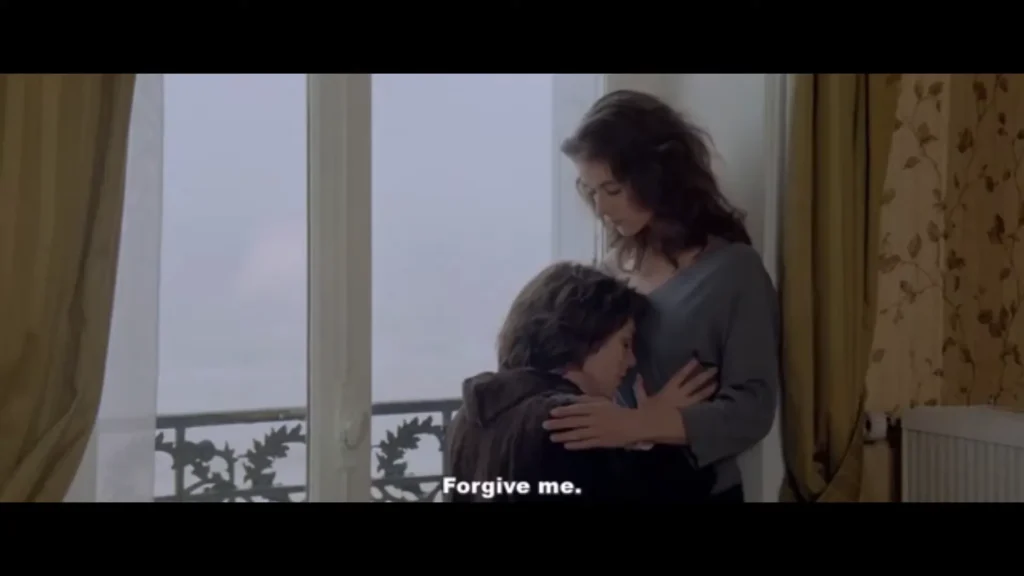
Alma, the primary character of the movie, is shown as having a seductive and enigmatic personality, yet her actions are still unclear.
She struggles between an ordinary existence and unrestrained love until giving in to her intense feelings, which results in a tragic ending.
This film presents a deep, albeit dark, exploration of human nature, hinting at the existence of pursuits in life beyond love.
Modern French Lesbian Classics
Portrait of a Lady on Fire (2019)
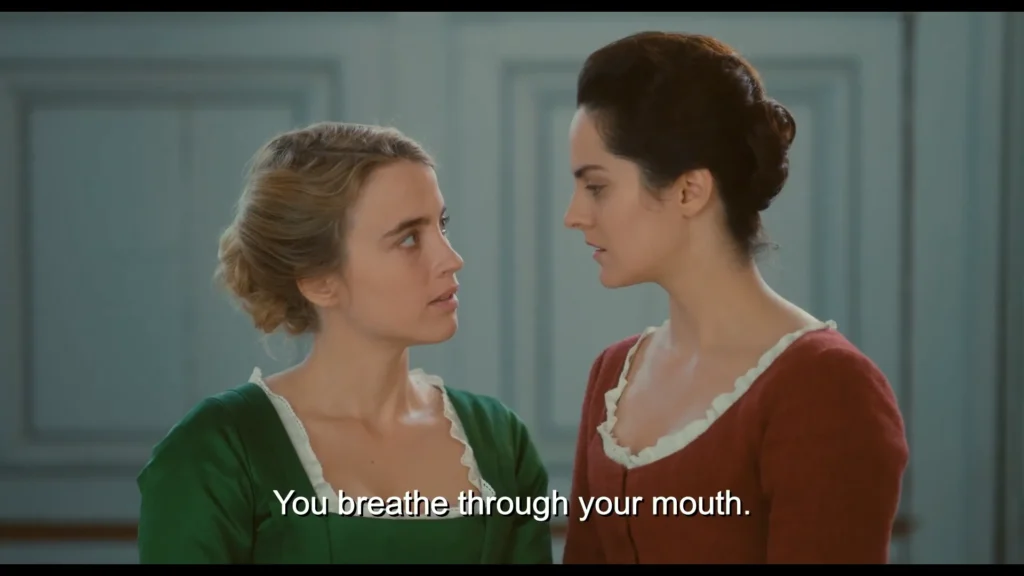
Portrait of a Lady on Fire is the French lesbian film I would recommend first to many viewers. It understands desire as attention: looking, remembering, painting, turning away, and looking again. Nothing feels rushed, yet every glance carries weight.
What still shakes me is how the film turns memory into structure. The romance does not need dramatic excess because the emotional devastation is already built into the act of remembering someone clearly.
Blue Is the Warmest Color (2013)
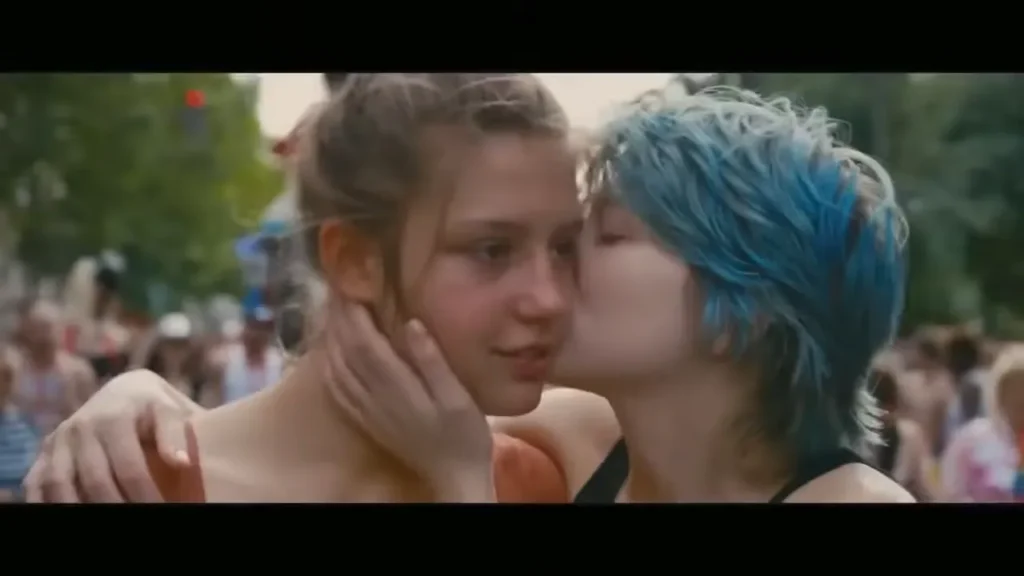
Blue Is the Warmest Color remains one of the most famous French lesbian films, but I would not discuss it without context. Its emotional intensity is undeniable, especially in the way it follows Adèle’s hunger for love, belonging, food, touch, and ordinary life. But the film has also been widely debated for how it frames lesbian desire and for the imbalance between its emotional realism and its gaze.
For me, its value is complicated. I understand why it affected so many viewers, but I also think later French sapphic films — especially Portrait of a Lady on Fire and Water Lilies — offer a more careful female-centered gaze.
Summertime (2015)

The film masterfully captures a pivotal moment in LGBTQ+ history, where a mother’s joy stands in stark contrast to her daughter’s painful sacrifice of leaving her female lover.
Though it may appear as another slow-burning French drama, it actually serves as a powerful lens into 1970s society, examining how women struggled against suffocating social conventions.
The narrative brilliantly illustrates the evolution of societal attitudes towards lesbian relationships, challenging the notion that social norms are fixed and unchangeable.
Water Lilies (2007)
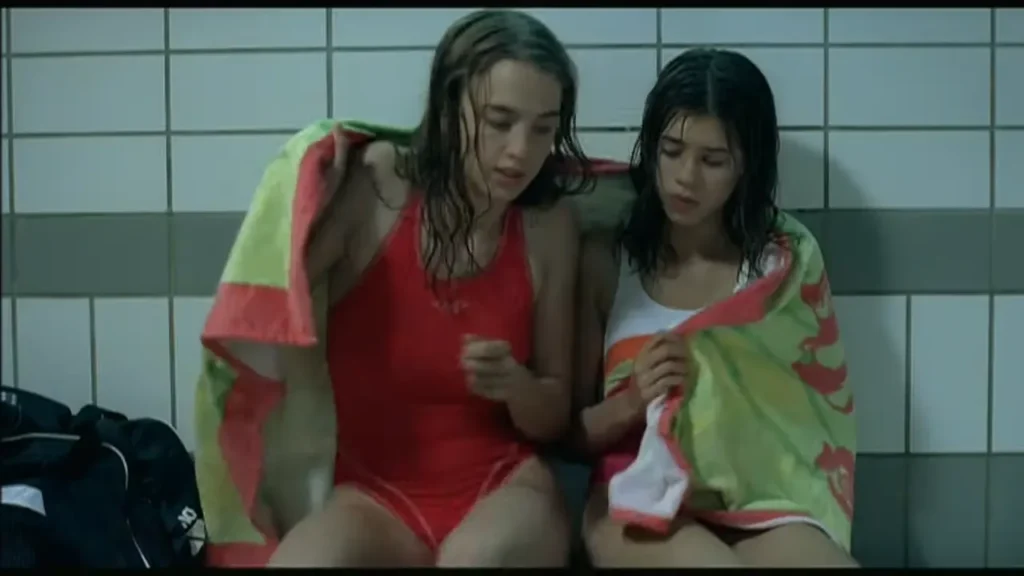
The film employs swimming as a moving allegory for the experiences of women, skillfully contrasting the calm surface with the hidden hardships and sacrifices.
Directed by a talented young woman, it offers an insightful exploration into a girl’s inner world, her formative experiences, and the harsh realities of growing up. It’s interesting to note that the narrative’s authenticity holds true regardless of the protagonist’s gender, demonstrating the topics’ universality.
The amusing underwater synchronized swimming scenes and the unusual fact that the two tall, chubby characters are left-handed are noteworthy, if unconnected, observations.
This film captures the complexity of puberty and identity, demonstrating the richness and diversity of the narrative from the viewpoint of a young director.
Tomboy (2011)
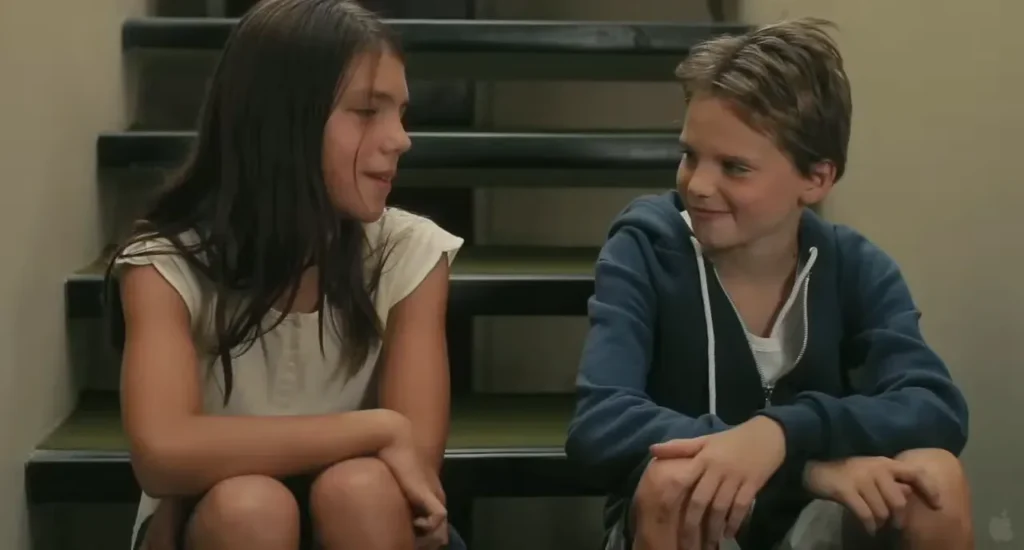
I was moved to tears by the scene in which the mother slapped the child; it struck a deep chord with me.
It serves as a moving reminder that children’s experiences and emotions are real and valid, especially in relation to their gender identification.
Childhood transgender identities may change over time, but it’s important to accept and value a child’s viewpoint and emotions right now. Their emotions and self-identification are sincere and worthy of recognition and support.
Darker French Sapphic Thrillers and Psychological Films
Knife + Heart (2018)

Knife + Heart is a stylish queer thriller that works more through atmosphere than comfort. Its 1970s setting, neon colors, genre references, and sense of danger make it feel like a dark love letter to queer cinema history.
I would not recommend it as a straightforward lesbian film, but it belongs here because of its queer gaze, its interest in marginalized desire, and the way it treats genre cinema as part of LGBTQ+ memory.
Related: If you are more interested in queer horror and sapphic genre films, I also have a guide to lesbian horror movies.
Breathe (2014)
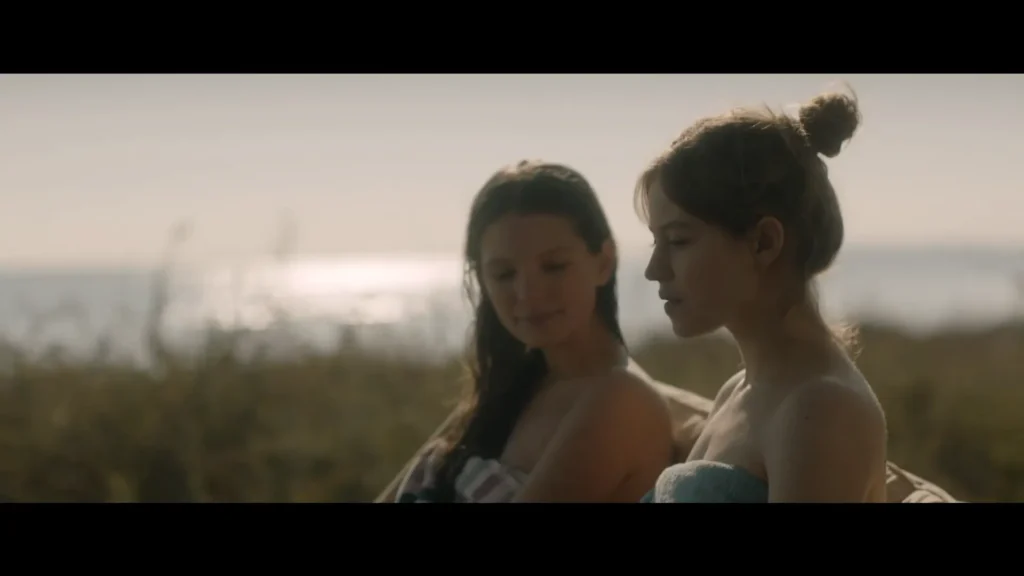
Breathe is not a comfortable sapphic film, but it is a sharp psychological portrait of teenage attachment. The relationship between the two girls is built from admiration, insecurity, imitation, jealousy, and emotional dependence until affection starts turning into harm.
What makes the film unsettling is how recognizable the dynamic feels. It understands how young people can mistake intensity for closeness, and how a friendship can become a mirror that slowly damages both people looking into it.
You Will Be Mine (2009)
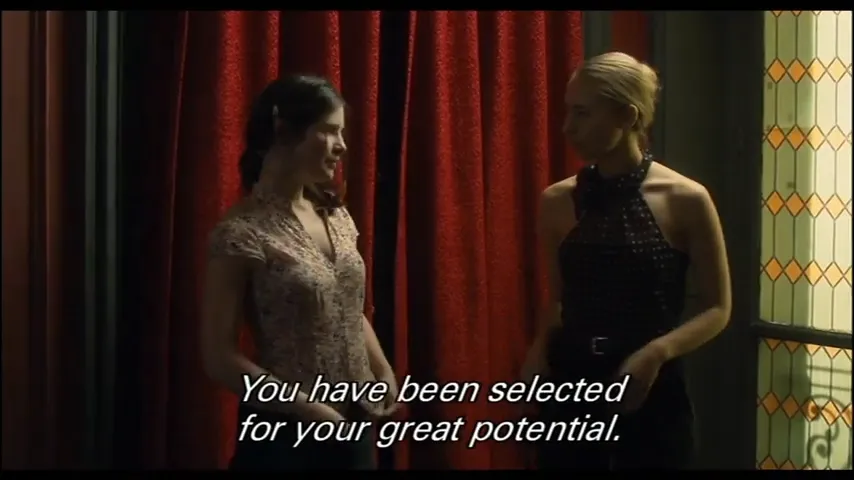
It seems to be a trait of French directors to capture the essence of love in such an intense, almost obsessive manner.
The relationship between Emma and Marie is deep and nuanced throughout the movie. Marie’s love is more impulsive and tinged with doubt, whereas Emma’s is characterized by commitment and moderation.
The expression “I want to devour you” expresses a deep desire to unite two souls in a way that goes beyond its literal meaning. This deep statement, which highlights the ultimate goal of love, is less about possession and more about the strength of their emotional connection.
This subtle portrayal invites viewers to consider the thin line that separates intense emotion from the need to completely integrate with another, challenging the conventional concept of love and possessiveness.
High Tension (2003)

High Tension is more of a queer-adjacent horror thriller than a straightforward lesbian film. I include it here because its female attachment, fear, obsession, and genre framing have made it part of many queer horror conversations, even though the representation is complicated.
The film uses sharp framing, sound, and sudden shifts in perspective to keep the viewer unsettled. It is tense and memorable as a genre film, but I would watch it with context rather than treat it as affirming sapphic representation.
Nathalie (2003)

The plot centers around two women’s complex relationship, where seduction and manipulation intertwine as they pursue their own agendas.
Fanny’s character shines with its duality – cunning yet innocent – particularly visible in the memorable cab scene, while Emmanuelle maintains a more contemplative presence.
The French adaptation elevates the female perspective, unlike its male-focused Canadian counterpart, relegating male characters to supporting roles.
This reimagining demonstrates how the same story can reveal different emotional depths when viewed through various cultural and gender lenses.
Replay (2001)
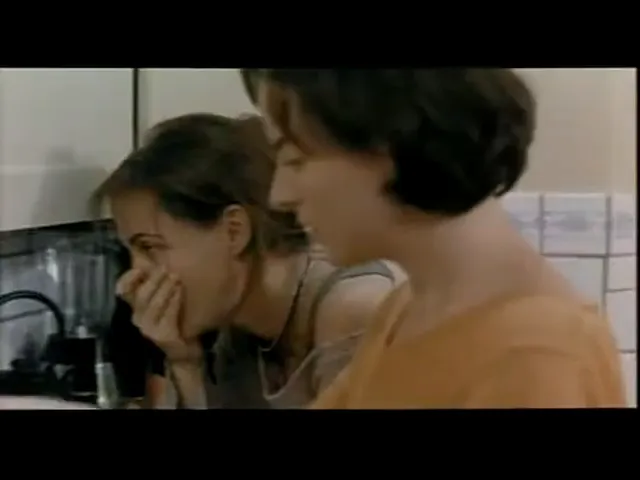
The movie defies conventional lesbian movie clichés by examining a complex and brittle relationship between two women.
At a pivotal point, Louisa realizes that she has lost her identity due to her intense preoccupation with Natalie.
Natalie is shown as having a strong emotional life but also being naive and self-centered, frequently taking advantage of Louisa’s emotions to get emotional support.
Their bond turns out to be fleeting. The film concludes with a poignant scene where the two main characters cross paths without further engagement, symbolizing the transient nature of their relationship.
La robe du soir (2010)
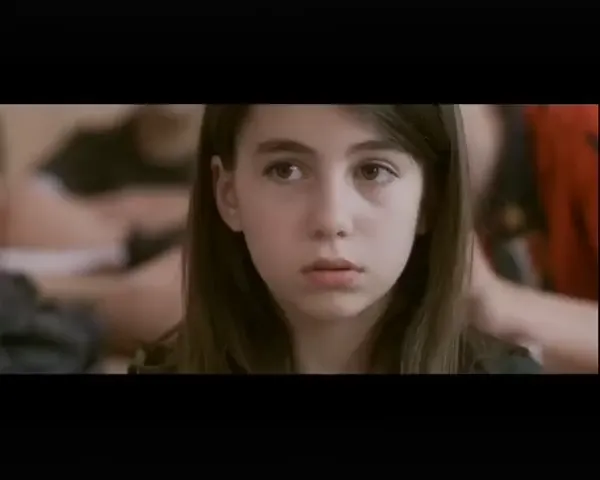
This movie explores similar topics to “The Hunt,” but from a different perspective. It illustrates how individuals with a deep sense of empathy can be profoundly affected by even the smallest gestures of others, intentional or not.
The young girl’s release from her obsessions at the end of the novel highlights a sad reality: some emotional wounds are difficult to fully heal once they have been inflicted.
The film subtly explores the complexities of human interactions and the lasting impact of our actions on others, especially on those more vulnerable.
Tel père, telle fille (2007)
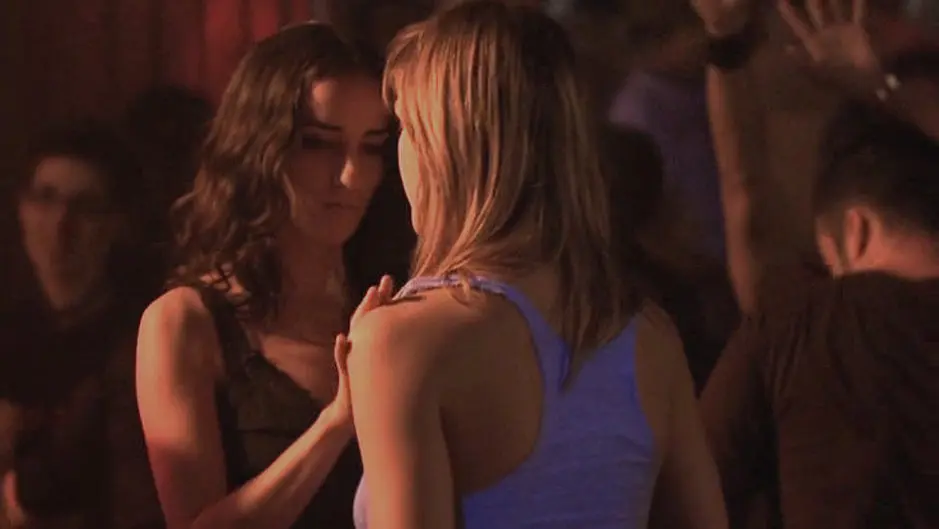
I would treat Tel père, telle fille as a small, unusual entry rather than an essential French lesbian film. Its sapphic element is brief but emotionally charged, and what stays with me is the loneliness beneath the encounter rather than the surface of the scene itself.
The film is more interesting as a fragment of female desire inside a larger story than as a fully developed lesbian romance.
Clara’s Summer (2004)
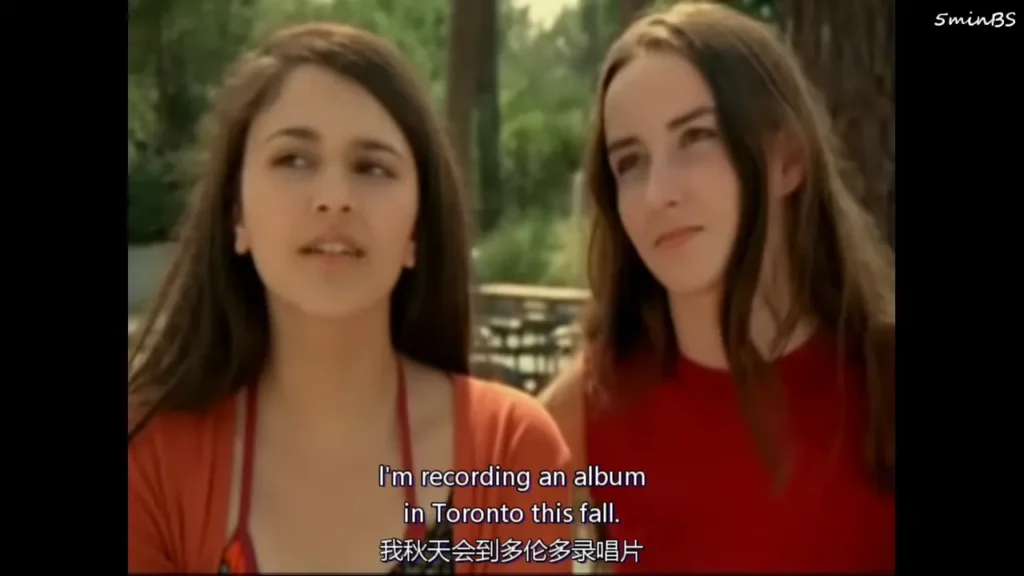
Set in a French school, the film thoughtfully and authentically portrays the emergence of sexual consciousness and the confusion surrounding sexual orientation among teenagers.
Despite being portrayed as innocent, the main character is far from perfect. Her subtle manipulations and sly undertones of resentment authentically capture the complicated and frequently murky inner lives of teenagers.
A sense of lingering introspection and emotional depth is left in the viewer by the film’s open-ended climax, which adds another element of romanticism.
Les blessures assassines (2000)

The movie explores the lives of Christine and Léa, who depend on one another and work as maids in difficult situations.
It is based on the true life of two sisters in France. Christine is portrayed by Sylvie Testud as a delicate, disturbed, and reclusive maid from a lower social class.
Her character’s spiral into paranoid ideation is shown as a logical development among her ongoing hardships, evoking a sense of profound anguish and transient freedom.
Classic and Queer-Adjacent French Lesbian Films Before 2000
Thieves (1996)

The movie deftly blends together what at first glance seems to be disparate and disorganized material without coming across as disorganized.
It has unique elements including queer individuals, homosexuality-related issues, illegal transactions, and philosophical reflections—all of which are told from multiple points of view.
These elements are representative of modern French cinema and literature, which I find especially interesting. To really appreciate this movie’s multi-layered intricacy, several viewings are recommended.
French Twist (1995)
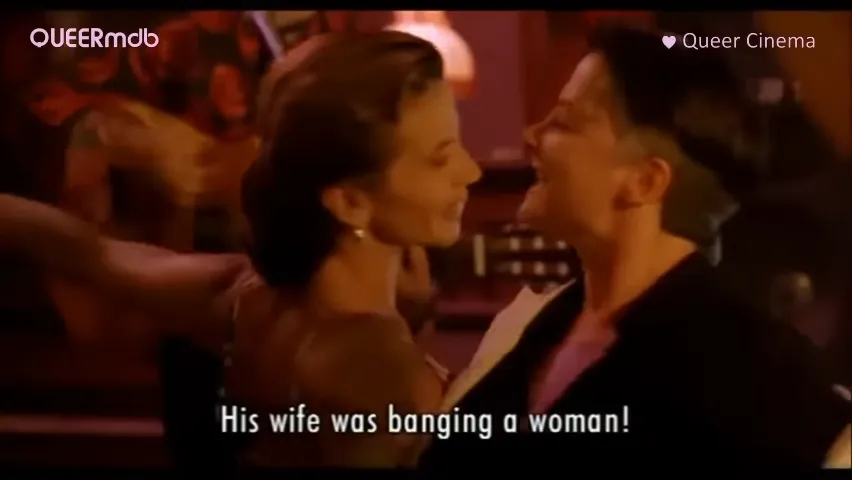
The story of the French lesbian movie defies expectations by showing a wife who becomes enamored with a multi-partner lady after discovering her husband’s infidelity.
In their bedroom, she switches her husband for her new companion, forming an unusual family dynamic between the three of them.
French cinema is known for its unpredictable endings, and this one does not disappoint. It alludes to a subtle change in the husband’s priorities.
The Girl (2000)

The French lesbian film features a female vocalist who hides her feelings and loves well, as evidenced by her distinctive black suit and white blouse.
Set in a time when female singers faced significant challenges, she identifies with a painter, a masculine woman representing the defiance of societal norms and biases.
Even if the painter’s masculine characteristics are clearly visible, there is a deep connection formed by her awareness of the singer as a woman.
The story does, however, come to a sad conclusion that emphasizes the nuanced interaction between their relationship and the expectations of the time.
Looking for Cheyenne (2006)
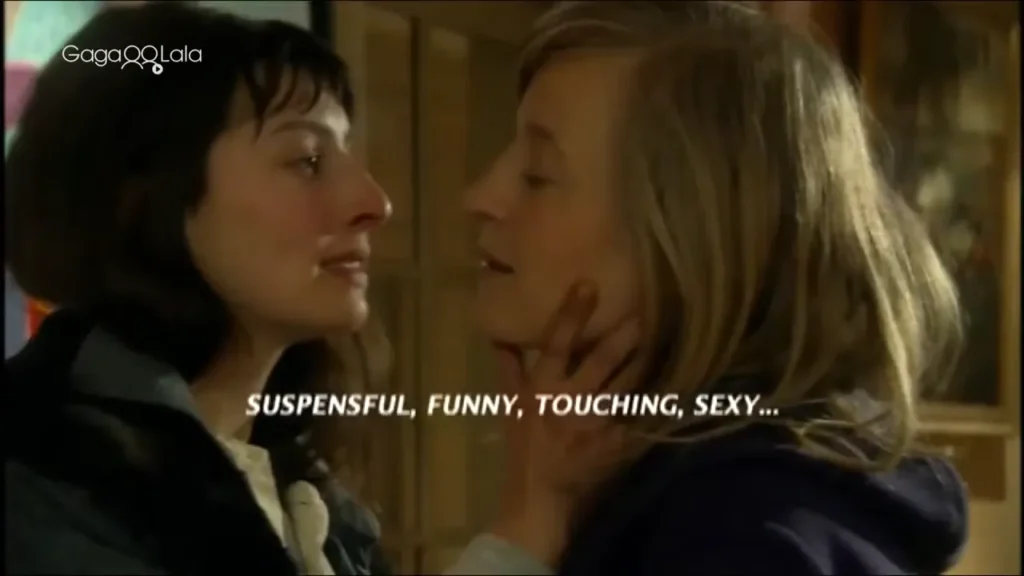
In this poignant love story, two individuals deeply in love are compelled to separate due to clashing beliefs about life. Their persistent unwillingness to split underscores the need for compromise on both ends in order to keep their relationship together.
This story effectively conveys the depth and complexity of emotions by fusing profound romanticism with realism. It speaks beautifully of the plethora of interesting and varied stories that lesbian women have to tell about their experiences, both ordinary and extraordinary.
This French lesbian movie serves as a helpful reminder that there are countless interesting and engaging stories to be told about the wide range of human connections.
Un amour de femme (2004)
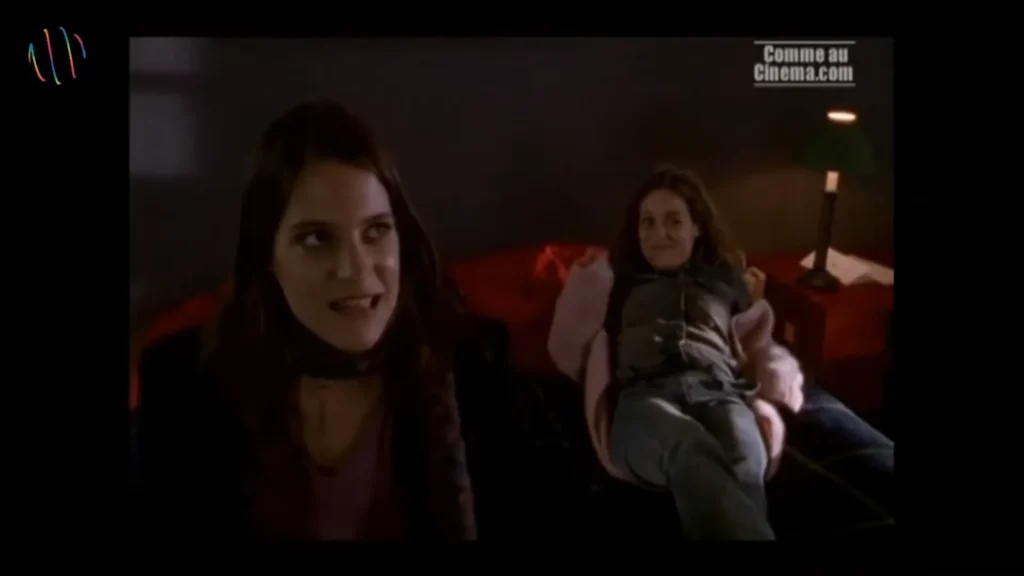
Through the perspective of a real woman, the French lesbian movie presents a delicate and nuanced portrayal of the romantic entanglements and subtleties between women.
Marie’s expressions, particularly her penetrating gaze and playful smirk, are especially memorable.
A moving moment is when Marie, looking deeply into Jeanne’s eyes, remarks, “I like to smoke when I am very happy,” revealing her profound contentment.
This sequence, along with others, highlights the movie’s dedication to delving into the depths of human connection and emotion.
FAQs About French Lesbian Movies
What is the best French lesbian movie to start with?
If you want the strongest visual and emotional entry point, I would start with Portrait of a Lady on Fire. If you prefer coming-of-age stories, try Water Lilies. For a more modern older-couple story, Two of Us is also a strong choice.
Are French lesbian movies usually romantic?
Some are romantic, but many are more complicated. French sapphic cinema often includes period dramas, psychological stories, coming-of-age films, thrillers, and queer-adjacent works where desire is expressed through mood, memory, silence, or social pressure rather than a straightforward love story.
Which French lesbian films are considered modern classics?
Portrait of a Lady on Fire, Water Lilies, Blue Is the Warmest Color, Summertime, and Two of Us are among the most recognizable modern French sapphic films, though each should be watched with different expectations.
Where can I watch French lesbian movies online?
Availability changes by country and over time. Some French lesbian films appear on Amazon Prime Video, Apple TV, Criterion Channel, LGBTQ+ streaming platforms, YouTube rentals, or art-house VOD services. I recommend checking each title directly before renting or subscribing.
Related Lesbian Movie Guides
If you want to keep exploring after this French sapphic cinema guide, these pages are the most natural next steps:
- Lesbian Movies Guide
- Lesbian Period Dramas and Historical Films
- Lesbian Coming-of-Age Movies
- Lesbian Crime Dramas and Thrillers
- Classic Lesbian Films
- German Lesbian Movies
- Italian Lesbian Films
👉 Also explore: Lesbian Movies | GL Series | Yuri Anime & Manga
🌍 By Country | 🎭 By Theme