
A League of Their Own is one of those rare lesbian series that feels expansive without losing its intimacy. Set in the 1940s, it moves between women’s baseball and queer self-discovery, but what stayed with me most was not just the romance.
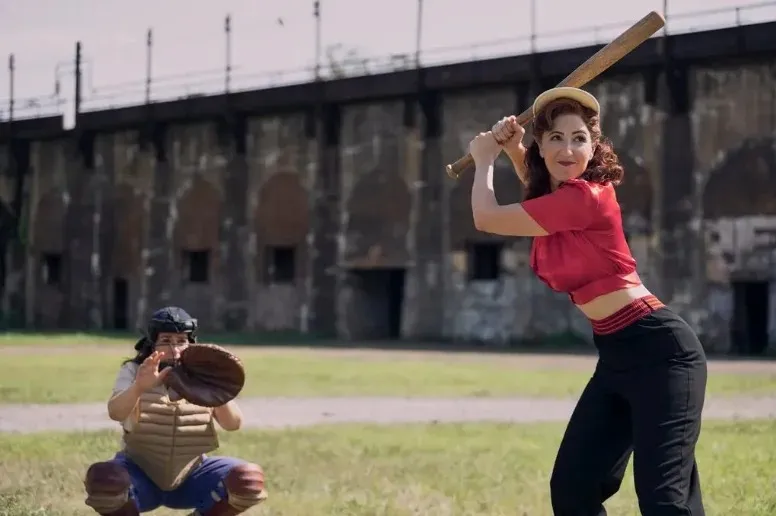
It was the way female connection kept glowing inside a world built on exclusion. Even with sexism, racism, and social pressure everywhere, the series still feels warm, alive, and unexpectedly generous. For me, this is not just a sports drama with queer characters. It is a deeply human story about ambition, friendship, identity, and women making room for each other when the world refuses to.Transit Girls (トランジットガールズ) is often referred to as the first Japanese lesbian drama series. Aired in 2015 on Fuji TV’s late-night block, this short yet emotionally packed show sparked conversations for its sincere portrayal of a young same-sex romance.
A League of Their Own Official Trailer
A League of Their Own Summary | |
|---|---|
| Title: | A League of Their Own |
| Year: | 2022 |
| Genre: | Lesbian series, queer sports drama, period drama, feminist TV series |
| Created by: | Will Graham, Abbi Jacobson |
| Main Cast: | Abbi Jacobson, Chanté Adams, D’Arcy Carden, Gbemisola Ikumelo, Roberta Colindrez |
| Why I Recommend It: | A queer period series that beautifully balances women’s baseball, lesbian desire, friendship, and self-discovery without losing warmth or humor. |
Plot
Set during the 1940s, A League of Their Own follows a group of women trying to build lives, careers, and identities within the newly formed women’s professional baseball league. On the surface, it is a story about competition, teamwork, and proving that women belong on the field. But underneath that, it is also a story about longing, self-recognition, race, class, and the quiet courage it takes to live more honestly.
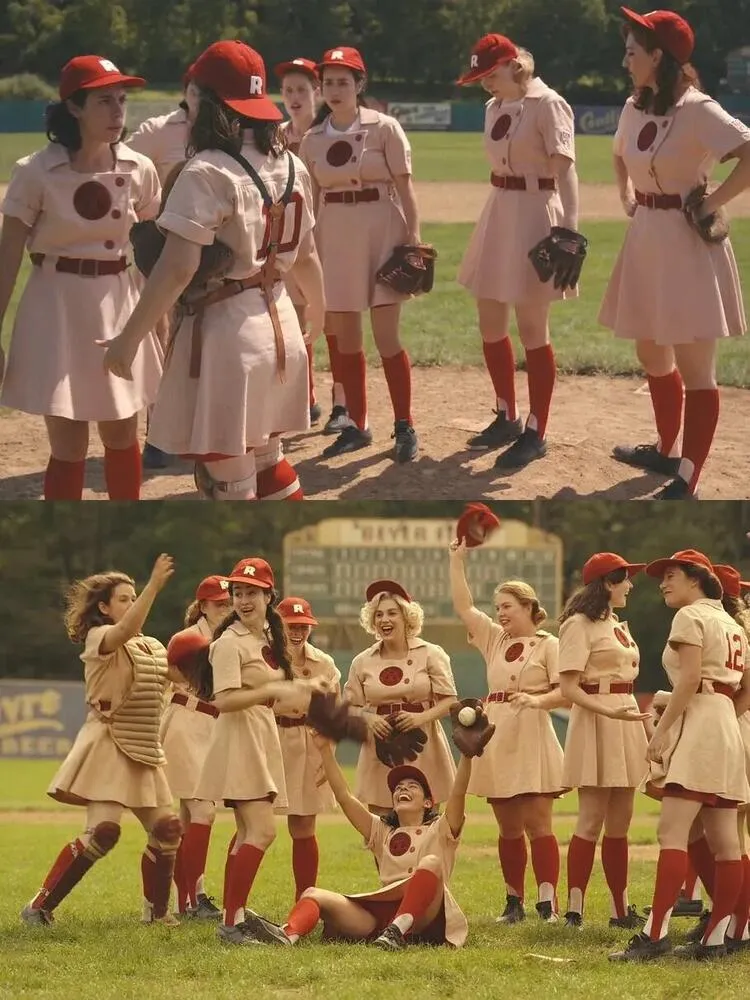
The series moves along two major emotional tracks: the pursuit of athletic purpose and the search for personal truth. Those two threads never feel separate to me. The women are not only chasing success in sport. They are also trying to understand who they are when no one is watching, what kind of lives they actually want, and which connections are worth risking everything for.
What makes the show especially moving is that it never reduces these women to symbols. They are funny, stubborn, talented, messy, romantic, scared, ambitious, and often still figuring themselves out. In a world where conformity is demanded at every level, the series shows how female companionship and queer feeling can become a form of resistance all by themselves.
A League of Their Own Cast
Charactor

A woman who enters the league trying to be the version of herself the world expects, only to slowly realize that desire, uncertainty, and self-knowledge cannot be kept neatly contained.
Abbi Jacobson
Abbi Jacobson is best known as the co-creator and star of Broad City, where her comedic style felt loose, modern, and highly specific. Here, she brings that same emotional awkwardness into a much more restrained period setting, and I liked how vulnerable her performance felt.

Max is one of the most compelling characters in the series: ambitious, athletic, restless, and constantly negotiating the limits placed on her by race, gender, and social expectation.
Chanté Adams
Chanté Adams gives Max incredible force without flattening her into pure toughness. She has appeared in Roxanne Roxanne and A Journal for Jordan, but this role gives her room to show both drive and emotional complexity in a way that really stayed with me.
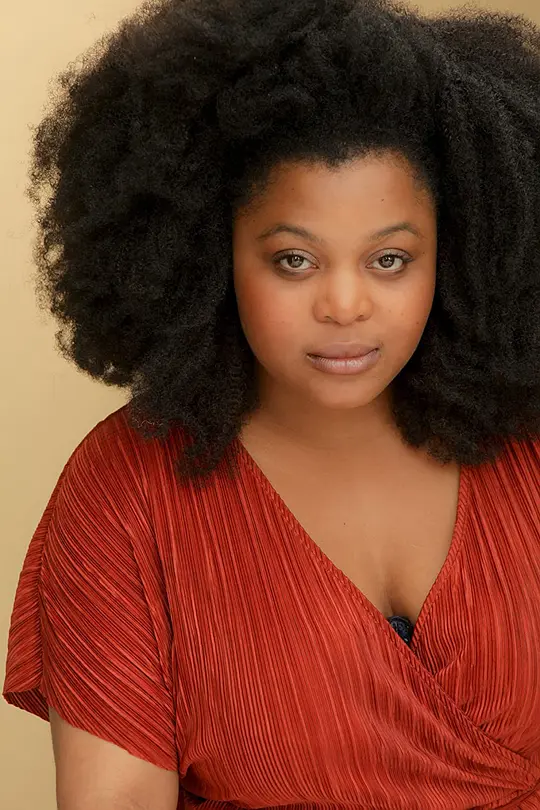
Clance is Max’s closest friend, emotional anchor, and one of the most lovable presences in the series. She is funny, imaginative, and at times overwhelmed by her own unrealized creative self.
Gbemisola Ikumelo
Gbemisola Ikumelo brings warmth and comic timing to Clance, but what I loved most was the depth underneath it. She never feels like a side character who only exists to be charming. Her presence gives the series heart.
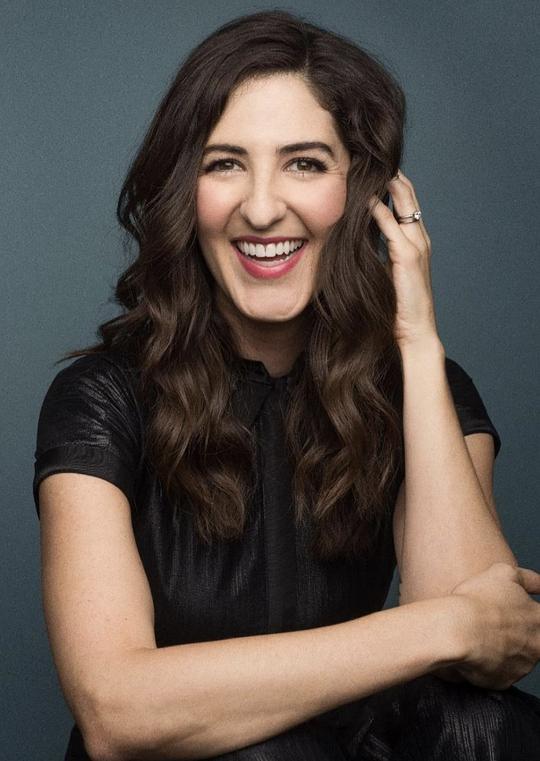
Greta is composed, magnetic, and socially polished, but there is always a sense that she is managing more than she says out loud. That tension gives the character much of her appeal.
D’Arcy Carden
D’Arcy Carden is widely known for The Good Place and Barry. Here, she uses that same precision in a quieter, more controlled way, which works well for a character whose emotional life is partly hidden behind elegance.
Supporting Cast

Lupe García
Roberta Colindrez

Jess McCready
Kelly McCormack

Shirley Cohen
Kate Berlant
A League of Their Own Review
Review
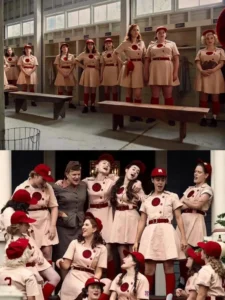
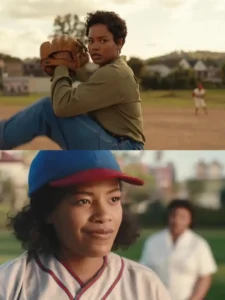
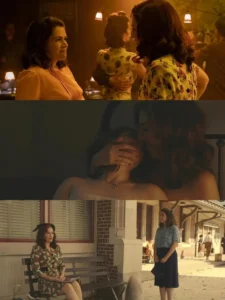
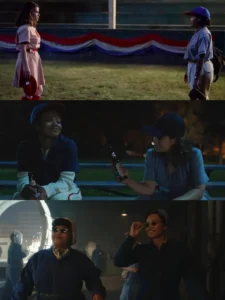
Story – 4.5/5
What I loved most about this series is how naturally it weaves together sports and self-discovery. The baseball storyline gives the show momentum, but the emotional core comes from the women’s inner lives. Their professional goals and emotional awakenings do not compete with each other. They strengthen each other.
Even though the setting is the 1940s, with discrimination and repression everywhere, the series never feels emotionally dead. It feels more like watching small lights appear across a dark surface. The women’s choices, loyalties, and moments of tenderness stand out even more because of how hostile the world around them can be. That contrast gives the series its emotional power.
Acting – 4.5/5
The performances are one of the show’s biggest strengths. Everyone feels lived-in rather than polished. The cast does not play these women as historical symbols or inspirational clichés. They feel flawed, immediate, and emotionally reachable.
What I especially appreciated is how the performances preserve humor even in painful situations. Several characters are living through disappointment, compromise, or invisibility, and yet the show still lets them be witty, impulsive, and deeply alive. That balance made me care about them much more.
Chemistry – 4.5/5
This is a series full of different kinds of chemistry, and that is one reason it works so well for me. There is romantic chemistry, of course, but also friendship chemistry, teammate chemistry, and the unspoken chemistry between women who understand each other’s limits without needing everything explained aloud.
One of my strongest feelings while watching was that the show understands something very important: friendship can be part of queer love, and queer love can grow out of friendship without making that bond smaller. Sometimes the woman you love is also your closest companion. Sometimes the deepest emotional loyalty is not defined by possession at all. This series gets that.
Production – 4/5
The period setting is convincing without feeling overly stiff. I liked that the show does not treat the 1940s as a decorative backdrop. The costume rules, public expectations, and social restrictions all shape the story in meaningful ways. Even something as simple as women being expected to wear skirts on the field becomes part of the larger commentary.
Visually, the series does not chase grandeur as much as emotional texture. The baseball scenes have energy, but the quieter scenes are often what stayed with me: shared rooms, train rides, backstage conversations, moments when one woman silently stays with another through doubt or disappointment. Those details make the world feel inhabited.
Ending – 4/5
The ending felt emotionally satisfying to me, even if not every thread closes in a perfectly easy way. What matters is that the series leaves us with a sense of movement rather than defeat. These women are still becoming. Their bonds still matter. Their choices still carry hope.
That hopeful quality meant a lot to me. So many queer period stories end by overemphasizing suffering. This one does not erase pain, but it also does not let pain be the only truth. What we are left with is something close to fullness.
My Take
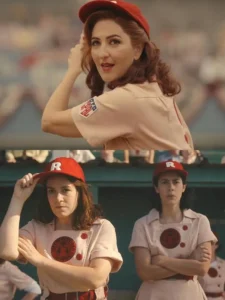
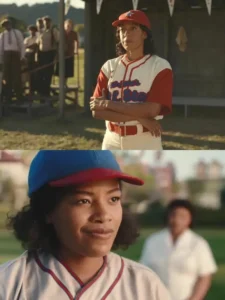
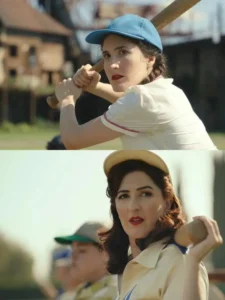
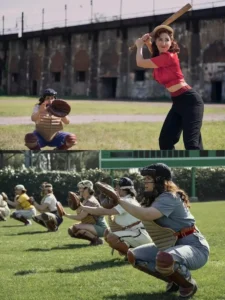
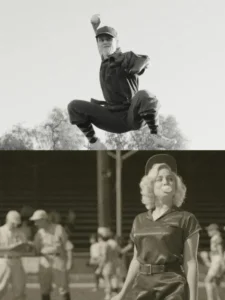
What stayed with me most after watching A League of Their Own was not just the romance or the baseball. It was the women themselves in motion. Strong women proudly showing off their arms. Sharp, athletic women running at full speed across the field. Women making mistakes, correcting themselves, speaking across differences, staying ambitious, refusing to give up. That energy is everywhere in the series, and I found it deeply uplifting.
I also kept thinking about how quietly female solidarity forms here. Not through grand speeches, but through everyday gestures. An older woman gives a younger one a chance. A peer becomes both rival and companion. When one woman starts doubting herself, another simply stays beside her. The discrimination in the show is real, but it unfolds as something woven into daily life rather than isolated into one dramatic incident. That makes it feel even more believable.
My favorite relationship in the whole series was honestly the friendship between Maxine and Clance. I adored them. Both of them are struggling in different ways, which is partly why their scenes can be so funny, but also why they feel so emotionally rich. I hate to put it this bluntly, but sometimes one person really does arrive at exactly the right place in another person’s broken life. Their friendship feels like that. Not as a fantasy fix, but as a real emotional patch where warmth, trust, and humor keep each other going.
There is a line of feeling in their story that moved me deeply: I love you, I know you love me, and you need to know that distance or other people will not erase what we are to each other. That kind of love, without possession but full of faith, is one of the most beautiful things in the series.
And I have to say this too: you can absolutely feel the female gaze in the way friendship is written here. The best friend beside the protagonist is not disposable comic relief, nor is she just there to support someone else’s arc. She is a full emotional force, and often a mirror to the heroine’s own unfinished self. I especially loved Clance for that. Her creative frustration, her spark, her slightly unhinged artist energy, all of it felt vivid and real to me.
This series reminded me of a quote I love: sometimes friendship begins with the possibility of romantic love, but what remains can become something longer-lasting, a repeated conversation over years, a fearless promise to keep meeting each other honestly through change. A League of Their Own understands that kind of bond. It understands that women can save each other in more than one way.
Best Scenes of A League of Their Own
1. The balance between sport and identity
The baseball storyline is not just background decoration. It gives the women purpose, structure, rivalry, and momentum, while the emotional story gives the sport real stakes.
2. Female solidarity that feels natural
I loved how support forms through daily gestures rather than dramatic speeches. The women teach, protect, challenge, and steady each other in ways that feel deeply believable.
3. Max and Clance’s friendship
This was the emotional gold of the series for me. Funny, painful, affectionate, and honest. Their scenes gave the show some of its warmest and most memorable moments.
4. A more generous queer period-drama tone
The show never ignores oppression, but it refuses to let oppression erase joy, humor, or tenderness. That balance is one of its greatest strengths.
A League of Their Own Information
Where to Watch
🔒 Not available in your region?
Try using a VPN to access official platforms safely.
👉 We use NordVPN because it’s fast, stable for streaming, and works with most geo-restricted BL/GL titles.