
I really loved Am I OK? — not because it’s dramatic or groundbreaking in plot, but because it captures something I almost never see done right on screen: the energy of an awkward lesbian awakening.
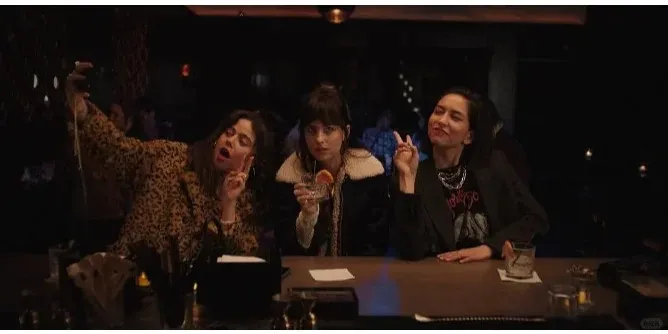
Not the confident, cinematic kind.
The kind filled with pauses, confusion, second-guessing, and quiet panic.
Am I OK? Official Trailer
Lucy is 32, living in Los Angeles, drifting through a job that doesn’t excite her, and feeling persistently uncomfortable in her relationships with men. When she begins to realize she might be attracted to women, her reaction isn’t joy or clarity — it’s embarrassment, disbelief, and anxiety.
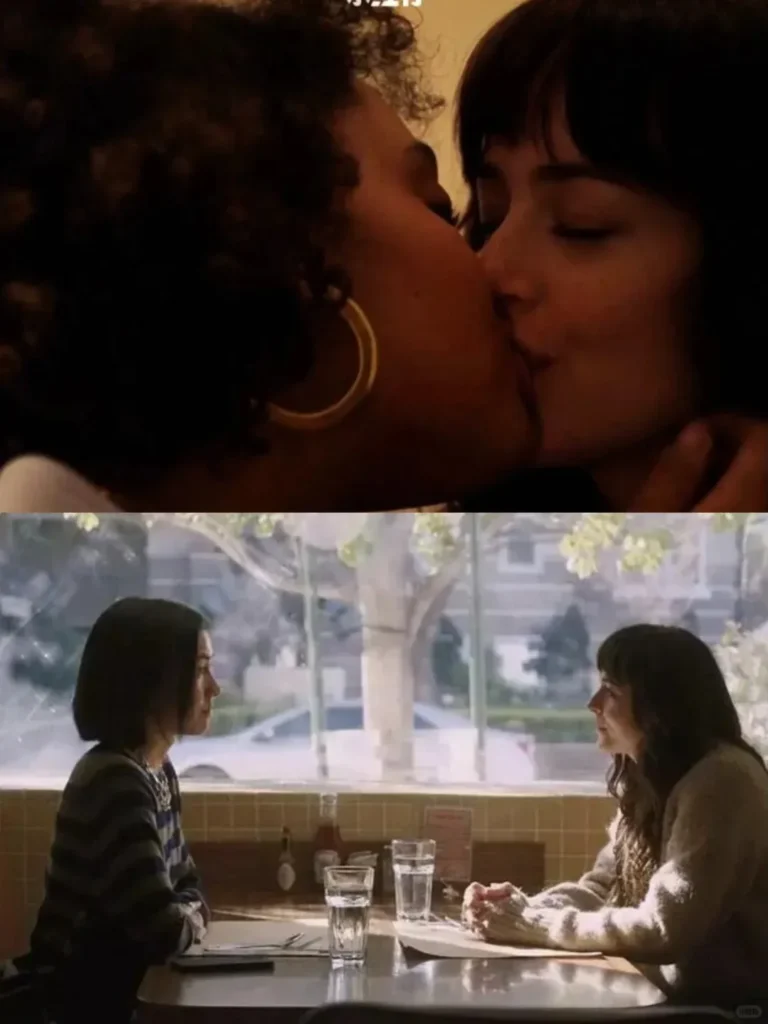
Isn’t it too late? Why does this feel so strange?
The film carefully traces Lucy’s journey from that uneasy realization to a clear “wide awake” moment — when she explicitly names her sexuality and communicates it to someone who once assumed otherwise. That moment isn’t loud or triumphant. It’s gentle, honest, and deeply human.
Watching it, I kept pausing — genuinely stuck in gay panic right along with her.
Am I OK? Cast
Charactor

Lucy is the kind of character that could easily turn annoying or overly self-conscious in the wrong hands — but Dakota Johnson makes her feel painfully real. Her Lucy is soft-spoken, hesitant, and often unsure how to take up space in the world. What I loved most is how she plays discomfort: the pauses, the half-smiles, the moments where Lucy clearly doesn’t know what to do with her body or her feelings.
Dakota Johnson
This is the first time I genuinely found Dakota Johnson charming on screen. She gives Lucy a quiet stubbornness beneath the awkwardness — someone who looks lost, but is slowly learning how to move forward anyway. It’s a performance built on restraint rather than likability, and that’s exactly why it works.

Jane is confident, socially fluent, and seemingly at ease with life — the kind of person who looks “OK” from the outside. Sonoya Mizuno brings a grounded calm to the role that makes Jane feel like a natural emotional anchor, not just a best friend written to be supportive.
Sonoya Mizuno
What stood out to me is how Jane’s confidence is never portrayed as perfection. Underneath her composure are moments of avoidance, fear, and uncertainty, especially when her own life starts to shift. Sonoya’s androgynous presence, British accent, and understated warmth give the character a quiet magnetism that balances Lucy beautifully.
Am I OK? Review
Review



Late Awakening, Handled with Kindness
What resonated with me most is how the film treats late realization as neither failure nor punchline.
In the Q&A, Dakota Johnson said something that stayed with me: growth doesn’t end just because you’re in your thirties. You can still be figuring things out. You can still change.
That philosophy is written directly into Lucy’s arc.
She goes from quietly questioning herself, to actively choosing women on a dating app (yes, with a very specific age range), to finally allowing herself curiosity without shame. None of it feels rushed. None of it feels instructional. It feels lived-in.
Jane & Lucy — Friendship as the Emotional Core
For me, the true heart of Am I OK? isn’t romance — it’s the friendship between Jane and Lucy.
Their dynamic evolves in painfully familiar ways:
“I know you better than anyone”
“Why don’t you handle things the way I would?”
“Are you supporting me, or avoiding your own problems?”
Silence
Reconciliation
These shifts felt uncomfortably real. I recognized them immediately.
One of the softest, most important scenes is when Lucy comes out to Jane in bed — not as a dramatic reveal, but as a moment of uncertainty and fear. Lucy doesn’t know where she’s going next. Jane, without hesitation, chooses to walk forward with her.
Later, when Jane faces her own uncertainty about moving to London alone, Lucy becomes her anchor in return.
They take turns holding each other steady. That mutual anchoring is, to me, the most romantic thing in the film — even when the story insists on calling it friendship.
“Am I OK?” — A Question Without a Deadline
The film’s title kept echoing in my head as I watched.
Is Jane “OK”?
She’s successful, socially confident, emotionally fluent, and adaptable. She looks like someone who has life figured out.
Is Lucy “not OK”?
Her career is stalled. Her relationships confuse her. Her best friend is about to leave the country.
But as the story unfolds, those categories blur.
Jane faces loneliness, conflict, and fear about starting over.
Lucy, newly aware of herself, begins dating boldly, reconnects with her creativity, and chooses presence over avoidance.
What the film gently insists is this: no one is ever fully OK — and that’s not a failure. It’s a condition of being alive.
Performances That Made This Work
Dakota Johnson is quietly perfect here. I’ve never found her particularly charming in other roles, but in this film she’s disarming — soft, hesitant, stubborn, and brave in small ways. Lucy feels fragile without being weak.
Sonoya Mizuno completely won me over. Her androgynous presence, British accent, and grounded calm make her the emotional counterweight Lucy needs. Their chemistry is subtle, never performative.
And then there’s Tig Notaro, whose cameo made me laugh out loud. Knowing she was involved behind the scenes — and hearing the Q&A stories about casting and creative trust — only made the film feel more intimate and queer-made.