
Benedetta is one of those lesbian period films that left me both fascinated and uneasy. It is provocative, theatrical, and deliberately excessive, but beneath all that shock value is a sharp story about faith, power, performance, and female desire inside a system built to control both the body and the soul. For me, this is not just a “nunsploitation” film or a scandal-driven queer period drama. It is a story about a woman who learns how to use belief itself as a weapon, and in doing so, exposes how fragile religious authority can be.
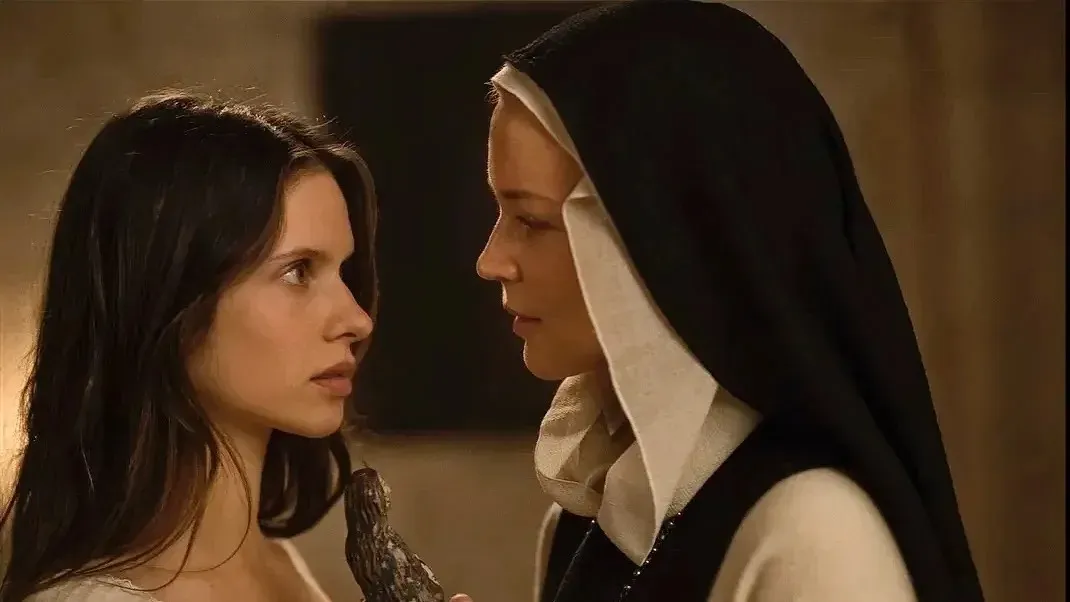
Benedetta Summary | |
|---|---|
| Title: | Benedetta |
| Movie Info: | France (2021) |
| Genre: | Lesbian movie, queer historical drama, religious satire, period film |
| Director: | Paul Verhoeven |
| Main Cast: | Virginie Efira, Daphné Patakia, Charlotte Rampling, Lambert Wilson |
| Why I Recommend It: | A bold and provocative queer historical film about faith, female desire, and power inside a repressive religious world. |
Plot
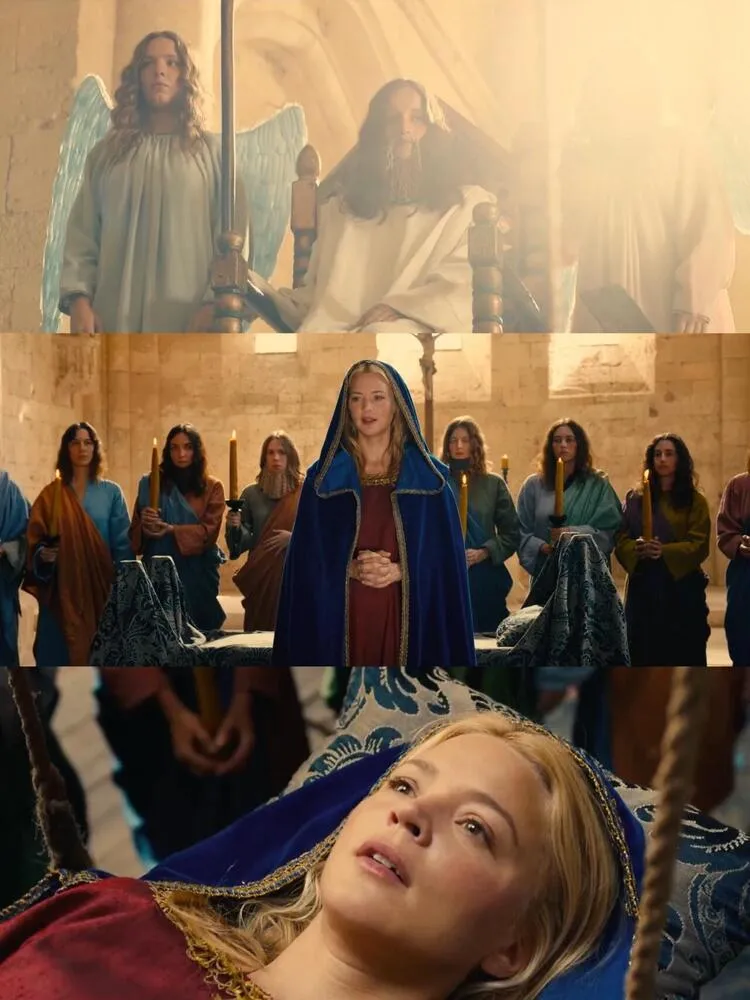
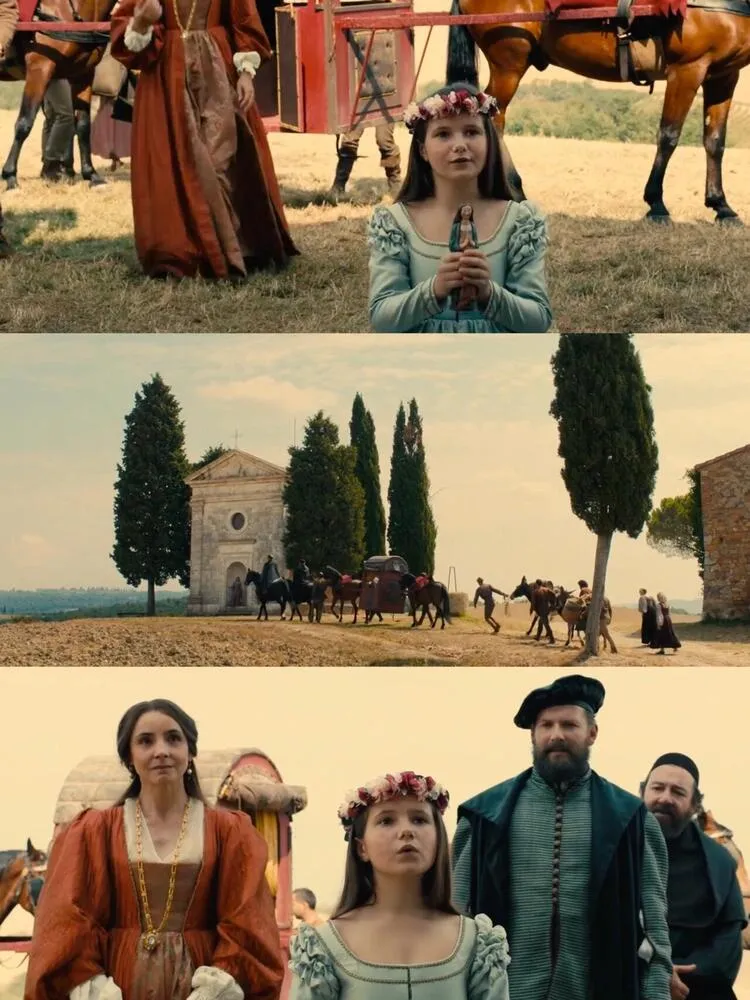
Inspired by Judith C. Brown’s historical study Immodest Acts: The Life of a Lesbian Nun in Renaissance Italy, Benedetta follows the life of Benedetta Carlini, a girl dedicated to the Church from childhood and raised inside a convent. As she grows older, Benedetta begins reporting visions, physical suffering, and signs of divine favor. These experiences gradually elevate her status within the convent and allow her to gain spiritual and institutional authority.
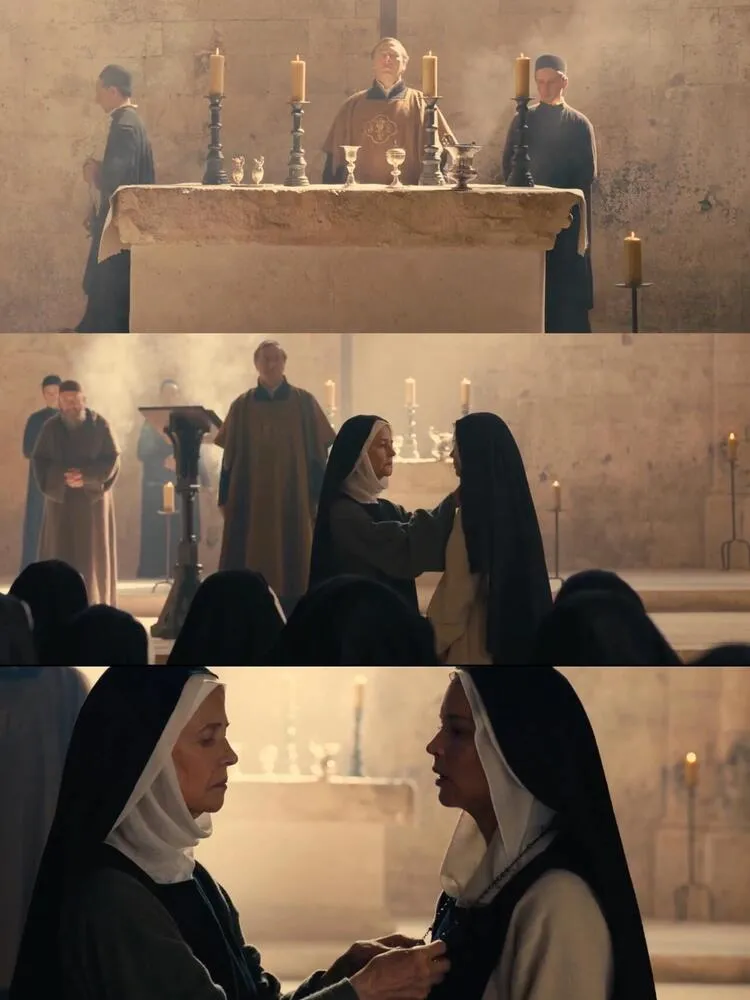
As her reputation grows, Benedetta develops a close relationship with Bartolomea, a young woman assigned to assist her. Their connection deepens into an intimate emotional bond inside a rigidly celibate religious structure. In Benedetta’s world, desire, devotion, and self-invention become impossible to separate cleanly.
The more power Benedetta gains, the more dangerous she becomes to the Church hierarchy around her. Investigations into her supposed miracles begin, and accusations follow: fabricated signs, false visions, manipulation, and forbidden intimacy. What unfolds is not simply the downfall of a fraudulent holy woman, but a larger battle over who gets to define truth, sanctity, sin, and authority.
Benedetta Cast
Charactor

Benedetta is the center of the film’s moral and emotional ambiguity: a nun, visionary, strategist, and deeply disruptive presence inside the convent. She is both shaped by the institution and determined to bend it toward her own survival and authority.
Virginie Efira
Virginie Efira gives one of the most commanding performances in the film. Best known for Other People’s Children, Revoir Paris, and Elle, she brings Benedetta a mix of sensuality, intelligence, theatrical intensity, and psychological opacity that kept me watching her even in her most unsettling moments.

Bartolomea enters the convent from a more vulnerable social position and becomes Benedetta’s companion. She brings emotional need, survival instinct, and a kind of restless directness that changes the film’s energy.
Daphné Patakia
Daphné Patakia is known for emotionally physical performances, and here she makes Bartolomea feel far more than a supporting figure in someone else’s rise. She gives the character volatility, tenderness, fear, and desire in ways that complicate the whole relationship.

As the convent’s abbess, Felicita represents discipline, authority, and institutional caution. She is not a cartoon villain, but a woman who understands exactly how dangerous uncontrolled charisma can become.
Charlotte Rampling
Charlotte Rampling’s screen presence adds gravity instantly. With classics like 45 Years, Swimming Pool, and The Night Porter behind her, she brings a severe intelligence to the role that makes every confrontation sharper.
BEST SCENES
1. Benedetta’s rise through visions and suffering
These early scenes are key to understanding the whole film. I was fascinated by how quickly spiritual spectacle turns into political leverage.
2. The growing bond between Benedetta and Bartolomea
What makes these scenes work is not just desire, but the emotional and institutional pressure around them. Their closeness feels charged because it is happening inside a world built to deny it.
3. The symbolic religious imagery
The visions, sacred objects, and serpent motifs make the film feel almost feverish at times. I found these moments especially revealing because they show Benedetta’s inner world and the Church’s theatricality at the same time.
4. The investigation and collapse of authority
Once the Church begins examining Benedetta, the film becomes even more compelling. What is being judged is not only sin, but who has the right to control belief.
Benedetta Review
Review
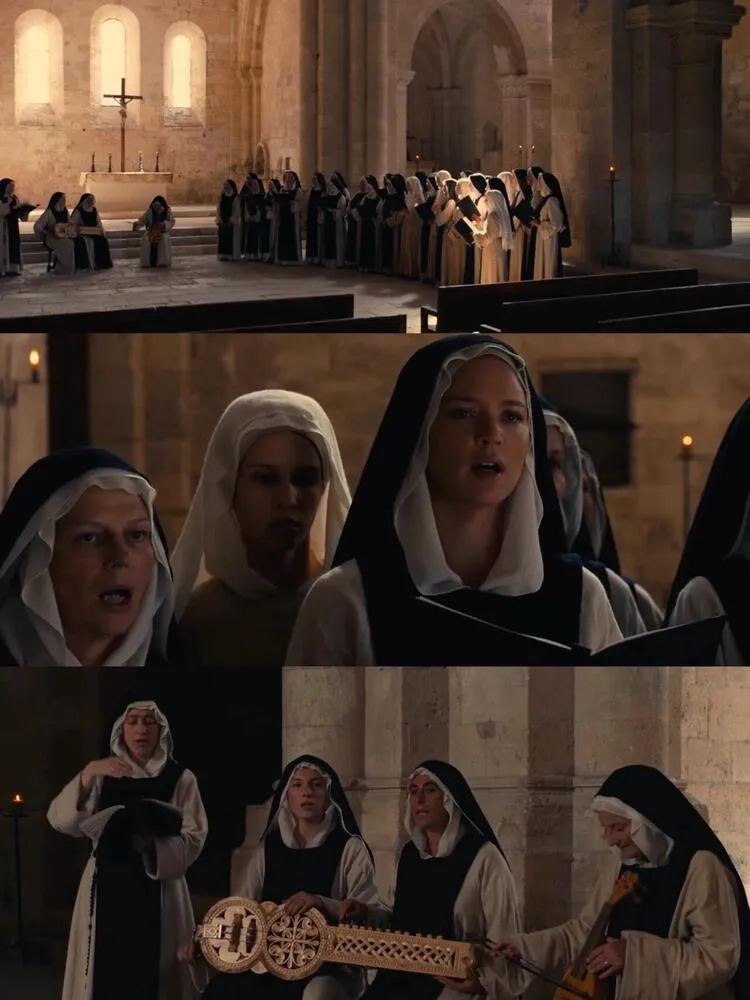
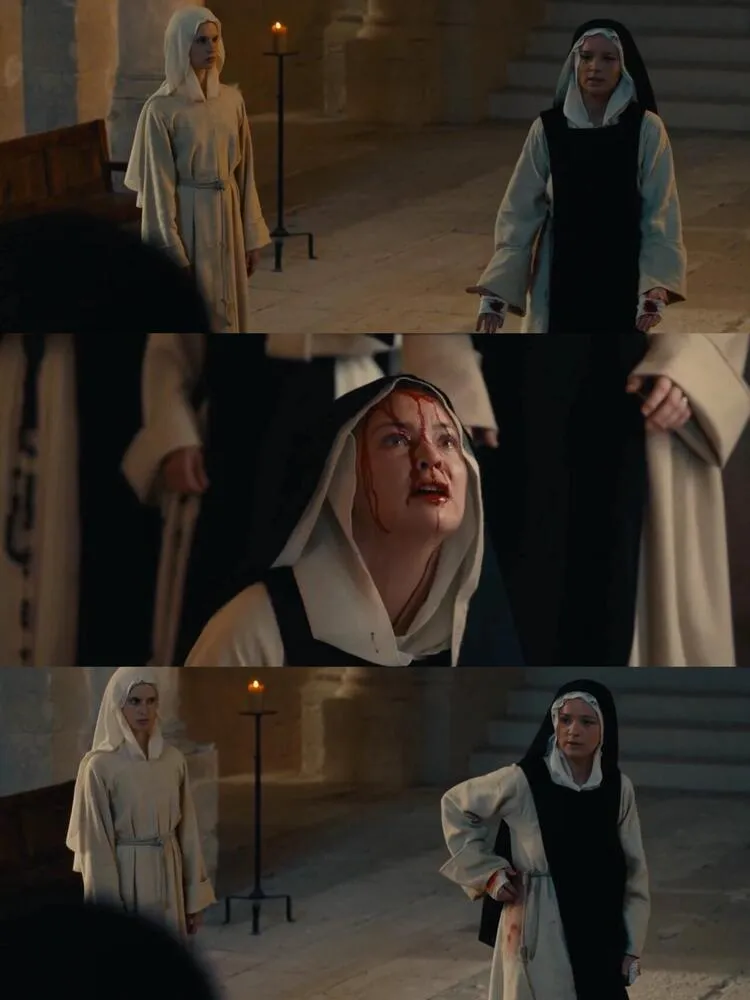
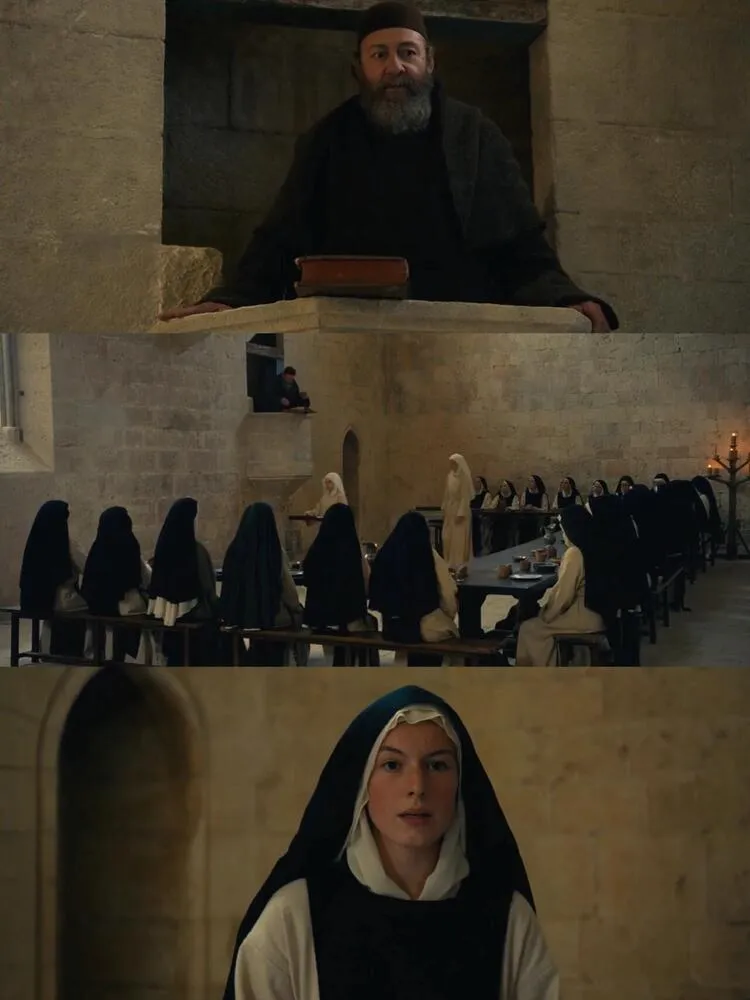
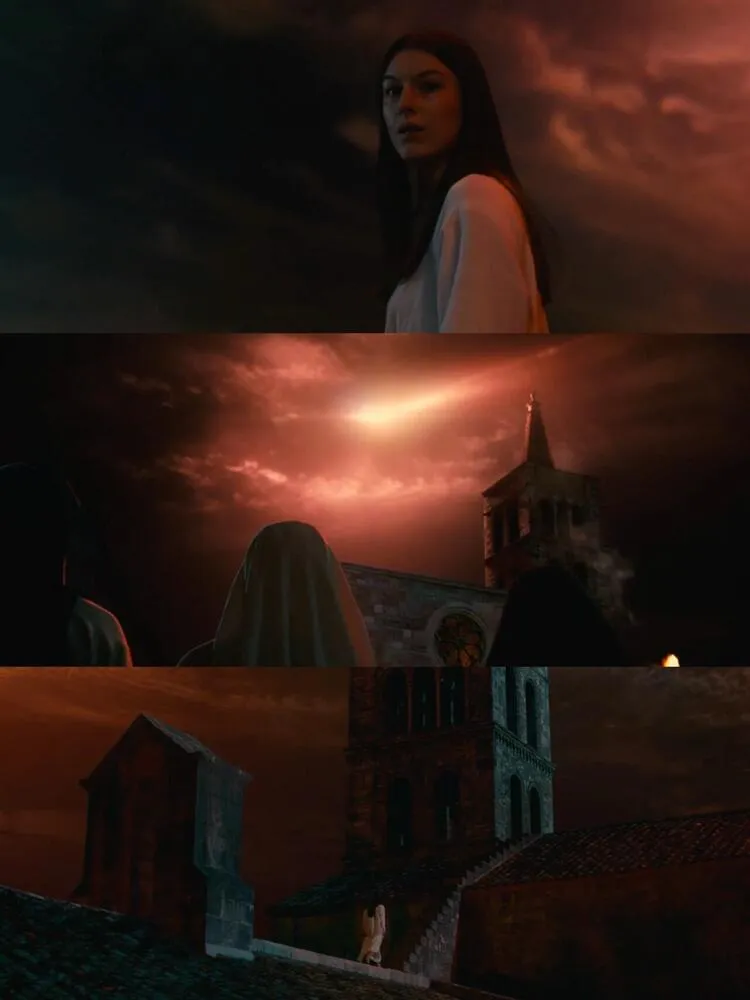
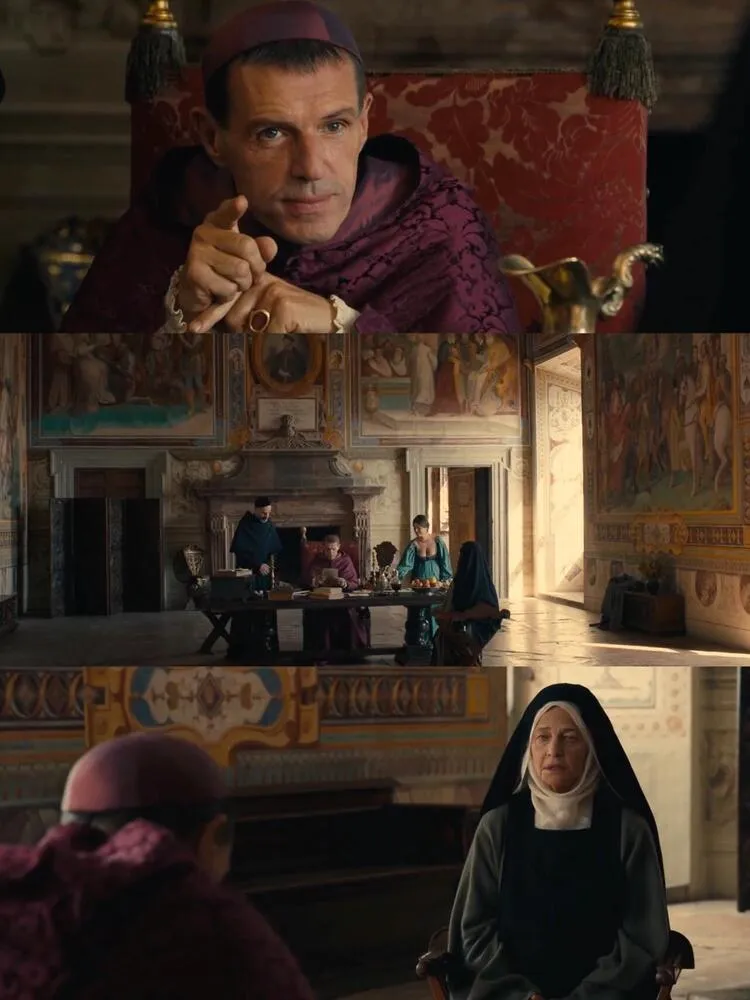
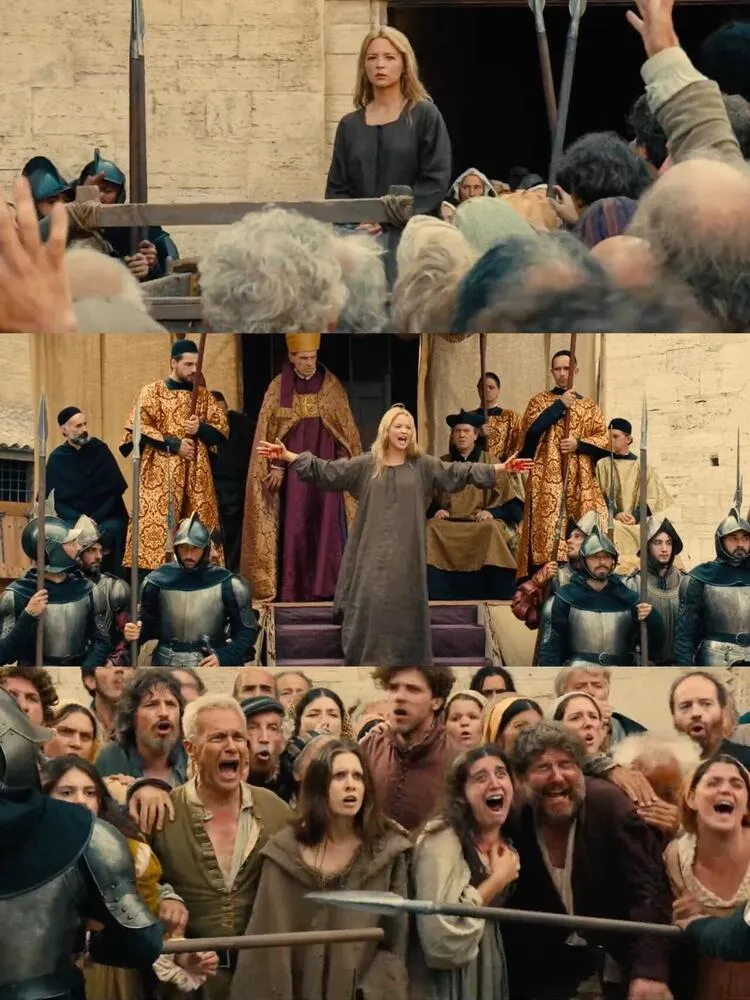
Story – 4.5/5
What impressed me most about Benedetta is that it never presents itself as a simple story of “truth versus lies.” The film is much more slippery than that. Was Benedetta a fraud, a survivor, a believer, a manipulator, or all of these things at once? The story refuses to reduce her into one category, and that ambiguity is exactly what makes her so compelling.
I also liked how the film frames personal desire and institutional power as deeply intertwined. Benedetta is not just trying to love someone in a forbidden environment. She is also learning how authority works, how symbols work, and how belief can be staged, weaponized, or internalized. That gives the film far more depth than a straightforward scandal narrative.
Acting – 4.5/5
Virginie Efira carries the film with remarkable control. She makes Benedetta feel charismatic, calculating, vulnerable, and strangely sincere all at once. I never felt like I was watching a one-note villain or a misunderstood saint. I felt like I was watching a woman who had learned to survive by turning her inner conviction—real or invented—into power.
Daphné Patakia brings emotional contrast as Bartolomea. Her presence adds softness, hunger, fear, and unpredictability to the story. Their scenes together are not powerful because they are merely transgressive, but because they reveal unequal experience, class differences, longing, dependence, and genuine attachment all at once.
Charlotte Rampling is also excellent here. She brings a quiet severity that makes the institutional conflict feel more human and more dangerous.
Chemistry – 4/5
The chemistry in Benedetta is not tender in the way many lesbian romances are. It is charged, uneasy, and bound up with power. That may not work for every viewer, but I found it interesting because it refuses to romanticize everything. The relationship between Benedetta and Bartolomea is shaped not only by attraction, but by hierarchy, fear, comfort, control, and spiritual language.
What stayed with me is that the film never allows their bond to exist outside history. This is not modern queer self-expression dropped into a period setting. It is desire filtered through religion, punishment, superstition, loneliness, and the intense emotional deprivation of convent life. That makes the connection feel more psychologically loaded.
Production – 4.5/5
Visually, the film is striking. Paul Verhoeven leans into spectacle, religious imagery, and open provocation, but I did not find that empty. In fact, I think the exaggeration is part of the point. The film keeps asking: if religious power already depends on symbols, theater, ritual, and fear, then how different is Benedetta’s performance from the system around her?
Some of the imagery is unforgettable. The sacred objects, the visions, the serpent symbolism, the severe convent spaces, the contrast between holiness and bodily life—all of it creates an atmosphere that feels both oppressive and strangely alive. Even when the film becomes outrageous, it remains thematically focused.
Ending – 4/5
I found the ending bleak but fitting. Benedetta does not offer emotional comfort, yet it does leave a strong impression of resistance. Even when the institution punishes her, it never fully erases the fact that she challenged it, manipulated it, and forced it to expose its own contradictions.
That is what lingered for me. The ending is not about moral closure. It is about the cost of confronting a system that insists it alone has the right to name truth.
Historical Background
Benedetta is adapted from Judith C. Brown’s nonfiction book Immodest Acts: The Life of a Lesbian Nun in Renaissance Italy, which reconstructs the case of Benedetta Carlini from surviving Church records. What makes the historical material so fascinating is that it never gives us complete certainty. Testimonies changed over time, accusations were shaped by fear and self-protection, and even the question of what truly happened between the two women remains unstable.
That uncertainty matters. It means the film is not adapting a clean historical truth, but a contested archive shaped by religion, power, shame, and survival. In some ways, that makes the adaptation even more interesting to me.
My Take
What made Benedetta memorable for me is that Benedetta is such a full, audacious central figure. She is not passive, not merely persecuted, and not written as a tragic victim waiting for interpretation. She acts. She schemes. She believes in herself with such intensity that even her self-deception starts to resemble faith. There is something almost terrifyingly complete about that kind of self-investment.
I honestly think that is why she feels like such a powerful lead character. She takes a structure built by men—religion, hierarchy, sanctity, obedience—and learns how to speak its language better than the men who claim to own it. She uses the Church’s symbols, its fear, its hunger for miracles, and even its hypocrisy against itself. To me, that is one of the most interesting things in the film.
I also found the imagery fascinating. The religious statues, the visions of Christ, the serpent references, the blending of guilt, temptation, suffering, and longing—none of these images feel accidental. They reveal Benedetta’s inner struggle, but they also function as a kind of challenge to the Church itself. The sacred is never shown as pure or untouched. It is constantly entangled with desire, money, performance, and control.
And that is where the film becomes richer for me than its scandalous reputation suggests. Yes, it is provocative. Yes, some scenes are designed to shock. But underneath that, I saw a story about how female feeling becomes unreadable inside patriarchal systems. Women’s intimacy is either dismissed, demonized, or forcibly translated into male-centered terms. That part hit me strongly. The tragedy is not only punishment. It is the fact that a bond between women can only be understood by the surrounding world as corruption, imitation, or blasphemy.
What also stayed with me is the historical cruelty behind all this. In early modern Europe, women could be punished not simply for desire, but for crossing gendered power lines. It was never just about morality. It was about control. A woman claiming spiritual authority, manipulating sacred symbols, or taking on a role reserved for men could be seen as far more threatening than private sin itself. Benedetta captures that atmosphere very well.
As a queer viewer, I did not watch this film as a simple lesbian romance, because it is not that. It is messier, stranger, and much more uncomfortable. But that discomfort is part of its power. It made me think about how women have historically had to invent languages for desire under conditions where honesty was impossible.
Benedetta Information
🎖 Awards & Recognition
Official Selection, Cannes Film Festival 2021
Nominated for the Palme d’Or at Cannes 2021
Nominated for the Queer Palm at Cannes 2021
Named one of the National Board of Review’s Top Five International Films of 2021
Where to Watch
🔒 Not available in your region?
Try using a VPN to access official platforms safely.
👉 We use NordVPN because it’s fast, stable for streaming, and works with most geo-restricted BL/GL titles.