
One of the most interesting side stories around Do Revenge has very little to do with its two leads — and everything to do with Talia Ryder.

Ryder had already broken out visually and culturally at Berlinale 2020. Three years later, her filmography as a leading actress was still surprisingly sparse, and in Do Revenge, she appears for barely more than ten minutes. Yet somehow, that limited screen time was enough to push her straight back into online discourse and fandom attention, with her Instagram following spiking almost overnight.
Part of that is star presence.
But honestly? A bigger part is that Gabbi — the character she plays — is the most emotionally “normal” person in the entire film. She’s not a tool, not a caricature, not a symbol. And in a movie built on exaggeration, that restraint stands out.
Do Revenge Official Trailer
Do Revenge is a dark teen comedy set in an elite American high school, where reputation functions as social currency and humiliation travels faster than truth.
The story follows two girls from opposite ends of the social hierarchy.
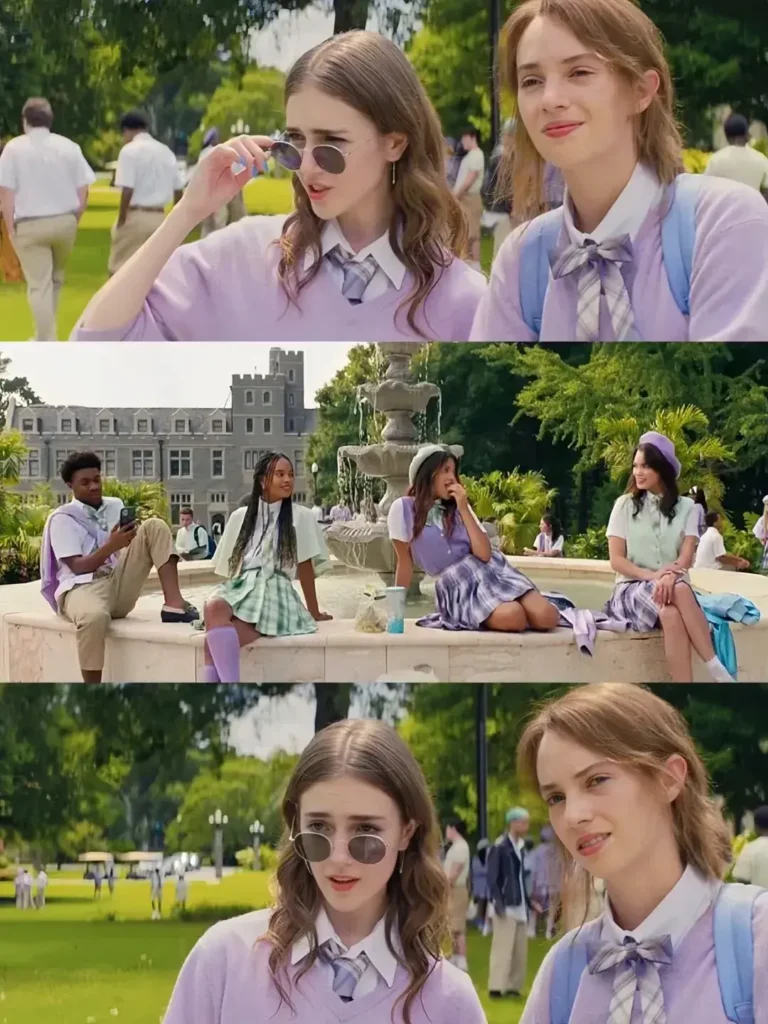
Drea is the school’s former queen bee, publicly disgraced after a private sex video is leaked by her wealthy boyfriend. Overnight, her social power collapses, exposing how quickly admiration turns into cruelty — especially toward girls.
Eleanor, newly transferred and socially awkward, carries her own trauma. She was once publicly humiliated by a crush who spread damaging rumors about her, leaving her isolated and mistrustful.
The two girls meet by chance during summer at a tennis center and form an uneasy alliance. Discovering their shared desire for revenge, they agree to help each other take down the people who hurt them — carefully, strategically, and anonymously.
What begins as a seemingly straightforward revenge pact slowly unravels into something far more complicated. As their plan progresses, buried resentments, shifting power dynamics, and uncomfortable truths begin to surface, forcing both girls to confront not only their enemies, but their own capacity for harm.
Do Revenge uses sharp dialogue, heightened aesthetics, and unexpected narrative turns to explore bullying, misogyny, and the fragile line between justice and cruelty — all beneath the glossy surface of a modern high school drama.
Do Revenge Cast
Charactor

Drea starts as the ultimate popular girl — confident, influential, and socially untouchable. After a private sex video is leaked, her entire identity collapses overnight. What makes Drea compelling is not just her fall from power, but how quickly she adapts, weaponizing intelligence and anger in equal measure.
Camila Mendes
Camila Mendes brings sharp control to Drea’s emotional swings. Known for playing charismatic but flawed characters, she handles Drea’s mix of vulnerability, narcissism, and rage with surprising balance. I liked that she never asks the audience to fully forgive Drea — only to understand her.

Eleanor appears awkward, harmless, and eager for connection. But beneath that softness lies unresolved resentment and a long memory of humiliation. As the story progresses, Eleanor becomes the film’s most unsettling presence — not because she is cruel, but because her pain has quietly hardened into strategy.
Maya Hawke
Maya Hawke excels at playing characters who feel emotionally exposed yet unpredictable. Her performance here leans into Eleanor’s contradictions: sincerity and manipulation, vulnerability and control. For me, she is the emotional wildcard of the film.

Gabbi is Drea’s ex-best friend — and notably, one of the few characters who feels emotionally grounded. She doesn’t scheme, dominate, or collapse into extremes. In a film full of heightened personalities, Gabbi feels almost disarmingly normal.
Talia Ryder
Talia Ryder had already drawn attention at Berlinale 2020, and even with limited screen time here, her presence is hard to ignore. What stands out isn’t spectacle, but restraint. Ryder gives Gabbi a quiet clarity that makes her feel like the film’s moral anchor — which explains why such a small role resonated so widely with audiences.

Max is Eleanor’s love interest — charming, performative, and ultimately emblematic of how easily boys can weaponize innocence. He represents the kind of casual cruelty that thrives under social approval.
Austin Abrams
Austin Abrams leans into Max’s ambiguity. Rather than portraying him as a clear villain, he allows the character’s harm to emerge through behavior that feels disturbingly plausible, which makes Max more unsettling than overtly malicious antagonists.
Director

Jennifer Kaytin Robinson
Jennifer Kaytin Robinson is an American filmmaker known for blending glossy genre films with sharp social commentary. Before Do Revenge, she had already shown interest in stories about female anger, power dynamics, and moral ambiguity.
What I find interesting about her direction here is that she never treats revenge as empowerment by default. The film looks playful and stylish on the surface, but underneath it constantly questions who gets hurt, who gets away with harm, and how easily moral positions can shift. Robinson clearly understands teen movie language — but she also knows exactly where to subvert it.
Do Revenge Review
Review



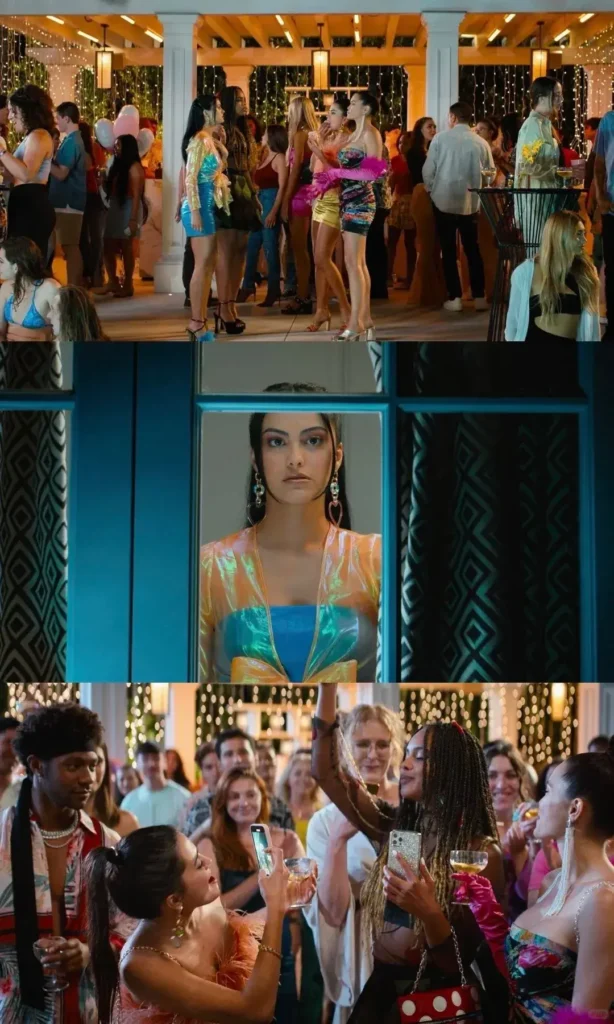
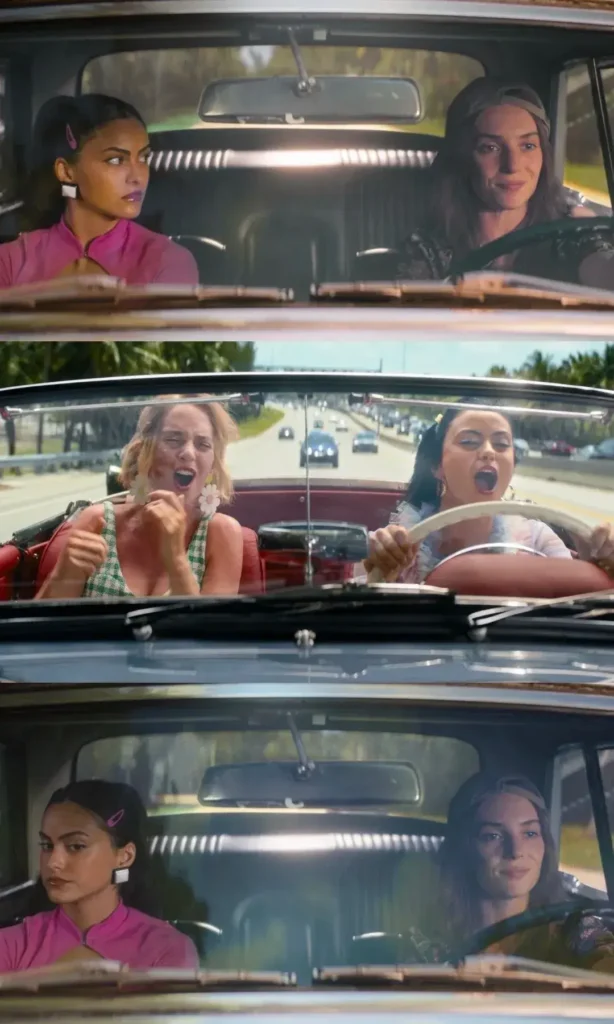
A Teen Revenge Story That Knows the Genre Is Exhausted
High school revenge stories have been done to death. Do Revenge knows this — and deliberately leans into it.
What surprised me is how the film structures itself around three narrative layers, each one recontextualizing the last. The twists aren’t just there for shock value; they actively reshape how we interpret power, victimhood, and responsibility.
The film also weaves feminist language and critiques of patriarchy into its story without turning them into slogans. Its characters feel distinctly Gen Z — hyper-aware of social image, identity politics, and reputation — yet still painfully vulnerable to the same systems of cruelty that have always existed.
Layer One: Easy Targets, Easy Destruction
At first, the story feels almost archetypal.
Drea is the popular queen bee, publicly destroyed when her wealthy white boyfriend leaks a private sex video.
Eleanor is the awkward outsider, humiliated after her crush spreads rumors painting her as a sexual predator.
Both girls experience how absurdly easy it is to ruin a teenage girl’s life.
As Drea bluntly puts it:
“Gossip, romance, slut-shaming… take your pick.”
What’s especially bitter is that even when they expose the boyfriend’s serial cheating, it barely touches him. Patriarchal logic remains intact:
A sex tape can destroy a girl — and elevate a boy.
This first layer is sharp but familiar. Its real function is to lull us into thinking we know what kind of movie this is.
Layer Two: When the Victim Isn’t Innocent
This is where Do Revenge becomes genuinely interesting.
As Drea begins to question Eleanor’s motives, she uncovers the truth:
their friendship was never accidental.
Eleanor orchestrated the entire relationship as revenge — against Drea herself.
Even more unsettling is the revelation that Drea once hurt Eleanor deeply as a child… and doesn’t remember it at all. For Eleanor, that moment defined her identity. For Drea, it barely registered.
Suddenly, the moral axis collapses.
From the audience’s “god’s-eye view,” our sympathy fractures into something deeply uncomfortable:
She deserves this.
But does she really?
Victim and perpetrator swap places. Solidarity turns into mutual harm. The revenge fantasy curdles.
Power, Narcissism, and the Illusion of Control
There’s a line early on where Drea explains why powerful boys never notice manipulation:
their obsession with themselves blinds them.
Ironically, the same logic applies to Drea.
Her hunger for revenge overrides everything else — including the fragile, genuine friendship forming between her and Eleanor. And that loss is what ultimately hardens Eleanor’s resolve to go through with the plan.
Both girls learn the same brutal lesson from opposite ends:
revenge doesn’t heal.
And recognition doesn’t erase harm.
Layer Three: From Revenge to Connection
The final narrative layer pulls the story back from cruelty toward something more honest.
Under social pressure and emotional collapse, both girls are forced to confront what they’ve become — and what they actually want.
Drea drops her carefully curated persona and finally allows herself to be vulnerable, messy, and imperfect.
Eleanor, no longer hiding behind manipulation, finds genuine acceptance — not as a performance, but as herself.
What the film ultimately values isn’t punishment, but connection — friendship, love, and emotional accountability.
And that shift matters.
Why Do Revenge Works (When It Does)
Unlike shows like 13 Reasons Why, which frame bullying primarily through victim testimony, Do Revenge attempts something riskier:
it forces us to inhabit morally compromised characters.
Anti-bullying education only works when it acknowledges complexity — when it shows not just suffering, but the consequences of becoming someone who inflicts harm in return.
In that sense, Do Revenge isn’t just a stylish teen thriller.
It’s a messy, imperfect, but necessary reflection on how anger, shame, and power circulate — especially among young people still learning who they are.
And for that, I think it earns its place in the conversation.