
What moved me most about The Half of It is not that it’s a lesbian love story — but that it insists, gently and persistently, that love has more than one shape, and that self-identity is never a finished product.

Like Saving Face, this film feels deeply personal. You can sense that Alice Wu isn’t inventing characters so much as revisiting emotional territories she’s lived through herself. Her protagonists are never just queer; they are people negotiating culture, class, family, loneliness, and expectation — all at once.
The Half of It Official Trailer
The story takes place in a small, predominantly white American town. Ellie Chu lives there with her father, quietly occupying the margins as one of the town’s few people of color. She keeps to herself, writes essays for classmates to earn money, and moves through life almost invisibly.
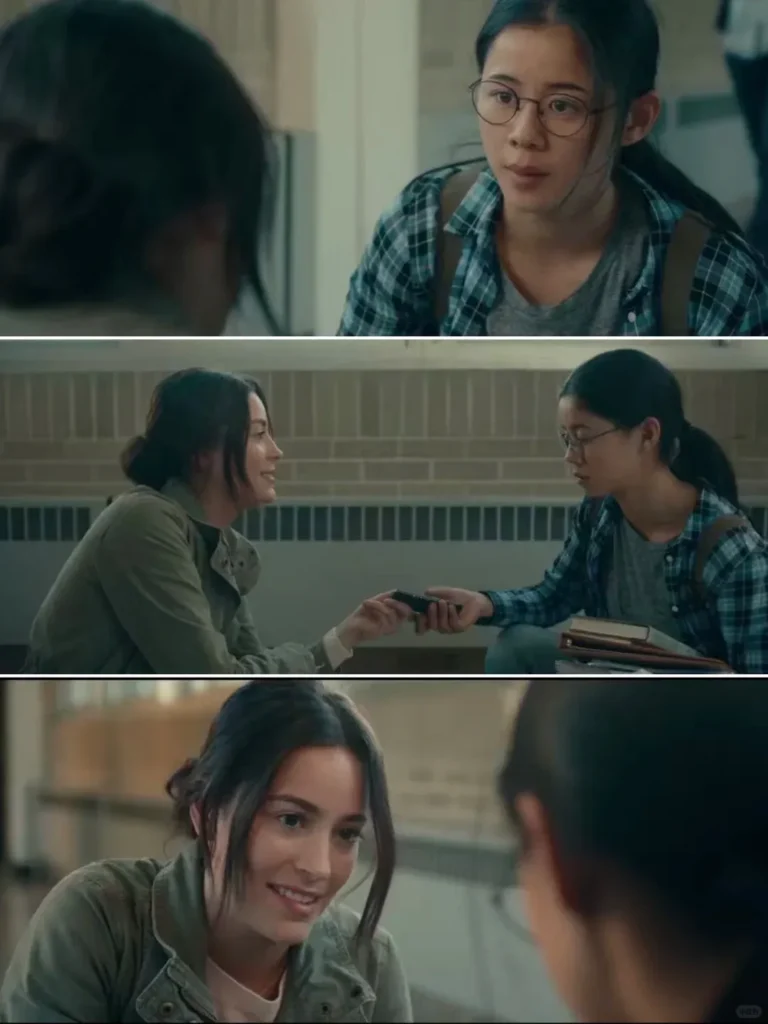
That invisibility cracks when Paul, a kind-hearted football player, asks her to help him write a love letter to Aster — the pastor’s daughter, a popular girl who, beneath the surface, is just as out of place as Ellie.
What starts as a paid favor turns into a triangle that is not really a triangle at all — but a slow collision of three lonely people, each trying to understand what connection means to them.
The Half of It Cast
Charactor

Ellie is intelligent, introverted, and quietly isolated — a teenage girl navigating life as a person of color in a small, predominantly white town. She observes more than she speaks, and much of her emotional life happens internally.
Leah Lewis
Leah Lewis brings a remarkable stillness to Ellie. Her performance is understated, never performative, which makes Ellie’s loneliness and longing feel deeply authentic. Lewis excels at conveying thought through silence — glances, pauses, restrained reactions — making Ellie feel less like a “teen movie character” and more like someone you might have known.

Aster appears at first to be the town’s golden girl — popular, beautiful, and admired. But beneath that surface, she is intellectually restless and emotionally constrained, struggling with religious expectations, social judgment, and her own sense of self.
Alexxis Lemire
Alexxis Lemire gives Aster a softness that prevents the character from becoming an idealized object of desire. There’s vulnerability in her performance — a sense that Aster is constantly negotiating who she’s allowed to be. I appreciated how Lemire makes Aster’s uncertainty feel sincere rather than dramatic.

Paul is warm, earnest, and emotionally open — a high school athlete who doesn’t fit the stereotype of masculinity imposed on him. He wants to connect, to care, and to be understood.
Daniel Diemer
Daniel Diemer’s portrayal of Paul is one of the film’s quiet strengths. He plays Paul without irony or bravado, allowing the character’s kindness and confusion to coexist naturally. What moved me most is how Diemer lets Paul be vulnerable without embarrassment — especially in moments where love doesn’t come with clear instructions.
Director

Alice Wu
Alice Wu is an American filmmaker whose work is inseparable from her own lived experience. Both Saving Face and The Half of It draw heavily from her personal history — not in a literal, autobiographical way, but emotionally and philosophically.
What I admire most about Wu’s direction is her refusal to simplify identity. She doesn’t frame queerness as a single revelation or a neat conclusion. Instead, she explores how self-recognition is shaped by culture, class, family, and silence. Her characters feel carefully observed rather than invented — as if she’s returning to questions she once asked herself and allowing them to remain unresolved.
That’s why The Half of It feels so gentle and so honest. Wu isn’t trying to teach us what love is. She’s asking us to sit with how complicated it can be.
The Half of It Review
Review
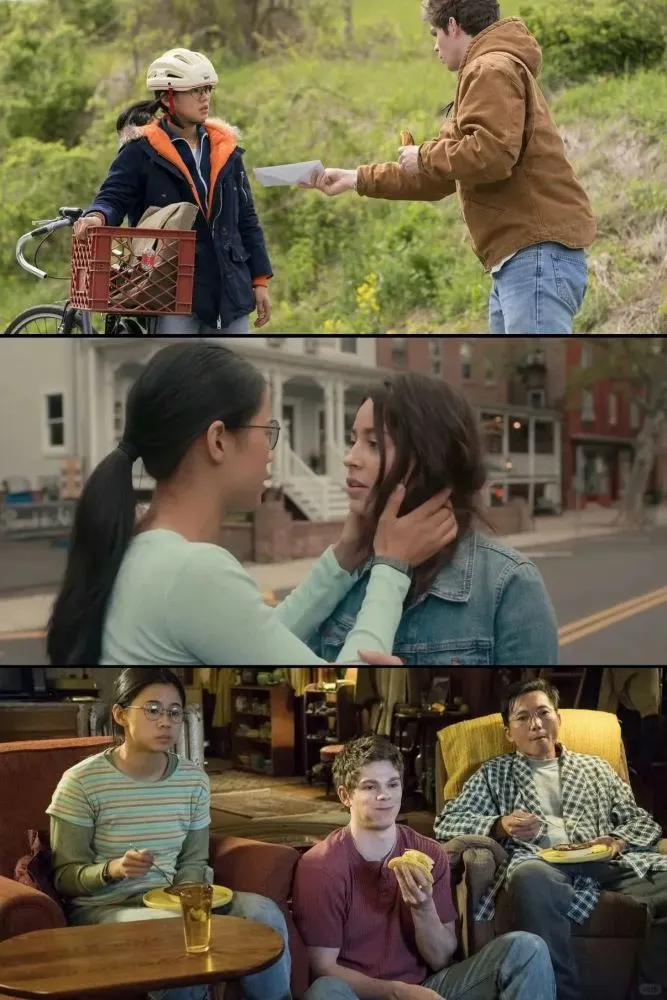
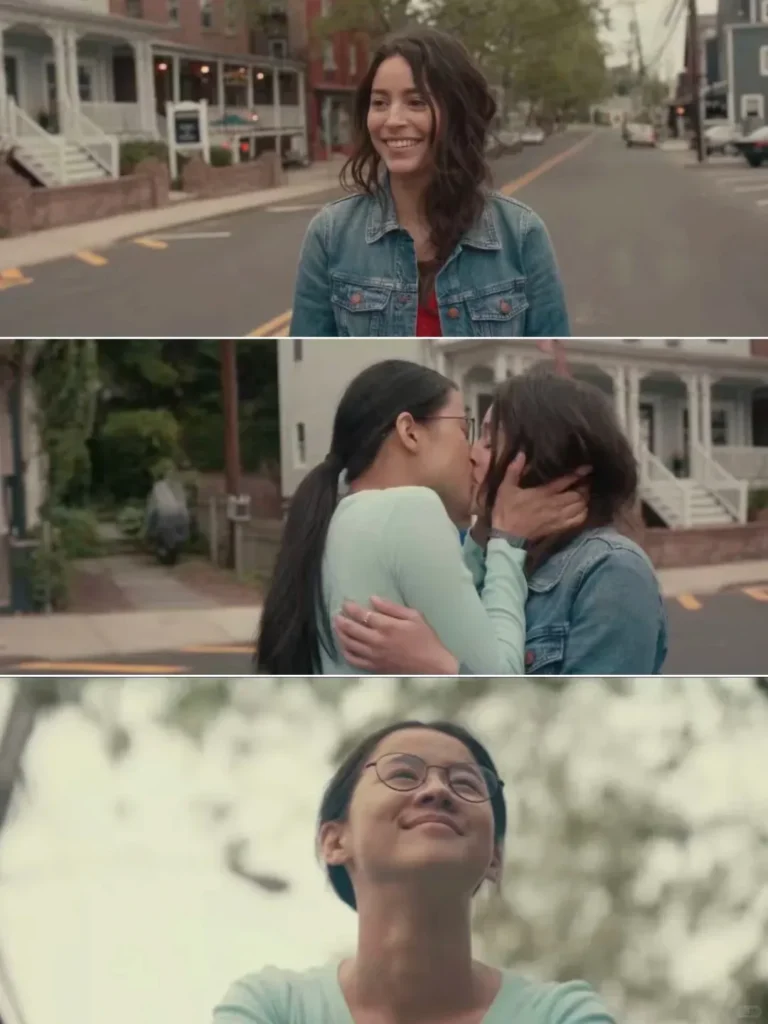
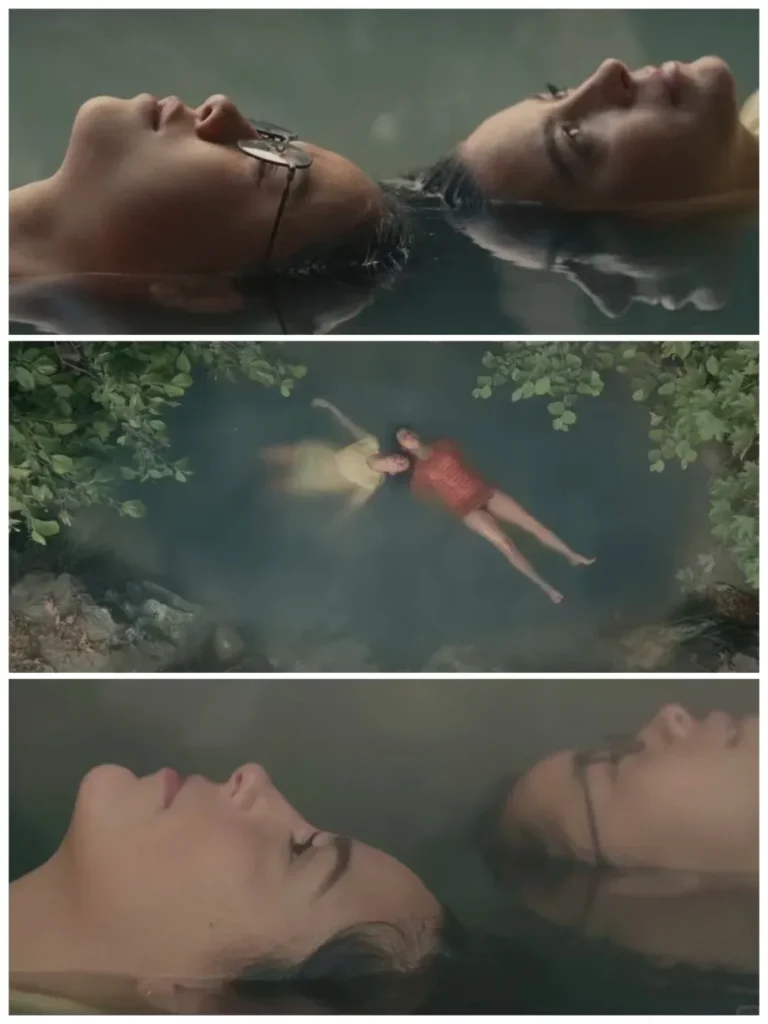
My Take: Love Is Not One Thing
Many people talk about The Half of It as a queer coming-of-age film. I see it more as a film about emotional literacy — learning to name what you feel when language, labels, and social scripts all fall short.
Ellie and Aster find each other first through words. Their bond is deeply intellectual, almost painfully Platonic, and yes — idealized in that cinematic way — but also sincere. When Ellie asks her literature teacher, “Do you know what it feels like to finally meet someone who understands you?” I felt that ache immediately. That’s the moment the title makes sense: finding “the other half” doesn’t necessarily mean romance. Sometimes it means recognition.
But the emotional core that surprised me most was Ellie and Paul.
Ellie & Paul: A Love Without a Name
Ellie and Paul love each other. That much is undeniable.
But what kind of love is it?
They want to spend time together. They show up for each other. They care deeply about each other’s happiness. There is intimacy — just not sexual intimacy. At least not for Ellie.
For Paul, this is confusing. And I don’t blame him.
We’re taught that strong feelings must fall into recognizable categories: romance, friendship, desire. But what if they don’t? What if love exists without fitting neatly into any box?
Alice Wu has spoken about drawing this relationship from her own life — a close, emotionally intimate friendship with a man during her years of questioning her sexuality, one that eventually faded because the world didn’t know how to hold it. That honesty shows. The film never forces a definition onto Ellie and Paul’s bond. It simply lets it exist.
And that’s why the train station scene works so well. Paul runs — not because he expects romance, but because love, in whatever form it takes, deserves to be acknowledged.
If I were Paul, I think I’d run too.
Identity, Faith, and Existential Weight
One detail I loved is how existentialism quietly threads through the film. Sartre appears almost as insistently as religion.
Ellie, Aster, and Paul are all trapped by expectations imposed by others — what a “good daughter” is, what a “normal boy” wants, what a “proper life” should look like. Sartre’s idea that existence precedes essence fits them perfectly: none of them are born with a fixed identity, yet they’re constantly pressured to perform one.
When Aster tells Ellie she hopes she’ll “find her faith,” I don’t hear religion. I hear something closer to this:
find the way of living that feels true to you — and commit to it.
That, to me, is the film’s quiet philosophy.
Final Thoughts
I watched The Half of It twice in two days. I came expecting a sapphic romance. I stayed for a meditation on how messy, contradictory, and unfinished love really is.
We may love someone without desire.
We may desire without love.
We may misname our feelings for years.
We may only understand what something was after it’s gone.
And maybe that’s okay.
Because love doesn’t owe us clarity.
It only asks that we stay honest — with ourselves first.
The Half of It Information
🎖 Awards & Recognition
The Half of It received widespread critical recognition after its release, especially within independent film circles and LGBTQ+ cultural spaces.
🏆 Tribeca Film Festival 2020
Founders Award – Best Narrative Feature
This is one of Tribeca’s top honors, recognizing films that combine strong storytelling with a distinct authorial voice. The award confirmed The Half of It as more than a coming-of-age romance — it was seen as a mature, personal work with cultural weight.🎬 Independent Spirit Awards
Nominated for Best Screenplay (Alice Wu)
The nomination highlighted the film’s strength in writing rather than spectacle — its layered dialogue, emotional restraint, and refusal to simplify love or identity.🌈 GLAAD Media Awards
Nominated for Outstanding Film – Limited Release
The film was recognized for its authentic and nuanced portrayal of queer identity, particularly its focus on emotional truth rather than conventional LGBTQ+ narratives.📰 Critical Reception
The film received strong reviews from major Western media outlets, with frequent praise for:its gentle, humanistic tone
its portrayal of queer adolescence without trauma exploitation
its redefinition of love beyond romantic fulfillment