
I didn’t come to Viola di Mare through cinema first.
I came to it through the sea.
The first time I heard the name viola di mare wasn’t in a film context at all. It was on a small boat near Favignana — one of the three small islands west of Sicily — where this film was later shot. A local fisherman pulled up his line, shouting that he’d caught a viola di mare. I remember thinking how beautiful the name sounded. The fish was fried and eaten on the boat. It tasted good. Only later did I realize that Sea Purple was also the title of this film.
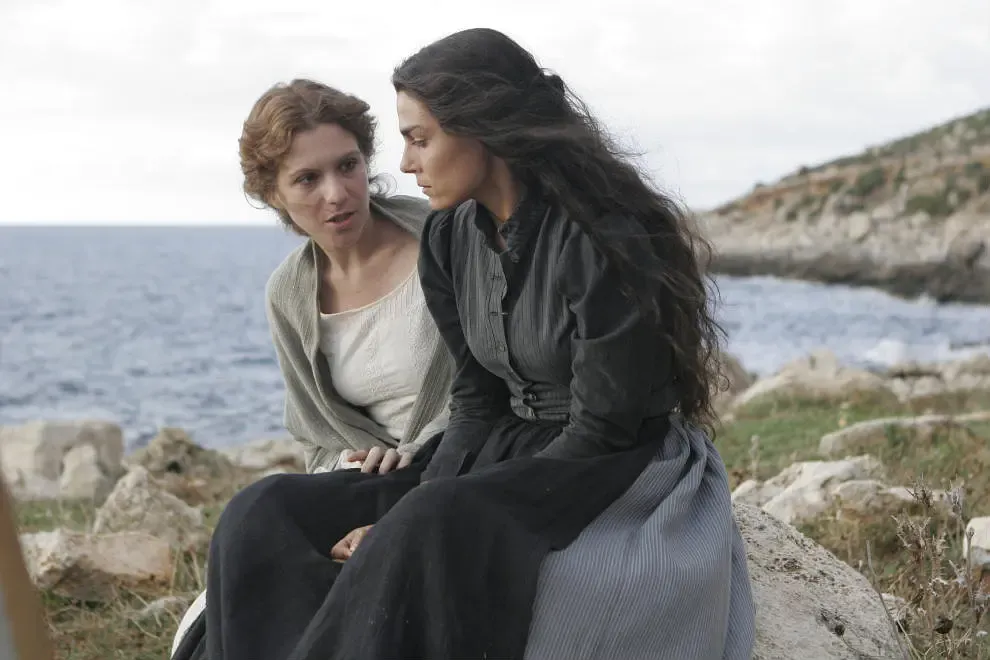
Set on a fictional Sicilian island in the 19th century, Viola di Mare tells the story of Angela, a young woman who changes her social identity in order to marry the woman she loves, Sara.
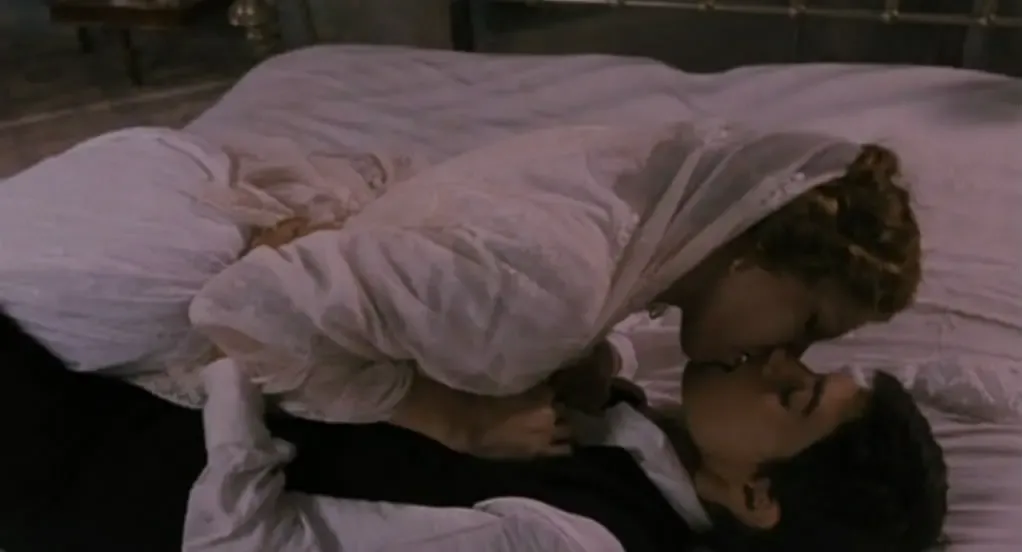
Angela does not transition in a modern sense. She does not hide her body, deny her sex, or seek medical transformation. Instead, she cuts her hair, binds her chest, dresses in men’s clothing, changes the last letter of her name, and is formally re-registered as a man with the local church.
With her father’s authority as a powerful quarry owner enforcing the decision, Angela becomes “Angelo” — gaining male privilege, inheritance rights, and the legal ability to marry Sara.
This transformation is not liberation in the abstract. It is a pragmatic adaptation under patriarchy: if the rules only allow men to act, then she will act as a man.
Viola di Mare Cast
Charactor

Angela is a young woman who adopts a male social identity in order to survive — and to marry the woman she loves — within a rigid patriarchal system. She does not reject her body or deny who she is; instead, she navigates power by stepping into a role that society recognizes as legitimate.
Valeria Solarino
Valeria Solarino plays Angela with remarkable restraint. She never performs masculinity as spectacle. What I felt throughout the film was a constant tension in her physical presence — a woman occupying a role that grants authority but never quite fits. That discomfort is exactly what makes the character convincing, and it keeps the story grounded in strategy rather than sensation.
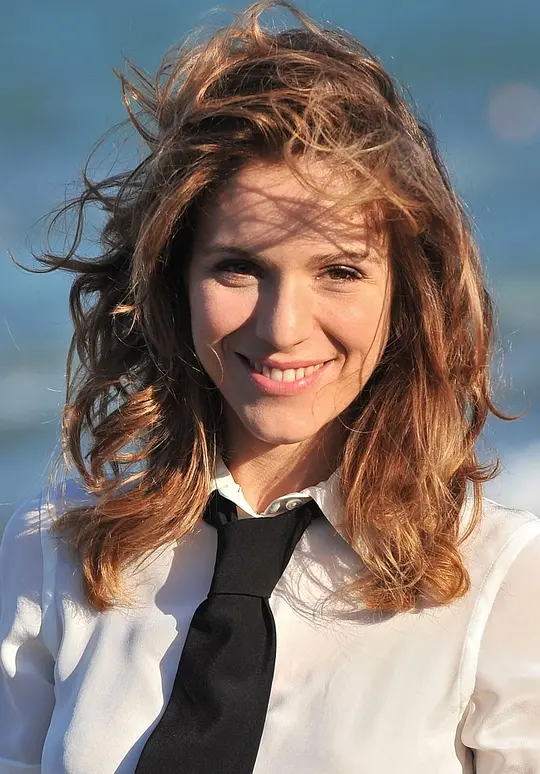
Sara is gentle, emotionally open, and quietly resolute. Unlike many queer love stories that emphasize hesitation or denial, Sara’s affection for Angela feels instinctive and unwavering.
Isabella Ragonese
Isabella Ragonese gives Sara a natural warmth that anchors the film’s emotional core. Her performance avoids melodrama; instead, she conveys certainty through calm presence. For me, Sara’s clarity is essential — it prevents the story from drifting into exoticism and keeps the love between the two women feeling grounded and sincere.
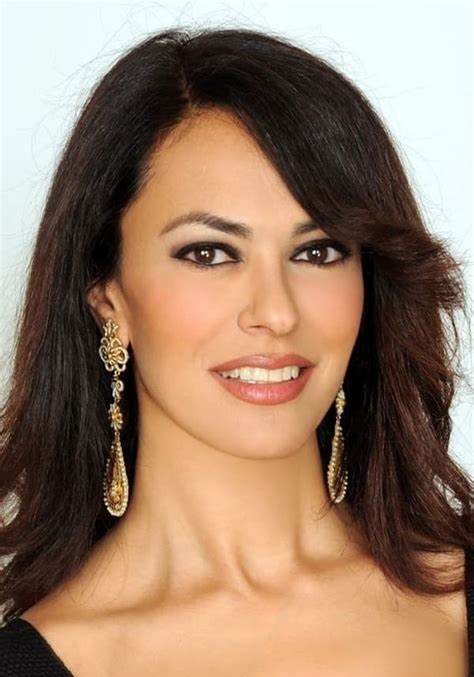
Agnese is a tragic figure shaped by secrecy, desire, and punishment under patriarchal authority. Her story echoes many of the film’s central themes: female silence, moral judgment, and the cost of transgression.
Maria Grazia Cucinotta
Maria Grazia Cucinotta — also one of the film’s producers — brings a quiet gravity to the role. While many viewers remember her earlier career as defined by beauty, here she embodies something far more substantial: a woman marked by experience, compromise, and loss. Even with limited screen time, her presence leaves a lasting weight.
Director
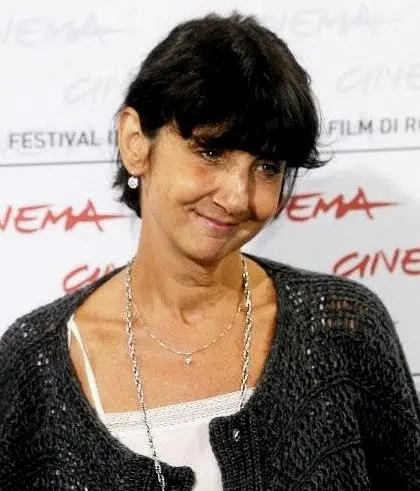
Donatella Maiorca
Viola di Mare is directed by Donatella Maiorca, whose approach places female experience firmly at the center of the narrative.What stood out to me is her refusal to sensationalize Angela’s transformation. The film is not interested in gender spectacle or shock; instead, it observes how women adapt, endure, and quietly resist within inherited structures of power. Even when the story feels loose or unresolved, Maiorca’s perspective remains consistent — this is a feminist story told from inside the constraints it depicts.
Viola di Mare Review
Review
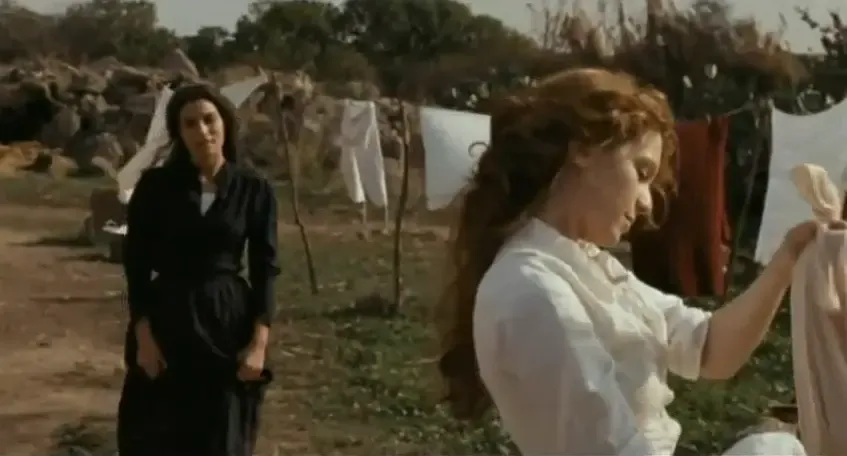
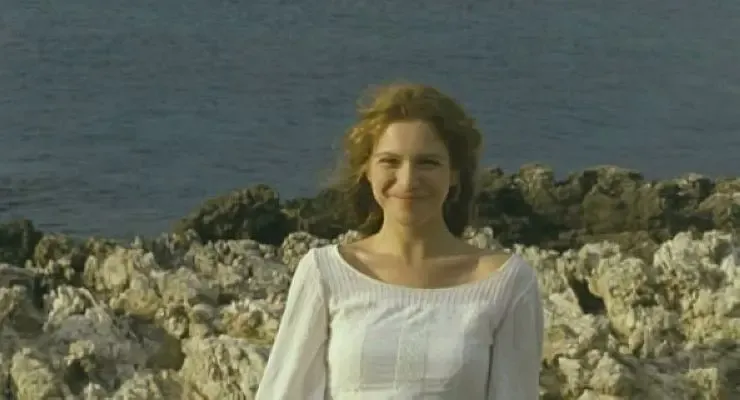
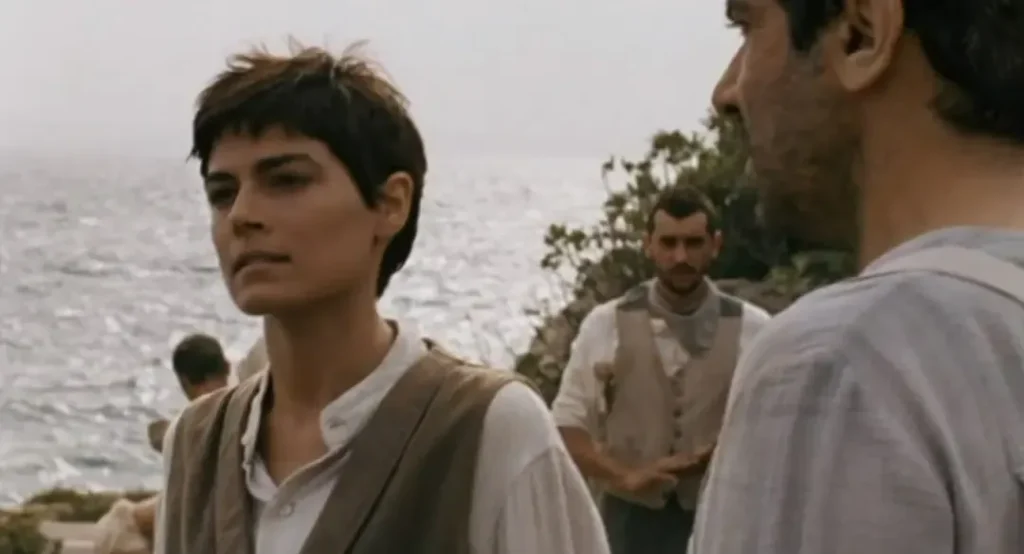
A Feminist Gaze, Quietly Certain
Halfway through the film, I looked up the creative team. I wasn’t surprised to find that from producers and writers to director and cinematographer, the key roles were held by women.
That explains the tone.
The film doesn’t linger on whether Angela is “really” a man or woman. It doesn’t frame her choice as deviance or spectacle. Patriarchy is the real subject here — heavy, stifling, and omnipresent — contrasted sharply with the softness and clarity of Angela and Sara’s bond.
Unlike many male-centered queer films that emphasize hesitation and torment, Angela and Sara’s love feels almost decisive. Some viewers might expect a long internal struggle, especially from Sara. I didn’t. It felt intentional: in this story, loving a woman is not the problem. Living under male authority is.
Mothers, Women, and Quiet Solidarity
One of the moments that struck me most was the mother’s reaction.
In a world ruled by men, it is Angela’s mother — outwardly submissive all her life — who imagines the solution, protects her daughter, and quietly engineers survival. Watching this, I suddenly understood something I’ve often wondered about in real life: why women, more often than men, instinctively support queer love.
It’s not ideology. It’s lived empathy.
The women in this film don’t confront patriarchy head-on. They absorb, bend, adapt, and outlast it — like the sea itself.
Angela Is Not Trans — She Is Strategic
This is not Boys Don’t Cry.
Angela does not attempt to “become” a man internally.
Everyone on the island knows who she is. This is a tiny fishing village where everyone knows everyone. Her masculinity is not convincing; it is tolerated because it fits the existing power structure. As long as the rules are observed on the surface, everything else — affairs, abortions, false gender records — can be quietly managed.
Angela’s transformation is not about identity. It is about access.
Access to inheritance.
Access to marriage.
Access to authority.
That distinction matters deeply to me, and the film handles it with surprising clarity.
The Island as a Living Archive
Favignana itself is inseparable from the story.
I remember circling the island in a small rental car, passing abandoned stone quarries, deep carved spaces that felt almost otherworldly. Some buildings still bore bullet marks. On a hilltop, there was even an abandoned German monitoring station from the war.
The quarry spaces in the film — where death, secrecy, and power intersect — are not symbolic inventions. They are real.
At night, lying by the sea, this was the only place in my life where I saw shooting stars every single evening. That memory overlays the film for me in ways no screenplay ever could.
Strengths, Weaknesses, and What Remains
The film wants to do many things at once: love story, social portrait, feminist parable, folkloric legend. Sometimes it hesitates. The narrative loses tension. Too many characters — the mother, the aunt, Sara’s family, the baroness — are introduced but never fully explored.
Later, seeing four screenwriters listed, I understood why.
Still, for all its looseness, Viola di Mare stays with me.
Sara, in particular, is quietly luminous.
The landscape is unforgettable.
And the premise — “I will wear men’s clothes if that’s what it takes to love you” — remains haunting.
My Take
Viola di Mare is not a perfect film. But it is a rare one.
It understands that gender, in certain historical contexts, was not an identity to be expressed, but a tool to be negotiated. It refuses to sensationalize that fact. And it lets women — not men — decide what survival looks like.
For that alone, and for the sea that never leaves my memory, this is a film I return to.